
Grab your broom, we have some things to clean up and clear up. Mostly the myths and magical thinking in our minds. Maybe a few “spiritual steps” to clear of debris. I once heard a church musician say now and then we all need a little “brainwashing”—washing out our brains. When it comes to the misnomers and misunderstandings about other people, especially those we “marginalize,” the washing can take a little longer. It’s never pleasant, so be aware, this may be an uncomfortable cleansing.
Over my years as an interfaith chaplain, my “congregations” endured many sweeps. In the jails, surprise inspections meant prisoners would be removed from their cells so staff could comb through everything including all personal possessions. They would often be acting on a tip regarding an illegal item like a drug, a cigarette or some kind of weapon. Sometimes “contraband” would be found, but usually it seemed to be an opportunity to reassert power and control over every aspect, every corner, every person, in the facility. On the streets we regularly witnessed sweeps of campsites, campers and cars or any areas where unhoused people tried to find safe places. Most of my “congregation” tried their best to be invisible, especially to business owners and police, but they couldn’t hide forever. Either the police, a city sanitation crew, a state maintenance team—or a combination of these—would “sweep” through an area—public park, hillside forest, under the freeway, along unused train tracks—and “clean out” everything. The impact was immediately felt in our “urban refugee” community. Women, men, families would arrive at the doorway of local social services agencies including St. Vincent dePaul, and of course, the chaplaincy. People needed blankets, sleeping bags, warm clothes, toiletries, and other basics for survival outside. When we had these items, we would give them out as we listened to each story of loss and hardship, sharing in the discouragement of a disheartening situation. Many people felt swept off their feet, knocked down when they were already down—“down and out.”
When reading that more “sweeps” are being conducted in our area, I recalled those memories of daily losses. Once again I reflected on the sweeping, wondering: What are we cleaning up? What does it mean for a city to be clean, for an area to be sanitized, cleared of “those people” we don’t wish to see? I’m no bleeding heart, but I do have blood pumping through my heart and have some feeling, empathy, for other hearts with feeling, who suffer in the dark and dirty places we don’t want to go. I also learned a valuable lesson through those years helping people endure the sweeps: When we treat people like trash, and want to sweep them away, or under the nice clean rugs we imagine cover our towns, we are swept up in a fantasy, a dangerous illusion and delusion. The way we treat our poorest neighbors says just about everything about what kind of human beings we are. Because human beings can’t be swept away or swept under rugs.
One of our street friends at the chaplaincy we called “Lee of the Trees.” Whenever he would wander in, he would pick up a broom from the closet and mosey out to sweep the entryway and sidewalk around the office. We were located in a church, so Lee was actually helping the congregation, though few would ever notice. For Lee, “ceilings are luxurious.,” even the ceilings of a church that would lock its doors to people like him—“the homeless.” I don’t know if any of Jesus’ disciples ever picked up a broom when they were hanging around a household hosting a visit from the Palestinian rabbi. It’s a comforting image though. A simple act of helping, while paying attention to the hubbub of activity surrounding the “star” who received the focus of attention and admiration. For some of us, Lee deserved that attention and admiration. Though he had endured a number of sweeps, roused from some alley or park where he felt safe, he still grabbed a broom to do his own sweeping.
Recently I read the tragic story of a man who was swept off a rocky seashore by a rogue wave. Living most of my life near the ocean, I learned to respect the power of those waves, never turning my back on them. When it comes to sweeping people away, or out of mind, it would do us well not to turn our backs to the waves of neighbors in need.
A woman who lived in a van, who was one of Lee’s friends, composed a song: “The Power of Goodness.” This is a power that could sweep us up, if we truly want compassionate communities.
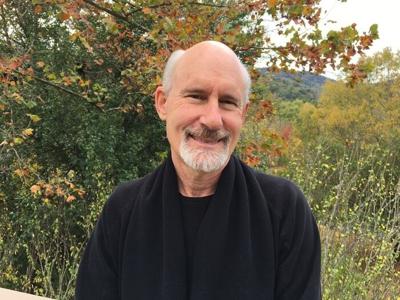
Chris Highland was a Protestant minister and interfaith chaplain for many years before becoming a humanist celebrant and author of many books. He lives in Asheville, North Carolina. His website is www.chighland.com.


(0) comments
Welcome to the discussion.
Log In
Keep it Clean. Please avoid obscene, vulgar, lewd, racist or sexually-oriented language.
PLEASE TURN OFF YOUR CAPS LOCK.
Don't Threaten. Threats of harming another person will not be tolerated.
Be Truthful. Don't knowingly lie about anyone or anything.
Be Nice. No racism, sexism or any sort of -ism that is degrading to another person.
Be Proactive. Use the 'Report' link on each comment to let us know of abusive posts.
Share with Us. We'd love to hear eyewitness accounts, the history behind an article.