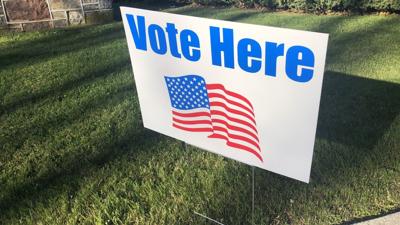
Voters across Alabama go to the polls Tuesday to select party nominees for the 2026 midterm elections in over 160 federal, state and local primary elections.
Alabama will have a new governor in 2027, as Gov. Kay Ivey is term-limited. Current U.S. Sen. Tommy Tuberville, a Republican, is running for the gubernatorial nomination, leaving his seat open. All congressional offices are up for election, with a caveat, and all 140 state legislative seats are on the ballot. There are two statewide constitutional amendments on the ballot.
For sample ballots in the Black Belt, go here.
Sample ballots for all 67 counties can be found on the Secretary of State’s website. Alabama has open primaries, so voters can ask for a Democratic or Republican ballot when they arrive at their polling place. Voters can find which legislative district they reside in here.
What's on the ballot:
Governor
At the top of each ballot, voters will choose a candidate for governor. On the Republican ballot, voters can choose between Ken McFeeters, Will Santivasci and current U.S. Sen. Tommy Tuberville.
- The issues: Among state party leaders, Tuberville is the assumed nominee. However, McFeeters challenged Tuberville’s candidacy with the Alabama Republican Party (ALGOP) over the senator’s residency. McFeeters alleged that Tuberville lives in Santa Rosa Beach, Florida, not Auburn where Tuberville claims. Alabama law requires the governor to have domicile in the state for seven years. Tuberville has refused to plainly answer where he has lived for the last seven years. The party dismissed the challenge, and McFeeters filed a lawsuit. A motion to dismiss the lawsuit from the party’s lawyers from last week is pending.
- According to Santivasci’s website, he will create an Alabama Department of Government Efficiency, cut taxes on overtime, gas and property, and work to pass a constitutional amendment on a lottery. According to Tuberville’s website, he will focus on workforce development, immigration enforcement and “Alabama values.”
- Fundraising: Tuberville is far ahead in campaign contributions. As of Friday, Tuberville reported $12.8 million in cash donations and $3.6 million in expenditures. McFeeters reported $353 in cash donations, $20,000 of his own money, and $13,000 in expenditures. Santivasci has not reported any fundraising or expenditures as of Friday.
On the Democratic ballot, voters can choose between pastor and engineer Will Boyd, talk show host JaMel Brown, speech therapist Yolanda Flowers, former U.S. Sen. Doug Jones, business owner Chad “Chig” Martin and former state Rep. Nathan Mathis.
- The issues: Candidates vary on campaign promises, but most are promising to make Alabama more affordable. Candidates are inspired by the rising cost of healthcare, utility bills and living.
- Fundraising: Jones leads in fundraising as of Friday on the Democratic ticket. He reported $2.2 million in cash donations and $1 million in expenditures. Boyd reported $71,000 in cash contributions and $63,000 in expenditures. Martin has raised $28,500 and spent $27,800. Mathisstarted with $1,000, has reported $10,000 in cash contributions and $10,000 in expenditures. Flowers has raised $1,700 in cash, $6,100 in in-kind contributions, and has spent $5,800. Brownstarted with $1,100, has reported $1,200 in cash donations, $1,600 in in-kind contributions, and has spent $2,600.
Lieutenant governor
Voters will also choose a nominee for the second-highest office in Alabama, lieutenant governor. The lieutenant governor once had powers similar to that of the House speaker, with the ability to appoint members of Senate committees and control the flow of legislation. But most of those powers were stripped from the office in 1999, after a weeks-long standoff between Lt. Gov. Steve Windom, a Republican, and what was then a chamber controlled by the Democratic Party.
There are seven candidates on the Republican ballot and two on the Democratic ticket.
Republican voters will choose between Alabama Secretary of State Wes Allen, Patrick Bishop, George Childress; Commissioner of Agriculture and Industries Rick Pate, Dr. Stewart Tankersley; Nicole Jones Wadsworth and former ALGOP Chair John Wahl. Democratic voters will choose between Rep. Phillip Ensler of Montgomery and Darryl D. Perryman.
Attorney General
There is only one Democratic candidate, Jeff McLaughlin, an attorney in Guntersville and former state representative, running for attorney general. Three Republicans are seeking the office:Pamela Casey, the district attorney of Blount County; former Alabama Supreme Court Justice Jay Mitchell; and Katherine Robertson, deputy attorney general for the state.
National issues and pledges of loyalty to President Donald Trump have largely dominated the primary. GOP candidates have showcased endorsements from police chiefs and sheriffs and talked of lengthening prison sentences, but also devoted large swathes of time to the U.S.-Mexico border, their opinions of Islam and the agenda of the so-called “woke left.”
Robertson led in fundraising as of Friday. She reported $4.4 million in cash donations and nearly as much in expenditures. Mitchell follows at $3.8 million in contributions and $3.9 in expenditures. Casey has reported about $200,000 in cash donations, $500,000 of her own money, and has spent $188,000. McLaughlin has not reported any contributions or expenditures.
U.S. Senate
There are 10 candidates running to replace Tuberville on Capitol Hill. Republican voters will choose between Seth Burton, a U.S. Navy veteran; Dale Deas Jr., a cardiac surgeon; Jared Hudson, a U.S. Navy SEAL; Alabama Attorney General Steve Marshall; U.S. Congressman Barry Moore, R-Enterprise; and Rodney Walker, a businessman from Lineville.
A poll commissioned by Alabama Daily News showed Moore leading the primary with 23% of the vote, followed by Hudson with 19% and Marshall with 14%. However, the poll also found 40% had not yet decided who to support.
Alabama Democrats will choose between four first-time candidates: Dakarai Larriett, a business owner; Kyle Sweetser, who is campaigning full-time; Everett Wess, an attorney; and Mark Wheeler, a chemist.
According to campaign filings, Republicans are out-raising Democrats in the race. The report shows as of Wednesday afternoon, Moore has raised the most money at $2.5 million and has spent $2.1 million.
Filings also show that Walker has raised $2 million and spent the same amount; Hudson has raised $1.5 million and spent $1 million; Marshall has raised $1.3 and spent $920,000 and Burton has raised the least of the GOP candidates at just over $67,000 and spent $58,374.
Sweetser is leading the Democrats in funds raised at $159,000 and he has spent $153,000. Larriett has raised just over $136,000 and spent $126,500; Wess has raised $43,700 and spent $42,400 and Wheeler has raised $17,100 and spent $16,759.
U.S. House of Representatives
All congressional seats are up for election, but Gov. Kay Ivey called a special election for Alabama’s 1st, 2nd, 6th and 7th congressional districts following a U.S. Supreme Court order directing a federal court to reevaluate its previous ruling that the Legislature-passed map violated Section 2 of the Voting Rights Act. The federal court is to revisit its ruling in light of the Supreme Court’s recent decision to raise the bar for racial discrimination in drawing district lines.
Votes cast in the current 1st, 2nd, 6th and 7th congressional districts on Tuesday will still count, according to the Secretary of State, unless the federal court changes the congressional map. Voters should fill out their entire ballot.
The congressional map that will be used in Tuesday’s election can be found here.
In the 1st Congressional District, Republican voters have seven choices: Jerry Carl, James Dees, state Rep. Rhett Marques of Enterprise, Joshua McKee, John Mills, James Richardson and Austin Sidwell. Only one Democratic candidate qualified, Clyde Jones, so he is the presumptive nominee.
In the 2nd Congressional District, there is not a primary because one candidate from each party qualified: U.S. Rep. Shomari Figures, D-Mobile, and Hampton Harris.
In the 3rd Congressional District, Republicans can choose between incumbent U.S. Rep. Mike Rogers, R-Saks, and Terri LaPoint. Lee McInnis is the only candidate on the Democratic side, and the presumptive nominee.
In the 4th Congressional District, Republican voters can choose between incumbent U.S. Rep. Robert Aderholt, R-Haleyville, and Tommy Barnes. Democratic voters will choose between Amanda Pusczek and Shane Weaver.
In the 5th Congressional District, Democratic voters will choose between Jeremy Devito, Candice Duvieilh and Andrew Sneed. Incumbent U.S. Rep. Dale Strong, R-Madison, is the only Republican candidate, and the presumptive nominee.
In the 6th Congressional District, Republican voters will choose between Case Dixon and incumbent U.S. Rep. Gary Palmer, R-Hoover. Keith Pilkington was the only one to qualify on the Democratic ticket, and is the presumptive nominee.
In the 7th Congressional District, no Republican candidate qualified, and incumbent Rep. Terri Sewell, D-Selma, was the only Democratic candidate to qualify, and is the presumptive nominee.
State Legislature
All 140 state lawmakers are up for election, but not all have primary or general election challengers. Ten districts will have a new lawmaker due to retirements or lawmakers seeking other offices: Senate districts 2 and 34, and House districts 8, 17, 32, 37, 50, 65, 74 and 91.
In some primaries, like House District 20 and Senate District 13, voters will choose between an incumbent and the district’s former legislator. Others, like House districts 40 and 82, are crowded. House District 60, among others on both sides, are filled with endorsements and political attacks.
Public Service Commission
Voters will also choose to serve on the Public Service Commission, which regulates the state’s utilities. There are two positions to choose from on each ballot. For Place 1 on the Republican ballot, voters will choose between Matt Gentry and incumbent Jeremy Oden. On the Democratic ballot, voters will choose between James Gordon and Jeff Ramsey. A third candidate, John Northrop, qualified but withdrew from the race.
For Place 2 on the Republican ballot, voters will choose between Priscilla Andrews, incumbent Chris Beeker, Brent Woodall and Jim Zig Zeigler. There is one Democratic candidate, Sheila McNeil, who will be the presumptive nominee.
Constitutional amendments
All ballots will have two statewide constitutional amendments. Statewide Amendment One asks voters to expand the list of crimes that will not be eligible for bond to solicitation; attempt and conspiracy to commit murder; and discharging a weapon into an occupied dwelling. The Legislature passed the amendment, an expansion of Aniah’s Law, in 2025.
Statewide Amendment Two asks voters to not allow a district attorney’s compensation to decrease during their term. The Legislature passed the amendment in 2025.
When do polls open?
Polls will be open from 7 a.m. to 7 p.m. on Tuesday.
Where do I find my polling place?
The Alabama Secretary of State’s website allows you to check voter registration and the location of your polling place. You can find it here.
What do I need to vote?
Voters must present a valid photo ID before voting. Valid forms of ID include:
- Alabama driver’s license (not expired or expired less than 60 days)
- Alabama Law Enforcement Agency digital driver’s license
- Alabama Non-Driver ID (not expired or expired less than 60 days)
- Alabama Photo Voter ID card
- State-issued ID (Alabama or any other state)
- Federal-issued ID
- U.S. Passport
- Employee ID from the federal government; state of Alabama; county; municipality, board or other entity of Alabama
- Student or employee ID from a public or private post-secondary educational institution in Alabama or other states (including colleges, universities, postgraduate technical and professional schools)
- Digital student or employee ID from a public or private post-secondary educational institution in Alabama or other states (including colleges, universities, postgraduate technical and professional schools)
- Military ID
- Tribal ID
What happens after Tuesday?
If no candidate in any race receives 50% of votes, a runoff election will be on June 16. The general election is on Nov. 3.
(0) comments
Welcome to the discussion.
Log In
Keep it Clean. Please avoid obscene, vulgar, lewd, racist or sexually-oriented language.
PLEASE TURN OFF YOUR CAPS LOCK.
Don't Threaten. Threats of harming another person will not be tolerated.
Be Truthful. Don't knowingly lie about anyone or anything.
Be Nice. No racism, sexism or any sort of -ism that is degrading to another person.
Be Proactive. Use the 'Report' link on each comment to let us know of abusive posts.
Share with Us. We'd love to hear eyewitness accounts, the history behind an article.