


Anxiety vs. heart attack: How to tell the difference
Chest pain can be terrifying, especially when you're unsure whether it's anxiety or something more serious like a heart attack. Understanding the key differences between these two conditions can help you make informed decisions about when to seek emergency care and when anxiety management techniques might be more appropriate.
The physical symptoms of anxiety and heart attacks can overlap, creating confusion during already stressful moments. However, each condition follows distinct patterns that can guide your response. Below, Doctronic outlines differences between anxiety attacks and heart attack symptoms, including signs that may require emergency care.
Key Takeaways
- Heart attack chest pain typically feels crushing or squeezing, while anxiety chest pain is often sharp or stabbing.
- Heart attack symptoms worsen with physical activity, and anxiety symptoms often improve with movement or distraction.
- Heart attacks cause pain that radiates to the arms, jaw, or back; anxiety attacks usually keep the pain localized to the chest.
- Both conditions can cause similar symptoms, such as sweating, nausea, and shortness of breath, making professional evaluation crucial.
What Is the Difference Between Anxiety and Heart Attack Symptoms?
Anxiety triggers your body's fight-or-flight response, releasing adrenaline that causes temporary physical symptoms. Your heart races, muscles tense, and breathing quickens as your body prepares to face perceived danger. These symptoms stem from your nervous system's protective mechanisms, not actual physical damage to your heart.
Heart attacks result from blocked blood flow to the heart muscle, causing tissue damage and distinct pain patterns. When coronary arteries become blocked, the affected heart muscle begins to die without oxygen. This creates a crushing, pressurelike pain that follows specific nerve pathways throughout your body.
The timeline differs dramatically between these conditions. Anxiety symptoms typically peak within 10 minutes and then gradually subside as adrenaline levels return to normal. In contrast, how long heart attack symptoms stay active can extend for hours, often worsening without treatment. Understanding this timing can be crucial for determining the appropriate response.
When Should You Suspect Heart Attack vs. Anxiety?
Suspect a heart attack if chest pain occurs during physical exertion and doesn't improve with rest. Heart attack pain often develops when your heart needs more oxygen than blocked arteries can provide, such as during exercise, climbing stairs, or emotional stress. This exertional pattern rarely occurs with anxiety attacks.
Consider anxiety if symptoms started during stress, conflict, or panic-inducing situations. Anxiety attacks often have clear triggers like work presentations, relationship conflicts, or crowded spaces. The connection between emotional stress and physical symptoms is usually obvious with anxiety.
A heart attack becomes more likely if you have risk factors like diabetes, high blood pressure, smoking, or a family history of heart disease. Age also matters — people over 40 face a higher cardiac risk. Women may experience different symptoms than men, including jaw pain, back pain, or unusual fatigue instead of classic chest pain.
An anxiety attack is probable if you have a history of panic disorder and symptoms include racing thoughts or fear of losing control. Many people with anxiety disorders can recognize the familiar pattern of physical symptoms accompanied by mental distress about what is a mini heart attack, and how to know you had one.
How Heart Attack and Anxiety Symptoms Manifest Differently
Heart attack pain creates a crushing, elephant-on-chest sensation lasting more than 15 minutes. Patients often describe it as pressure, squeezing, or burning rather than sharp pain. This discomfort typically doesn't change with position, breathing, or movement.
Anxiety chest pain presents as sharp, stabbing, or tight feelings that come and go. The pain may worsen with deep breathing or certain positions. Many people can temporarily relieve anxiety chest pain by changing positions, practicing breathing exercises, or using relaxation techniques.
Heart attack radiation follows predictable patterns, with pain sometimes traveling to the left arm, jaw, neck, back, or stomach area. This radiation occurs because heart pain travels along established nerve pathways. The connection between angina, heart attack, and stroke involves similar vascular processes.
Anxiety creates symptom clusters including chest pain combined with dizziness, tingling hands, or feelings of unreality. These neurological symptoms result from hyperventilation and adrenaline effects, not cardiac damage.





Emergency Warning Signs Requiring Immediate Care
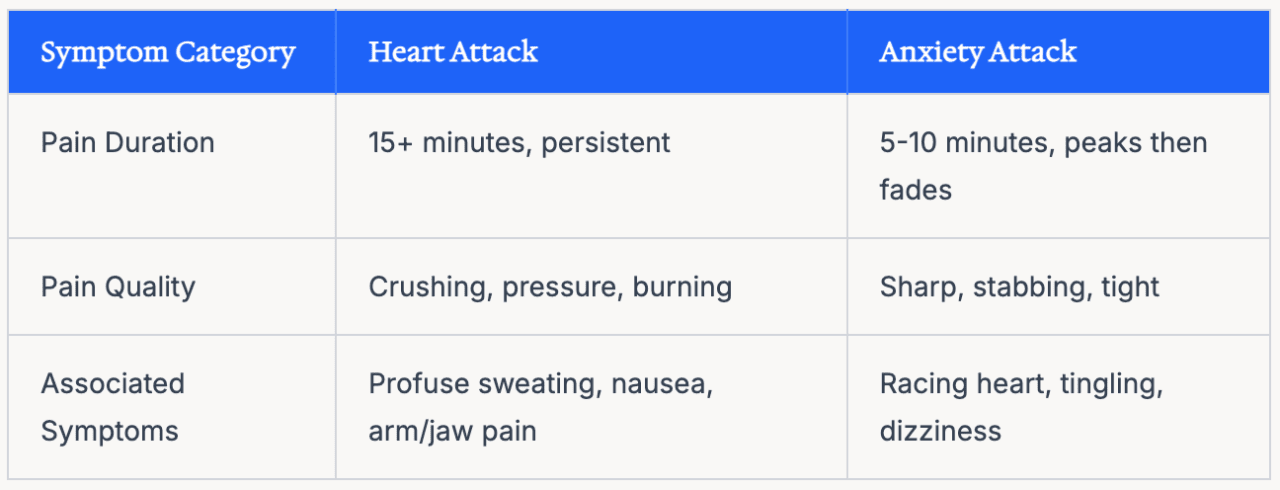
Chest pain lasting longer than 15 minutes or getting progressively worse requires emergency care. Unlike anxiety attacks that peak quickly, heart attack pain typically builds and persists. Any chest discomfort in adults over 40 warrants immediate medical evaluation, even if anxiety seems likely.
Pain accompanied by profuse sweating, nausea, vomiting, or lightheadedness indicates a possible cardiac emergency. These symptoms suggest your body is responding to severe stress on the cardiovascular system. The question of how quickly a heart attack becomes fatal depends on prompt treatment.
Shortness of breath that doesn't improve with anxiety management techniques needs medical evaluation. While both conditions can cause breathing difficulties, heart-related shortness of breath typically worsens with activity and doesn't respond to relaxation methods.
Frequently Asked Questions
Can anxiety really cause chest pain that feels like a heart attack?
Yes, anxiety can cause intense chest pain, rapid heartbeat, and shortness of breath that closely mimic heart attack symptoms. However, anxiety chest pain is typically sharp and brief, while heart attack pain is crushing and persistent.
Should I go to the emergency room for chest pain if I have anxiety?
When in doubt, seek emergency care. Even people with known anxiety disorders can have heart attacks. Emergency departments can quickly rule out cardiac causes using EKGs and blood tests, providing peace of mind.
How can I tell if my racing heart is from anxiety or a heart problem?
Anxiety-related rapid heartbeat typically occurs with obvious triggers and calms down within minutes. Heart-related rhythm problems may occur without triggers and feel irregular or skip. Any persistent heart racing warrants medical evaluation.
What should I do during an anxiety attack to avoid confusing it with a heart attack?
Focus on slow, deep breathing and remind yourself that anxiety symptoms peak within 10 minutes, then improve. If symptoms persist beyond 15 minutes or worsen, seek medical attention regardless of your anxiety history.
Can stress really cause a heart attack?
Yes, extreme emotional or physical stress can trigger heart attacks in people with underlying coronary artery disease. However, the difference between a panic attack versus heart attack lies in the underlying cause and symptom patterns.
The Bottom Line
Distinguishing between anxiety and heart attack symptoms can be challenging, but understanding key differences can save your life. Heart attacks typically cause crushing chest pressure lasting over 15 minutes, often radiating to arms, jaw, or back, especially during physical activity. Anxiety attacks create sharp, stabbing chest pain that peaks quickly and then fades, usually triggered by stress or panic-inducing situations. Both conditions share symptoms like sweating and shortness of breath, making professional evaluation essential when in doubt. Age, risk factors, and symptom duration all play crucial roles in determining the appropriate response.
This story was produced by Doctronic and reviewed and distributed by Stacker.

(0) comments
Welcome to the discussion.
Log In
Keep it Clean. Please avoid obscene, vulgar, lewd, racist or sexually-oriented language.
PLEASE TURN OFF YOUR CAPS LOCK.
Don't Threaten. Threats of harming another person will not be tolerated.
Be Truthful. Don't knowingly lie about anyone or anything.
Be Nice. No racism, sexism or any sort of -ism that is degrading to another person.
Be Proactive. Use the 'Report' link on each comment to let us know of abusive posts.
Share with Us. We'd love to hear eyewitness accounts, the history behind an article.