




By Jake Meeus-Jones
Adverse reactions to the likes of Ozempic and Wegovy are set to soar by more than 350% in a single year, according to the latest data.
Between January and mid-May 2024, some 2,780 reports of spontaneous suspected adverse drug reactions to semaglutide were reported to the UK's Medicines and Healthcare products Regulatory Agency.
This already exceeds the total reported for all of 2023 - when 1,592 reactions were reported to the MHRA's Yellow Card Scheme, to which patients, carers and medics and submit worries.
Reports for 2024 - which include four fatal reactions - have only been processed up to mid-May. But if trends remain the same, more than 7,200 reactions will be reported - a 357% surge for 2024.
Semaglutide - which is the pharmaceutical name for the brands Wegovy and Ozempic - is used to treat type 2 diabetes, but it is also increasingly used as a weight-loss jab.
It comes after reports of nasty side effects - including eye problems, infections and gastrointestinal disorders - nearly tripled from 2022 to 2023.
Five years ago, in 2019, just 114 reactions were reported.
The data is the latest available from the Yellow Card scheme, run by the MHRA, which recorded 5,500 adverse reactions to semaglutide since 2019, up to mid-May 2024.
Most of these were gastrointestinal disorders, with 50 to 59-year-olds the most common age group, with women outnumbering men by more than three to one.
For liraglutide - better known as Saxenda - adverse reaction reports appear to have slowed, with just 22 in January to May 2024 , compared to 304 in 2023.

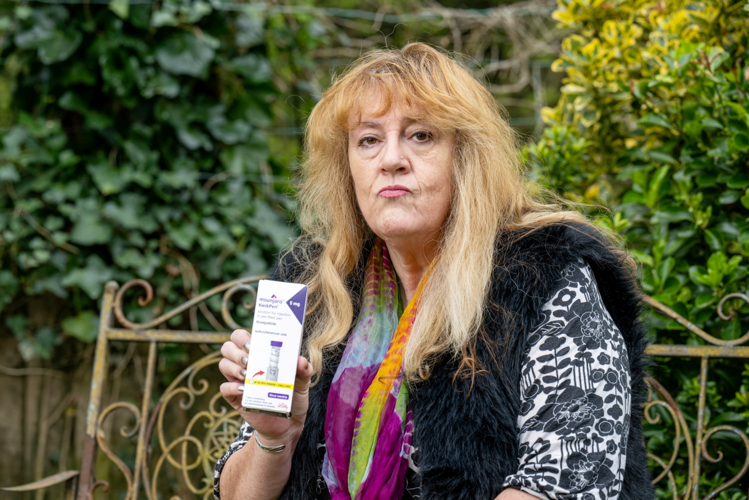
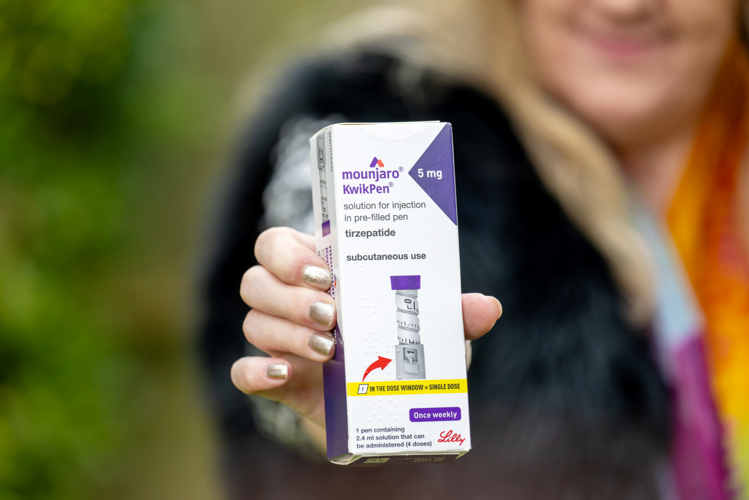
Karen Coe used to take Mounjaro. (Tony Kershaw via SWNS)
The same comparison for tirzepatide - known as Mounjaro - is harder to make because it was only approved for use in the UK in November 2023.
But there were 209 reports of adverse reactions up until May 2024 - including one fatal.
The most common complaint after gastrointestinal disorders was fatigue followed by headaches - but less common reports included increased menstruation bleeding, joint problems and heart rhythm issues.
For Karen Coe, 59, taking Mounjaro felt like she was being "ripped open by a knife."
She said: "At first I had a headache and got dizzy.
"I had a few stomach cramps.
"On Monday it was excruciating. It was like being ripped open with a knife."
Karen decided to try the injections to lose weight and help combat type two diabetes, and was prescribed them on the NHS.
But after her first injection on March 14 she began to get a headache and feel dizzy.
Three days later on March 17, she woke up at 5am with "excruciating" stomach pains, suffered with extreme diarrhoea and had to call for an ambulance.
She said: "I nearly passed out.
"I had to ask my husband to call for an ambulance.
"I was dizzy and really cold.






"They did my observations and said it was all ok."
Karen - who only injected herself once - was told her observations were ok and to monitor her symptoms.

(Tony Kershaw via SWNS)
She spent the next 24 hours with stomach cramps and passing blood when she went to the toilet, she said.
Karen's symptoms had eased off but when she had "massive blood clots" on March 24, she rushed to A&E.
After an examination, she was referred on the urgent two week pathway to see a colorectal surgeon.
Doctors said her initial symptoms were likely caused by Mounjaro, she claims, but doctors haven't confirmed the cause of her subsequent clotting complications.
The NHS lists nausea, diarrhea, and abdominal cramps as potential side effects of the injection.
Karen was told to keep an eye on her symptoms and she was initially left weak and unable to eat.
She said: "Every few minutes I would go to the loo and pass blood."
Karen won't be continuing with her Mounjaro injections.
She said: "It can cause severe reactions and severe side effects.
"People should really think carefully and don't take it lightly."
Eli Lilly - who make Mounjaro, or tirzepatide - said: "Patient safety is Lilly’s top priority. We take any reports regarding patient safety extremely seriously and actively monitor, evaluate, and report safety information for all our medicines.
"The Mounjaro (tirzepatide) Patient Information Leaflet warns that various gastrointestinal side effects – including nausea, diarrhea, vomiting, stomach pain, and constipation – are common or very common side effects.
"We encourage patients to consult their doctor or other healthcare professional regarding any side effects they may be experiencing and to ensure that they are getting genuine Lilly medicine."
According to the Yellow Card website "it is important to note that reported adverse reactions have not been proven to be related to the drug, and should not be interpreted as a list of known side effects".
Of the 2,780 reports for adverse reactions to semaglutide in 2024, up to May, 281 were deemed "serious".
Reports of reactions to semaglutide by year:
2019- 114
2020 - 144
2021 - 336
2022 - 534
2023 - 1592
2024 (up to May 19) - 2780
The makes of semaglutide did not respond immediately to a request for comment.

(0) comments
Welcome to the discussion.
Log In
Keep it Clean. Please avoid obscene, vulgar, lewd, racist or sexually-oriented language.
PLEASE TURN OFF YOUR CAPS LOCK.
Don't Threaten. Threats of harming another person will not be tolerated.
Be Truthful. Don't knowingly lie about anyone or anything.
Be Nice. No racism, sexism or any sort of -ism that is degrading to another person.
Be Proactive. Use the 'Report' link on each comment to let us know of abusive posts.
Share with Us. We'd love to hear eyewitness accounts, the history behind an article.