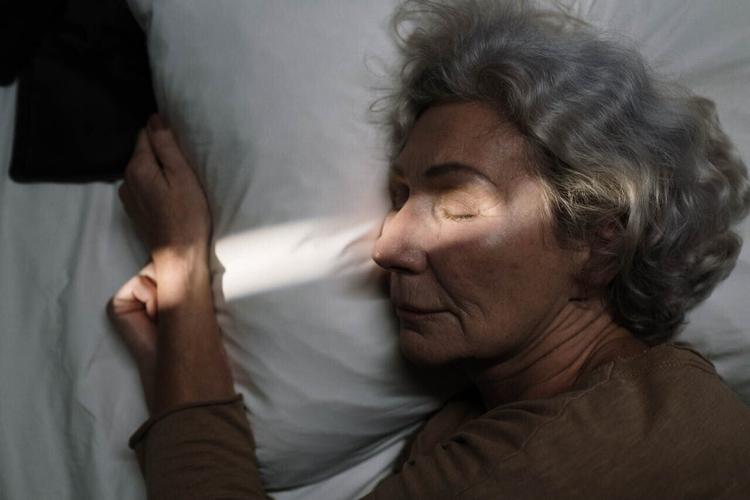





Photo by Ron Lach via Pexels
By Stephen Beech
Excessive napping may be a warning sign of potentially deadly underlying health conditions in older people, according to new research.
Seniors who are prone to dozing off — especially in the morning — are closer to dying than other senior citizens, suggests the study.
But the findings represent an opportunity for tracking health conditions and preventing decline, say scientists.
American researchers followed more than 1,300 older adults for up to 19 years to track napping habits and associated mortality rates.
Their findings, published in the journal JAMA Network Open, showed longer, more frequent, and morning naps were associated with higher mortality rates.
Lead author Dr. Chenlu Gao, of Mass General Brigham, Boston, said: "Excessive napping later in life has been linked to neurodegeneration, cardiovascular diseases and even greater morbidity, but many of those findings rely on self-reported napping habits and leave out metrics like when and how regular those naps are.
“Our study is one of the first to show an association between objectively measured nap patterns and mortality and suggests there is immense clinical value in tracking napping patterns to catch health conditions early.”

Photo by SHVETS production via Pexels
Previous studies have shown that between 20% and 60% of older adults take naps.
While infrequent napping can be restorative, excessive daytime napping in old age has been linked to a wide range of health issues.
Despite the associations, the relationship between napping and health in older people had not been widely studied until now.
Previous research lacked napping pattern data, the time of day naps took place, and changes in napping patterns from day to day.





For the new study, Mass General Brigham researchers turned to data from the Rush Memory and Aging Project, which began in 1997.
It primarily focused on the cognition and neurodegeneration of older, mainly white people in northern Illinois.
Beginning in 2005, participants wore wrist activity monitors for 10 days to measure rest-activity data.
The research team extracted sleep patterns from the extensive rest-activity data and mapped nap length, frequency, time of day, and day-to-day variability.

Photo by Kampus Production via Pexels
By 2025, 19 years’ worth of data was collected from the participants.
Researchers analyzed the data for associations between napping patterns at the initial assessment and mortality during the 19-year follow-up.
They found that longer, more frequent, and morning naps were all associated with higher mortality.
Each additional hour of daytime napping per day was associated with around a 13% higher mortality risk.
Each extra nap per day was associated with around a 7% higher mortality risk, while morning nappers had a 30% higher mortality risk compared to afternoon nappers.
However, irregular napping patterns were not associated with any increased mortality risk.
Dr. Chenlu Gao said: “It is important to note that this is correlation, not causation.
"Excessive napping is likely indicating underlying disease, chronic conditions, sleep disturbances, or circadian dysregulation."
She added: “Now that we know there is a strong correlation between napping patterns and mortality rates, we can make the case to implement wearable daytime nap assessments to predict health conditions and prevent further decline.”

(0) comments
Welcome to the discussion.
Log In
Keep it Clean. Please avoid obscene, vulgar, lewd, racist or sexually-oriented language.
PLEASE TURN OFF YOUR CAPS LOCK.
Don't Threaten. Threats of harming another person will not be tolerated.
Be Truthful. Don't knowingly lie about anyone or anything.
Be Nice. No racism, sexism or any sort of -ism that is degrading to another person.
Be Proactive. Use the 'Report' link on each comment to let us know of abusive posts.
Share with Us. We'd love to hear eyewitness accounts, the history behind an article.