





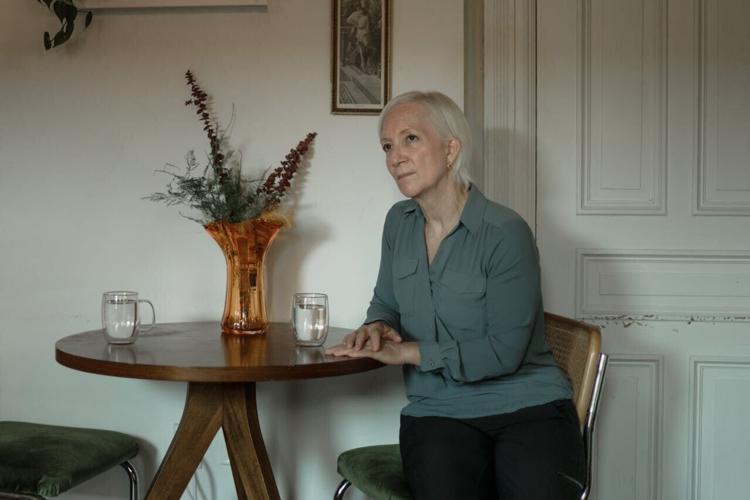


(Photo by beytlik via Pexels)
By Stephen Beech
Loneliness has a negative impact on the memory of older adults, according to new research.
But feeling lonely doesn't accelerate brain decline, the findings suggest.
Lonelier people performed worse in initial memory tests.
But over the course of seven years, their ability to recall information declined at a similar rate to participants who didn't feel alone.
The findings come from an analysis of the Survey of Health, Ageing and Retirement in Europe (SHARE) study, which involved 10,217 people, ages 65 to 94, from 12 continental countries.
Loneliness has become a significant public health issue due to its impact on longevity, mental and physical health, and general well-being.
The latest study, published in Aging and Mental Health, adds further weight to the strong links between feeling lonely and brain function in older adults.
The research was conducted by scientists from Spain, Sweden and Colombia.
They say the findings also reinforce the theory that isolation is not necessarily a risk factor for dementia.

(Photo by cottonbro studio via Pexels)
The team suggests that regular loneliness screening could be included in checks to test mental abilities in older adults.
Study lead author Dr. Luis Carlos Venegas-Sanabria said: "The finding that loneliness significantly impacted memory, but not the speed of decline in memory over time was a surprising outcome.
"It suggests that loneliness may play a more prominent role in the initial state of memory than in its progressive decline."
He says loneliness and social isolation are among the most relevant risk factors for dementia.
But data on the link between loneliness and cognitive function are inconsistent.
Some studies suggest loneliness accelerates cognitive decline over time while others have found no significant link.
The aim of the new study was to assess the effect of loneliness on how memory changes over a seven-year period.





The analysis used data covering 2012 to 2019 from SHARE, a survey launched in 2002 that examines the health and aging of Europeans ages 50 and over.

(Photo by cottonbro studio via Pexels)
Participants were from countries including Germany, Slovenia, Spain and Sweden. The 12 countries were grouped into four geographic regions: Central, South, North and Eastern.
Anyone with a history of dementia, including Alzheimer's disease, was excluded along with those whose activities related to daily living were "impaired" — classified as people who have any disability in activities such as walking, eating or taking a shower.
Memory was assessed as the ability to recall information immediately and after a time delay.
Tests included participants having to remember as many words as possible in a minute from a 10-word list that was read aloud.
Loneliness was defined as "feeling alone."
Researchers asked participants three questions to measure their loneliness and to categorize them into low, average or high.
The questions included "How much of the time do you feel you lack companionship?" and "How much of the time do you feel left out?"
Researchers also assessed physical activity, engagement in social activities, depression scores, diabetes and other factors that could potentially influence the research.
Results showed Southern European countries reported the highest levels of loneliness (12%) followed by the Eastern region (9%), Central (6%) and Northern (9%) regions.

(Photo by RDNE Stock project via Pexels)
Overall, the majority of participants (92%) reported either average or low levels of loneliness at the start of the research.
The group with high levels (8%) was older, mostly female and self-reported worse health issues. They also had a higher prevalence of depression, high blood pressure and diabetes.
Those in the "high" category had lower immediate and delayed recall scores at the beginning of the study compared to those with lower loneliness levels.
But they experienced a rate of decline in memory similar to that of participants in the low and average loneliness categories.
The steep "slope" was observed between the assessments at year three and year seven, according to the findings.
Dr. Venegas-Sanabria, of Universidad del Rosario, Bogota, Colombia, added: "The study underscores the importance of addressing loneliness as a significant factor in the context of cognitive performance in older adults."

(0) comments
Welcome to the discussion.
Log In
Keep it Clean. Please avoid obscene, vulgar, lewd, racist or sexually-oriented language.
PLEASE TURN OFF YOUR CAPS LOCK.
Don't Threaten. Threats of harming another person will not be tolerated.
Be Truthful. Don't knowingly lie about anyone or anything.
Be Nice. No racism, sexism or any sort of -ism that is degrading to another person.
Be Proactive. Use the 'Report' link on each comment to let us know of abusive posts.
Share with Us. We'd love to hear eyewitness accounts, the history behind an article.