






(Photo by Karola G via Pexels)
By Stephen Beech
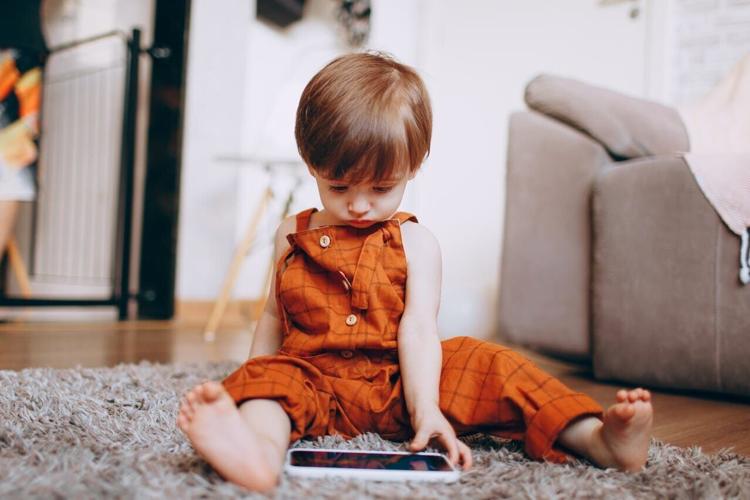
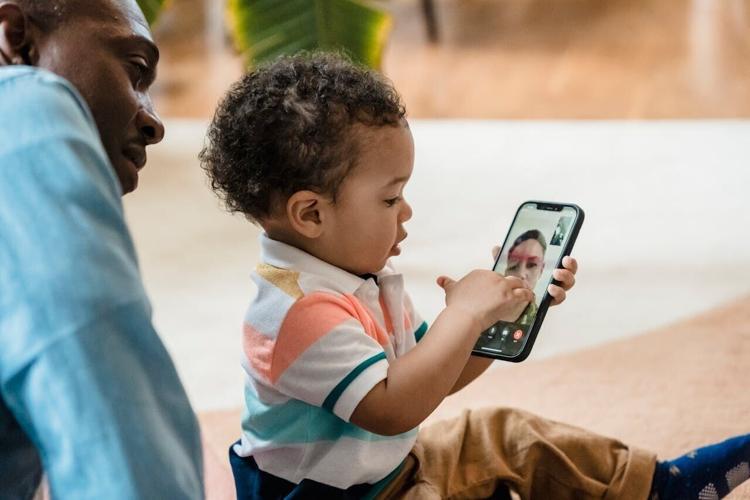
Toddlers who spend hours in front of a screen are more likely to suffer anxiety issues as teenagers, warns new research.
Long periods spent staring at a TV, computer or tablet before the age of two-years-old is linked to "enduring" brain changes and adolescent mental health problems, say scientists.
The study is the latest to raise concerns around parents using a "digital dummy" to calm their child's tantrums.
Mums and dads should spend more time reading to their toddlers to make up for time spent in front of a screen, suggest scientists.
Researchers in Singapore found that children exposed to high levels of screen time before the age of two showed changes in brain development that were linked to slower decision-making and increased anxiety by their teenage years.
The research team followed 168 children for more than a decade, conducting brain scans at the age of four, six and seven.
The scans allowed them to track how brain networks developed over time rather than relying on a single snapshot.

(Photo by Ivan S via Pexels)
The study, published in the journal eBioMedicine, is the first on screen time to incorporate measures spanning over 10 years, highlighting the long-lasting consequences of screen time in infancy.
Researchers focused on infancy, a period when brain development is most rapid and especially sensitive to environmental influences.
They say the amount and type of screen exposure in infancy are largely determined by parental and caregiver awareness and parenting practices, highlighting a crucial window for early guidance and intervention.
The findings revealed that children with higher infant screen time showed an "accelerated maturation" of brain networks responsible for visual processing and cognitive control.
The researchers suggest this may result from the intense sensory stimulation that screens provide.






Screen time measured at ages three and four did not show the same effects, which the team say underlines why infancy is a particularly sensitive period.

(Photo by Helena Lopes via Pexels)
Study first author Dr. Huang Pei said: "Accelerated maturation happens when certain brain networks develop too fast, often in response to adversity or other stimuli.
"During normal development, brain networks gradually become more specialized over time.
"However, in children with high screen exposure, the networks controlling vision and cognition specialized faster, before they had developed the efficient connections needed for complex thinking.
"This can limit flexibility and resilience, leaving the child less able to adapt later in life."
Dr. Pei explained that children with the altered brain networks took longer to make decisions during a cognitive task at age 8.5, suggesting reduced cognitive efficiency or flexibility.
Those with slower decision-making, in turn, reported higher anxiety symptoms at age 13.

(Photo by George Pak via Pexels)
The researchers say their findings suggest that screen exposure in infancy may have effects that extend "well beyond" early childhood, shaping brain development and behavior years later.
In a study published in the journal Psychological Medicine in 2024, the same team found that infant screen time is also associated with alterations in brain networks that govern emotional regulation - but that parent-child reading could counteract some of those brain changes.
Among children whose parents read to them frequently at age three, the link between infant screen time and altered brain development was "significantly" weakened.
The researchers suggest that shared reading may provide the kind of "enriched, interactive experience" that passive screen consumption lacks, including back-and-forth engagement, language exposure, and emotional connection.
Study senior author Dr. Tan Ai Peng, from National University of Singapore Yong Loo Lin School of Medicine, said: "This research gives us a biological explanation for why limiting screen time in the first two years is crucial."
She added: "It also highlights the importance of parental engagement, showing that parent-child activities, like reading together, can make a real difference."



(0) comments
Welcome to the discussion.
Log In
Keep it Clean. Please avoid obscene, vulgar, lewd, racist or sexually-oriented language.
PLEASE TURN OFF YOUR CAPS LOCK.
Don't Threaten. Threats of harming another person will not be tolerated.
Be Truthful. Don't knowingly lie about anyone or anything.
Be Nice. No racism, sexism or any sort of -ism that is degrading to another person.
Be Proactive. Use the 'Report' link on each comment to let us know of abusive posts.
Share with Us. We'd love to hear eyewitness accounts, the history behind an article.