


What type of asthma inhaler is right for you?
In the U.S., 25 million people are affected by asthma. That’s roughly 1 in 13 adults and children.
Asthma can be mild or severe. Some people with asthma have symptoms every day. Others have symptoms that only kick in when they experience triggers.
Since asthma is a lung issue, it’s often treated with medications that you breathe into your lungs. These medications are given using an inhaler.
This guide from GoodRx, a platform for medication savings, explains the different types of inhalers used for asthma, along with what they do and how to know which one(s) you need.
Key takeaways:
- Asthma inhalers work in different ways. Some prescription inhalers help to open up your airways, and others help to reduce inflammation.
- Certain types of asthma inhalers can be used during asthma attacks (rescue inhalers). Other types are used daily to keep your symptoms under control.
- The right inhaler for you depends on many factors, including how often you’re having symptoms and how severe your symptoms are.
What is asthma?
Asthma is a common lung condition that makes it hard to breathe. The symptoms of asthma are:
- Breathlessness
- Wheezing (noisy breathing)
- Chest tightness
- Cough
Asthma symptoms can be triggered by:
- Infections, such as pneumonia, sinusitis, or a viral cold
- Allergies, especially to airborne substances, like pollen or pet dander
- Cold or humid weather
- Exercise
Both children and adults can have asthma. Some people grow out of it, and others develop it as they get older. Asthma tends to run in families and is common in people who have allergies or eczema.
What is an inhaler?
Inhalers are devices that allow you to breathe medications into your lungs through your mouth. They don’t require electricity and are small enough to be carried in your pocket.
Inhalers make sense for treating asthma. They send medication directly into your airways, where it can fight asthma right where it happens.
There are several types of inhalers. They look different from each other and contain different technology. But what matters most is the medication inside.
The medication in some inhalers works quickly. These are useful for asthma attacks or flare-ups and are often called rescue, reliever, or quick-relief inhalers.
Other inhalers contain medication that works more slowly. These are taken every day, and their job is to keep asthma symptoms from starting. They’re often called prevention, maintenance, or daily inhalers.
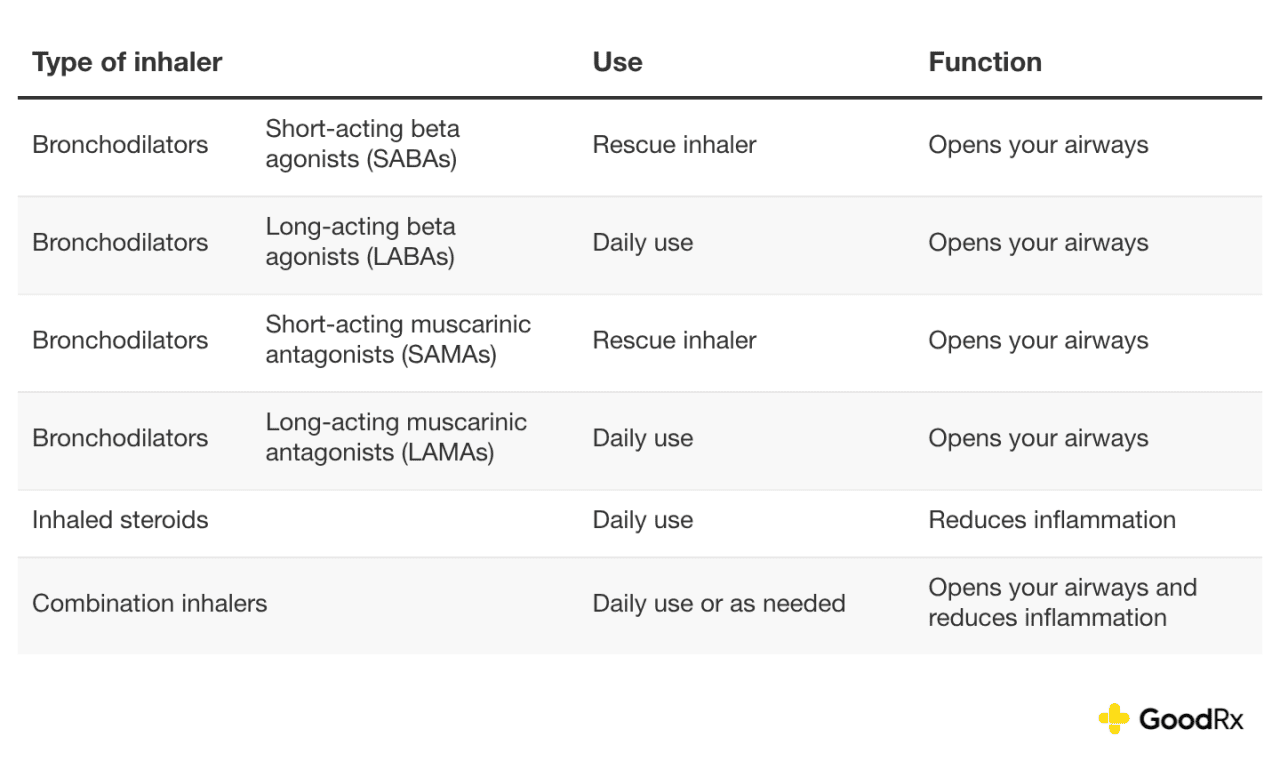
Here’s a closer look at each of these different types of inhalers.
Bronchodilators
If you’re having trouble breathing, it’s important to find a fix, fast.
Bronchodilators contain medications that open the air passages in your lungs. The most common of these medications — the short-acting beta agonists (SABAs) — start working in just a few minutes.
Short-acting beta agonists (SABAs)
SABAs are the most commonly prescribed inhaler for quick relief of asthma symptoms.
Examples include:
- Albuterol (ProAir, Ventolin, Proventil)
- Levalbuterol (Xopenex)
How they work
Asthma causes the airways in your lungs to squeeze and swell. SABAs work to relax the squeeze, making it easier for air to pass through.
Taking a SABA inhaler will open your small airways quickly. But it won’t fight the airway swelling that comes with asthma, and the effect won’t last for very long.
Who they’re good for
SABAs are used for immediate relief of asthma. Most people with asthma should have a SABA on hand for emergency use.
Ideally, a SABA should only be used occasionally. If you’re taking steps to prevent asthma symptoms — including taking your daily medications as instructed — you shouldn’t need to use your SABA inhaler very often.
Typical timing
The usual SABA dose is two puffs. The first puff opens the airways enough to let the second puff penetrate deep into the lungs.
SABAs are used as needed, and their effect lasts for four to six hours or so. If you need to take them more frequently than that, you’ll want to talk to a healthcare professional about other ways to control your asthma.
Precautions
If you need to take your SABA more than every four hours — either because your symptoms come back or because the inhaler isn’t working — call a healthcare professional immediately. Needing this inhaler more than every four hours can be a sign that you need emergency medical care.
SABAs can cause side effects, like shaking of the hands (tremors), noticeable heartbeats (palpitations), or feelings of excitement or stress.
Long-acting beta agonists (LABAs)
Similar to SABAs, LABAs open up airways by relaxing airway muscles. The difference? LABAs last longer, but they can also take a bit longer to start working.
One example of a LABA is salmeterol (Serevent Diskus).
How they work
Like SABAs, LABAs open the airways by relaxing the muscles around them. LABAs aren’t used alone. When combined with other medications, they can be helpful in preventing or reducing asthma symptoms.
Who they’re good for
LABAs hold airways open, which can help prevent symptoms in people who have asthma. But they don’t stop airway swelling or drainage caused by an asthma trigger. And they aren’t usually quick enough for emergency use. For this reason, LABAs are only taken together with other medications.
Typical timing
These medications are typically taken two times a day.
Precautions
LABAs aren’t great at preventing or treating asthma on their own, so they shouldn’t be your only asthma medication.
LABAs may cause shaking of the hands (tremors), noticeable heartbeats (palpitations), or feelings of excitement or stress.
Short-acting muscarinic antagonists (SAMAs)
In people who face moderate or severe asthma symptoms, SAMAs can add an extra boost to keep airways open.
Like SABAs, SAMAs are bronchodilators, but they work through anticholinergic (muscarinic) receptors in the lungs. SAMAs take longer to kick in than SABAs, and they carry added side effects. SAMAs are typically used for chronic obstructive pulmonary disease (COPD), but there may be certain situations where they’re prescribed for asthma.
Examples include:
Long-acting muscarinic antagonists (LAMAs)
Like their short-acting siblings, LAMAs are bronchodilators that can help people with severe asthma get a handle on their symptoms. They’re most often used together with other medications.
Examples include:
- Tiotropium (Spiriva Handihaler)
- Fluticasone/umeclidinium/vilanterol (Trelegy Ellipta)
Inhaled steroids
Asthma can cause your airways to squeeze and swell. Bronchodilators help loosen the squeeze, but steroids stop the swelling and inflammation from happening in the first place. Over time, steroids also treat asthma symptoms.
Inhaled steroids come in low, medium, or high dosages. The dose you take will depend on how severe your asthma is.
Examples include:
- Fluticasone propionate HFA (Flovent)
- Fluticasone furoate (Arnuity Ellipta)
- Budesonide (Pulmicort Flexhaler)
- Beclomethasone (Qvar RediHaler)
- Mometasone (Asmanex HFA, Asmanex Twisthaler)
How they work






Steroids are anti-inflammatories. The medication is similar to a natural hormone made by the body called cortisol. Cortisol has many functions, and stopping inflammation is one of them.
Who they’re good for
Steroids are helpful for people who often get asthma symptoms. If you use inhaled steroids regularly, they can block asthma symptoms before they happen. These can also be useful for treating asthma symptoms over time.
Typical timing
Steroids don’t work instantly. Although they can help ease symptoms, steroids take several hours to start working.
To prevent asthma symptoms, inhaled steroids need to be taken before you encounter a trigger. That means taking them every day, even when you feel well. Inhaled steroids are most often used twice a day: morning and night. Some have longer-lasting effects and are used once a day.
Precautions
Inhaled steroids have some side effects. If the medication settles inside your mouth, a fungal infection can develop. Using a spacer with your inhaler and rinsing your mouth after using it can help prevent this.
Steroids are also linked to growth suppression in children and to a slightly weaker immune response in everyone who takes them. Often, these side effects are small compared to the potential benefits of inhaled steroids for asthma. Talk to a healthcare professional if you have concerns about side effects.
Combination asthma inhalers
Combination inhalers contain two or more medications mixed together in the same inhaler. This makes it easier to take two medications that help symptoms of asthma and prevent symptoms long term.
The most common combination inhalers include a LABA and an inhaled steroid. Examples include:
- Fluticasone/salmeterol (Advair, AirDuo, Wixela Inhub)
- Fluticasone/vilanterol (Breo Ellipta)
- Budesonide/formoterol (Symbicort, Breyna)
- Mometasone/formoterol (Dulera)
- Albuterol/budesonide (Airsupra)
How they work
The combination of a steroid and a LABA in one inhaler helps to reduce inflammation in the lungs and relax the muscles in the airways. This combination can be very effective for preventing or controlling asthma.
Who they’re good for
Combination inhalers are good when asthma isn’t well controlled with a single medication, especially in people with more frequent or severe symptoms. They’re especially recommended for people who:
- Get asthma symptoms every day
- Wake up with asthma symptoms at night
- Take a daily medication to prevent asthma
Typical timing
Combination inhalers are taken one or two times a day, depending on the inhaler and your symptoms.
Which type of asthma inhaler is best for me?
Asthma treatment isn’t one-size-fits-all. The right type of inhaler for you depends on many factors, including how often you get asthma symptoms.
For example, if you only have mild asthma symptoms, an inhaled steroid — like fluticasone (generic Flovent) — might be all you need.
But if you get more than occasional symptoms, your healthcare team may recommend a combination of a SABA and a separate steroid inhaler to help keep your symptoms under control. Alternatively, an as-needed inhaler that contains both a bronchodilator and a steroid is a good option (see the section on SMART asthma therapy, below).
And, in some cases, you might need to take other medications, too.
Other medications used for asthma
For people who have moderate or severe asthma, other medications are sometimes needed. These aren’t usually used alone. Additional medications can be added when inhaled steroids and bronchodilators aren’t enough.
Examples include:
- Mast-cell stabilizers, such as cromolyn
- Leukotriene receptor antagonists (LTRAs), such as montelukast (Singulair) or zileuton (Zyflo)
- Oral steroid pills, such as prednisone
- Biologics, such as omalizumab (Xolair), mepolizumab (Nucala), or dupilumab (Dupixent)
What is SMART for asthma?
For years, many people with asthma needed to juggle multiple inhalers. Preventing asthma and treating asthma symptoms required two different medications. Current recommendations suggest that a certain combination of steroid/LABA inhaler — specifically one that uses formoterol as the LABA — could solve this problem for some people.
The plan, which is called single maintenance and reliever therapy (SMART), involves using the same inhaler for both prevention and treatment. It has some serious benefits:
- It reduces mix-ups. The same inhaler can be used for both daily asthma prevention and for in-the-moment treatment.
- It works better. The strong prevention offered by this medication combination results in fewer symptoms in the first place. And, when symptoms do break through, it works fast enough to treat symptoms in the moment. The added dose of steroid helps turn things around quickly.
Although SMART sounds like a win-win for people with asthma, some brand-name steroid/formoterol inhalers (like Symbicort and Dulera) are still very expensive. And they aren’t always fully covered by insurance.
But Symbicort is also available as a generic (budesonide/formoterol), which can be more affordable.
Using your inhalers correctly
Learning how to use your inhaler correctly is important. There are several types of inhaler devices, and they work in different ways.
Your primary care provider, asthma nurse, or pharmacist can help teach you how to use your inhaler. There are also great videos online on how to use different inhalers and spacer devices.
Inhaler technology
You could encounter several types of inhalers, including:
- Metered-dose inhalers (MDIs)
- Dry powder inhalers (DPIs)
- Soft mist inhalers (SMIs)
Although these inhalers look and work differently, the most important difference between them is the medication inside.
Metered-dose inhalers (MDIs)
MDIs contain medication in a liquid form. The liquid medication is propelled out of the inhaler as an aerosol, like a spray can. When using an MDI, you need to inhale deeply just as you push a button on the inhaler. The timing of this can be tricky for some people.
A spacer chamber is sometimes used with an MDI. A spacer is a mouthpiece that connects to your inhaler with a plastic tube. It helps the medication reach your lungs instead of sticking around inside of your mouth. Spacers only work with MDIs. And they make MDIs much easier to use.
Dry powder inhalers (DPIs)
DPIs contain a sealed dose of dry powder in a capsule or disk. The inhaler mechanism pierces the capsule so you can suck the powder into your lungs. DPIs are easier for some people to use. A deep breath in is all it takes to make them work. If you can’t inhale deeply, these inhalers may not be right for you.
Soft mist inhalers (SMIs)
Unlike other types of inhalers, SMIs release a cloud of medication that you can pull into your lungs just by breathing normally. This makes them easy to use and very effective at getting medication where it’s needed. This type of inhaler is relatively new, so it isn't widely available yet.
Nebulizers
A nebulizer is a machine that turns a liquid medication into a mist that you can breathe through a mask. Although nebulizers are easier to use for some people, it can take a long time for a nebulizer to deliver a single dose of medication. Plus, nebulizers are relatively large and often require electricity to work, so they’re much less practical for everyday use.
Nebulizers are often used in the hospital when someone is very breathless. They’re also helpful for babies and children who are too young or uncooperative to use inhalers.
Why are inhalers so expensive? Here’s how to save
Inhalers can be expensive, because many are brand-name products that combine medication with complex delivery devices. So how can you save money if you need one? Here are some of your options:
- Switch to a more affordable alternative. Different prescription plans cover different brands of medication. Plus, there are generic options available for some inhalers. Sometimes making a switch to a different brand or generic can offer huge savings. Speak to a healthcare professional to see if there are any less-costly alternatives available for you.
- Try a manufacturer copay card or patient assistance program. Many inhalers — especially expensive, brand-only ones — will have options to save through the drug manufacturer with a copay card or patient assistance program. Several manufacturers have capped the price of certain asthma inhalers at $35 for those who are eligible.
- Submit an appeal. If your inhaler isn’t covered by your insurance, submit an appeal. Just because a drug isn’t covered by your plan doesn’t mean that you’ll have to cover the full cost of your medication. Speak with your primary care provider or call your insurance company to start an appeal process. Persistence can pay off.
More ways to prevent or improve asthma symptoms
Asthma symptoms can be triggered by a person’s environment, allergies, or infections. Here are a few ways you can potentially prevent or improve asthma symptoms, in addition to taking medication:
- Stop smoking. Quitting smoking is the single best thing you can do for your asthma or your child’s asthma. Quitting smoking reduces the number of flare-ups, and helps asthma medications work better. It also lowers the risk of chest infections.
- Improve indoor air quality. Taking steps to improve your air quality at home can help control asthma. This includes cutting down on indoor allergens, like pet dander and dust mites, and making sure you have good ventilation.
- Treat your allergy symptoms. If you have allergies that cause a runny nose and sinusitis (rhinosinusitis), treating those symptoms with antihistamines or decongestants can improve asthma symptoms.
- Avoid irritants. Irritants can be found both indoors and outdoors and can make asthma symptoms worse. Irritants include substances like air pollution, wildfire smoke, and perfumes.
- Stay up-to-date with vaccinations. For people with asthma, a chest infection can be a big deal. Staying up to date with vaccines that protect against the seasonal flu and community-acquired pneumonia is an important part of staying healthy.
- Treat heartburn. Gastroesophageal reflux disease (GERD) can make asthma symptoms worse, particularly coughing. Treating acid reflux with antacid medications can also improve asthma symptoms.
- Consider your body weight. People with excess body fat tend to have more severe asthma and more frequent symptoms. Studies show that when people with excess weight lose weight, their asthma symptoms improve.
Frequently asked questions
Can albuterol cause vomiting?
Nausea and vomiting are possible, but they’re not a common side effect of albuterol. More common side effects include shaking, a fast heartbeat, and feeling jittery.
What is the strongest asthma inhaler?
There isn’t a single “strongest” inhaler. The right option depends on your symptoms and how severe your asthma is. People with more severe symptoms may need higher-dose inhaled steroids or combination inhalers.
The bottom line
Asthma makes it hard to breathe because your airways get swollen and narrow. And when you have asthma, an attack can leave you coughing, wheezing, and short of breath.
For many people with asthma, inhalers are a key part of treatment. There are two main types: quick-relief inhalers and daily inhalers that prevent and control symptoms. If you have asthma, talk to a healthcare professional about which type of asthma inhaler is right for you (and your pocket). They can help you understand your choices, as well as how to get the most out of your inhaler correctly.
This story was produced by GoodRx and reviewed and distributed by Stacker.
(0) comments
Welcome to the discussion.
Log In
Keep it Clean. Please avoid obscene, vulgar, lewd, racist or sexually-oriented language.
PLEASE TURN OFF YOUR CAPS LOCK.
Don't Threaten. Threats of harming another person will not be tolerated.
Be Truthful. Don't knowingly lie about anyone or anything.
Be Nice. No racism, sexism or any sort of -ism that is degrading to another person.
Be Proactive. Use the 'Report' link on each comment to let us know of abusive posts.
Share with Us. We'd love to hear eyewitness accounts, the history behind an article.