
Why leg fatigue and spider veins are getting more attention in everyday health
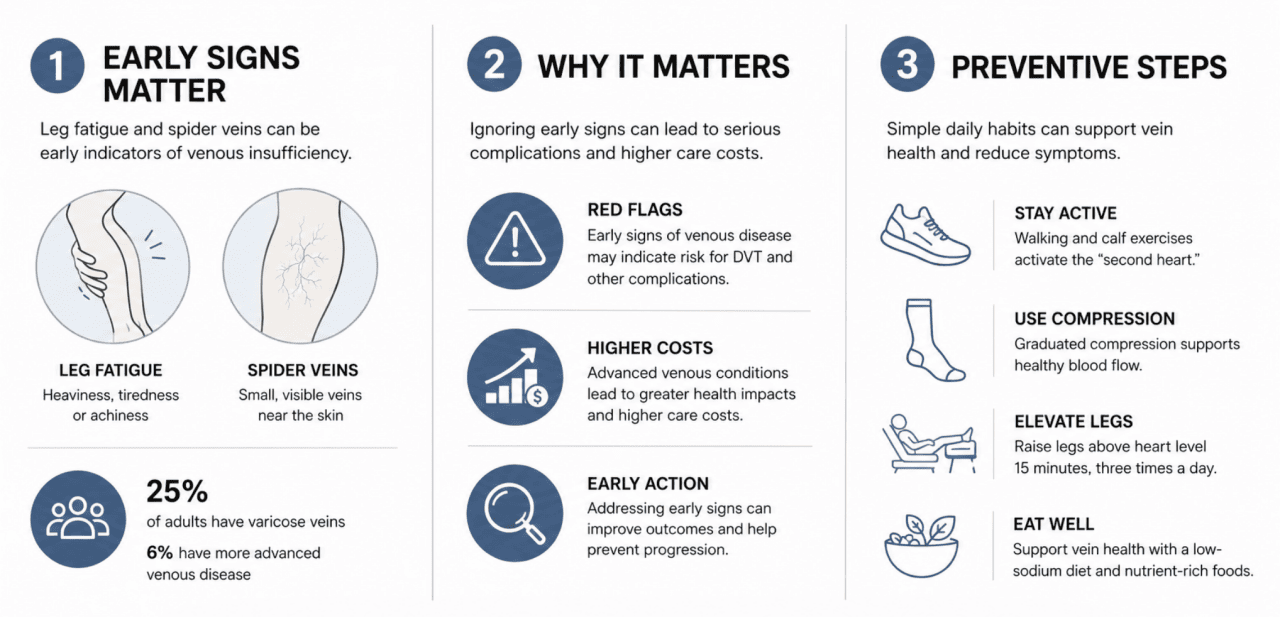
For the estimated 25% of adults managing varicose veins, persistent leg fatigue is rarely an isolated inconvenience—it is an early clinical marker of vascular decline.
Specifically, experts now understand that these two factors are early predictors of Chronic Venous Insufficiency (CVI), an affliction diagnosed in 150,000 people every year, with care costs of over half a billion, according to StatPearls data. In fact, the amount of information on the signs and symptoms of CVI can be treated as a key catalyst for growing public attention.
Red Flags and Long-Term Complications
In isolation, it’s understandable to feel that, as minor-sounding everyday health concerns, leg fatigue and spider veins can safely be ignored. After all, there are all sorts of issues that accumulate over the years, the majority of which don’t spell anything more serious than everyday aches and pains. Clinical research indicates that the prioritization of telangiectasias and leg fatigue correlates directly with their role as primary indicators for CVI and related systemic pathologies.
As outlined in the aforementioned research, spider veins, or telangiectasias to give them their proper name, are the first clinical sign of venous disease. Physicians will look out for them to identify the early stages of issues that, if left unchecked, could lead to more serious outcomes, including deep vein thrombosis (DVT).
According to MVM Health, a vein treatment center, people are increasingly tuned in to these red flags and are addressing them with preemptive treatment that’s about more than just the cosmetic side of spider veins. Ideally, this attention will reduce the proportion of the population that ends up with more advanced iterations of venous conditions.
The current data shows that 24% of people have varicose veins, while 6% have a more intensive form of CVI. While intervention is possible, experts agree that taking action at an earlier stage, when spider veins first emerge, is more likely to deliver the most desirable results.
There’s also the cost of care to account for. According to a 2023 clinical review published in the National Institutes of Health (NIH) by Stanek A, Mosti G, et al, in some regions roughly 3% of total healthcare expenditure is attributable to the treatment of advanced venous ulceration alone. Given the economic implications as well as the individual impacts, raising awareness of leg fatigue and spider veins has obvious multifaceted upsides.
Preventive Steps





Non-invasive surgeries that address the early signals of potential CVI are the best option for those already exhibiting telangiectasias. However, the true surge in awareness focuses on lifestyle modifications that can bolster vascular resilience before clinical intervention becomes necessary. Since the venous system relies on muscle contractions to pump blood back to the heart against gravity, prevention centers on movement and mechanical support.
The Second Heart Activation
Incorporating calf-strengthening exercises, such as heel raises or rhythmic walking, serves to activate the calf muscle pump. This physiological mechanism is often referred to by experts as the second heart because of its vital role in preventing blood from pooling in the lower extremities.
Graduated Compression Therapy
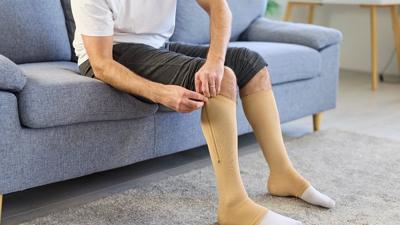
Once reserved for post-surgical recovery, graduated compression hosiery has moved into the mainstream wellness space. By applying the highest pressure at the ankle and decreasing it further up the leg, these garments mechanically assist blood flow, reducing the day-long leg fatigue experienced by those in sedentary or "standing" professions.
Positional Awareness
Clinical guidelines increasingly emphasize the rule of elevation. Raising the legs above the level of the heart for 15 minutes, three times a day, uses gravity to drain venous blood and reduce venous pressure, directly mitigating the development of new spider veins.
Nutritional Support
Emerging research into bioflavonoids, such as diosmin and hesperidin, suggests that certain micronutrients may improve venous tone and reduce capillary permeability. When paired with a low-sodium diet to prevent water retention and subsequent pressure on vein walls, nutrition acts as a foundational pillar of long-term leg health.
Playing the Long Game
Shifting the narrative from cosmetic annoyance to proactive vascular maintenance is how this increased attention ensures that leg fatigue and spider veins are treated as the vital health signals they truly are. Taking action today, whether through a brisk walk, a pair of compression socks, or a consultation with a specialist, can significantly alter the trajectory of one’s circulatory future.
This story was produced by MVM Health and reviewed and distributed by Stacker.

(0) comments
Welcome to the discussion.
Log In
Keep it Clean. Please avoid obscene, vulgar, lewd, racist or sexually-oriented language.
PLEASE TURN OFF YOUR CAPS LOCK.
Don't Threaten. Threats of harming another person will not be tolerated.
Be Truthful. Don't knowingly lie about anyone or anything.
Be Nice. No racism, sexism or any sort of -ism that is degrading to another person.
Be Proactive. Use the 'Report' link on each comment to let us know of abusive posts.
Share with Us. We'd love to hear eyewitness accounts, the history behind an article.