
MONTGOMERY, Ala. — One of the largest revenue streams for state government in recent years is likely to see a major decrease in the coming years, according to a presentation given to state lawmakers Tuesday during a budget hearing.
Growth in state’s General Fund, which supports non-education state agencies, is largely due to accrued interest earning on federal dollars from bills like the 2021 American Rescue Plan Act and the 2020 CARES Act.
While states are required to have spent that money by the end of 2026, the federal government allows for states to temporarily hold the funds in things like investment accounts, where they can accrue hundreds of millions of dollars in interest.
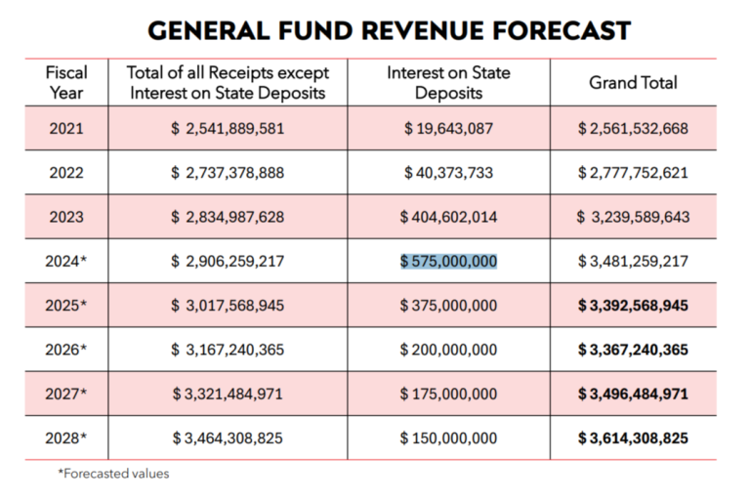
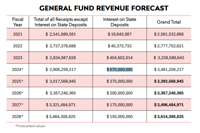
During fiscal year 2023, for example, the state of Alabama saw a record-high $3.2 billion in revenue toward its General Fund, nearly 12.5% of which – $404.6 million – was solely from interest on state deposits.
Kirk Fulford, Deputy Director at Legislative Services Agency, cautioned lawmakers on Tuesday that the end of federal subsidies and other market factors will likely shrink that revenue source in the coming years.
“The General Fund is doing great, the General Fund needs no revenue growth for the rest of the year to support what you’ve already obligated,” Fulford said.
“But, let’s figure out where we’re going.”

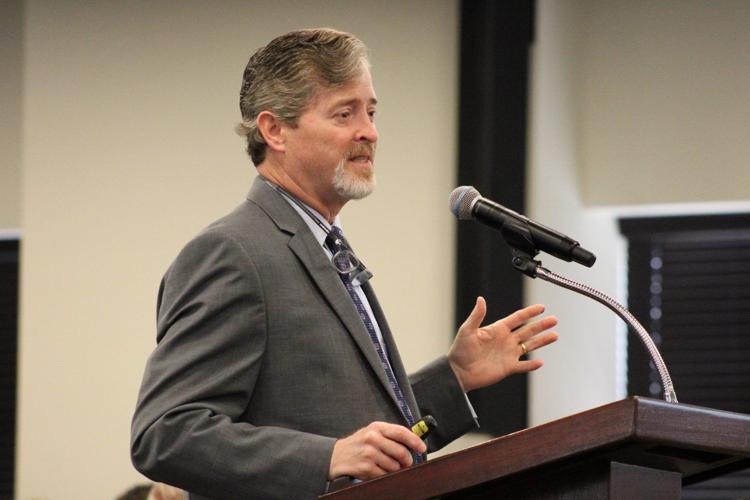
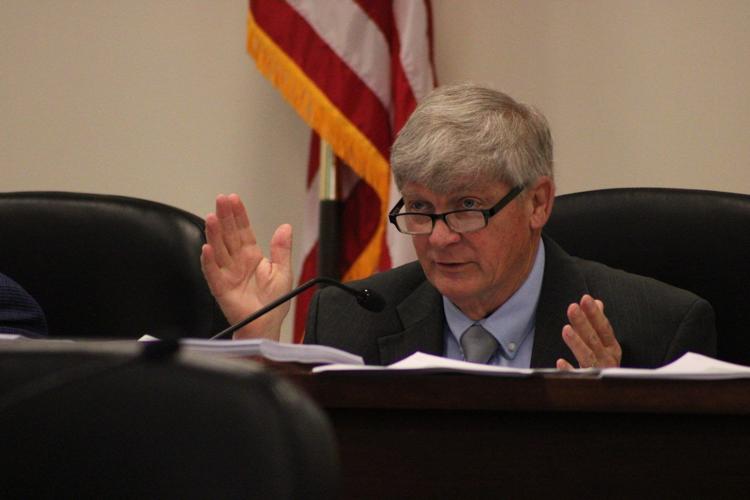
Kirk Fulford, deputy director at the Legislative Services Agency’s Fiscal Division, speaks at a July 16 budget hearing in Montgomery.
According to the presentation, interest from state deposits is projected to hit its peak this fiscal year at $575 million, then drop to $375 million in 2025, $200 million in 2026, $175 million in 2027, and $150 million in 2028.






Excluding interest on state deposits, receipts to the state’s General Fund are forecast to increase slightly into 2025 before taking a moderate dip.

Data from the Legislative Services Agency’s Fiscal Division shows a projected decline in state revenue from interest accrued from state deposits.
Fulford also warned that other economic factors outside of the State Legislature’s control such as a cut in interest rates, which are set by the Federal Reserve, could also severely impact the state’s revenue from interest on state deposits.
“If you go back to 2020, there were two rate cuts totaling 150 basis points; from that point to the end of the fiscal year, interest on state deposits dropped off almost 50%,” Fulford said. “If they go half a basis point, that’s a $200 million hit. I’m not trying to scare you, I’m not saying this is what will happen, I was just trying to show you possibly what could happen.”
Sen. Greg Albritton, R-Range, the chair of the Senate General Fund budget committee, noted that there was not much lawmakers could do to stop the decline in revenue from interest in state deposits.
“The amount that we have on deposit, which is mostly federal money – ARPA, CARES and other monies – that is to be spent, not appropriated, but to be spent by December of 2026,” Albritton said.
“That money is now in the process of being spent and coming out of the coffers, which is going to cause, between now and December of 2026, a huge decline in the amount of monies that we hold on deposit. So regardless of what the rate is, just the amount that’s available to earn interest on will be in significant decline.”

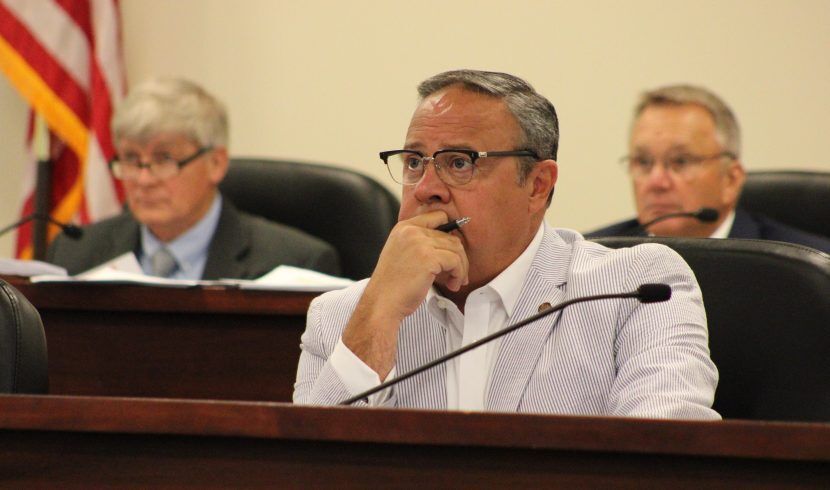
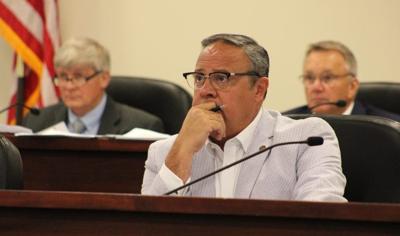
Sen. Greg Albritton speaks during a July 16 budget hearing in Montgomery.
(0) comments
Welcome to the discussion.
Log In
Keep it Clean. Please avoid obscene, vulgar, lewd, racist or sexually-oriented language.
PLEASE TURN OFF YOUR CAPS LOCK.
Don't Threaten. Threats of harming another person will not be tolerated.
Be Truthful. Don't knowingly lie about anyone or anything.
Be Nice. No racism, sexism or any sort of -ism that is degrading to another person.
Be Proactive. Use the 'Report' link on each comment to let us know of abusive posts.
Share with Us. We'd love to hear eyewitness accounts, the history behind an article.