Alabama officials Thursday asked the federal government to extend a two-year reprieve from changes to a food assistance program that could cost the state more than $174 million based on errors in the program.
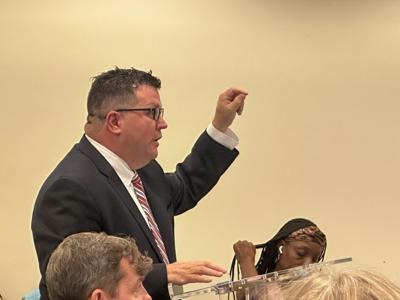
The One Big Beautiful Bill Act (OBBBA) introduced a penalty for states with a high error rate in the Supplemental Nutrition Assistance Program (SNAP). Alabama’s error rate for fiscal year 2025 was 9.52%, SNAP Director Brandon Hardin said at a quarterly meeting of the Alabama Department of Human Resources (DHR), which administers the program in the state.
“It’s not even close to a measure of fraud. It’s when a household circumstance changes, and they do not report that, it ends up becoming a potential error in that case,” Hardin said.
He said errors can be on the client, the agency, or can be under-issuances or overpayments of benefits.
A $174.3 million penalty
Alabama will have to pay about $174.3 million beginning Oct. 1, 2027, or about 10% of the state’s SNAP benefits, unless the FY26 error rate gets below 7.99%. Before the passage of the OBBBA, the benefits were fully funded by the federal government.
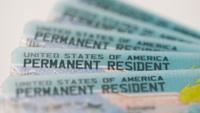
The changes to the program have pushed over 80,000 Alabamians off SNAP, according to an analysis released Wednesday by the Center for Budget and Policy Priorities, a left-leaning think tank. About 23,000 were children.
According to preliminary data for FY26, the state’s error rate is trending down, but the first three months of the fiscal year were difficult, Hardin said in an interview after the meeting. A shutdown of the federal government in November left SNAP-recipients without benefits.
The error rate in November was 12.86%, which is about $4,300 “error dollars.” The state issued $142 million in benefits that month. The error rate in February was 5.37%, about $1,800 error dollars. The state issued $135 million in benefits that month. Through the first five months of FY26, the error rate is 9.55%.
“Ultimately, we are seeing a downward trend. But statistically, you’ve got to have a lot more dollars involved in it,” he said. “All the states submitted a request in the first part of this fiscal year to exempt October and November samples because it was such a trying time during the shutdown, and that was denied at the federal level … Those months, you’ve got to understand that it was very chaotic for a client.”
If the FY26 error rate is between 6% and 7.99%, the state will have to pay 5% of its benefits in 2027. Based on FY25 issuance, that would be $87.1 million. In 2028, the state’s penalty is based solely on the FY26 error rate.
States with error rates below 6% or above 20% will not have to pay penalties. Penalties for states on the high end will have a two-year delayed implementation.
“All the other states should be treated fairly. They should all get the same treatment,” DHR Commissioner Nancy Buckner said.
‘What we’re going to have to live and die by’
Error rates, part of the program’s quality control system, are based on 1,020 cases over the fiscal year, Hardin said. Currently, there are approximately 650,000 individuals enrolled in SNAP, about 45% of whom are children.
Hardin said there are three options with the error rate: pay the penalty, get below 6% or end SNAP in Alabama.
“That baseline is 1,020 cases. They’re basing a $1.7 billion program that’s on the brink of what could happen to it based on 1,020 cases,” Hardin said. “We do 750,000 transactions a year, and that sample is what we’re going to have to live and die by.”
Buckner said that without a SNAP program, crime rates could go up, medical costs would increase and test scores would decrease.



“Food banks themselves say they cannot make it up, and I believe that it would be up to the people,” she said. “Food is a necessity for people. Whether they’ve got it, they’re going to get it one way or the other to feed their children.”
The board unanimously approved a motion, brought by Joe Morton, for Buckner to send a letter to the Alabama congressional delegation asking for a two-year delayed implementation of the error rate penalty.
“I think it would be well for this board to support that effort, so we would officially take a stand that we’re headed in the right direction in Alabama, but we just need more time,” Morton said.
Hardin said the department has implemented several “payment accuracy strategies” to improve the error rate since the passage of the OBBBA, but the results will not be visible until the FY26 error rate is finalized in 2027.
Congressional reaction
Messages seeking comment from the congressional delegation were left Thursday afternoon. U.S. Rep. Terri Sewell, D-Selma, said in a statement that the cuts to SNAP is one of the reasons she voted against the OBBBA.
“I am open to exploring any proposal that would reverse or mitigate the harm that this cruel bill is inflicting on our children, but let’s be clear – these cuts to SNAP should never have become law in the first place,” she said. “Hard working Alabama families should not have to struggle to put food on the table so that billionaires can get even richer.”
U.S. Rep. Shomari Figures, D-Mobile, said in a statement Thursday that he, like all Democratic representatives, voted against the bill because of the potential impacts to programs like SNAP and Medicaid.
“Republicans continued to tell us time and time again that no children would be cut off from SNAP. Now here we are, with over 80,000 Alabamians – including over 23,000 children – having access to food ripped away while billionaires got permanent tax breaks in the same law,” Figures said. “Now the Alabama DHR board is essentially saying that they need relief from the effects of the ‘One Big Beautiful Bill.’”
Hardin said that SNAP participation fluctuates with the economy, with peak enrollment in 2012 at about 912,000. Eligibility for the program was expanded during the COVID-19 pandemic, when there were about 770,000 Alabamians enrolled. The OBBBA tightened eligibility work requirements, which has contributed to some of the 80,000 Alabamians that lost benefits between the passage of the law in July 2025 and May.
Republican Sen. Tommy Tuberville, who is the party’s nominee for governor, said in a statement in June that DHR should use artificial intelligence (AI) to improve the error rate.
“Alabama’s SNAP error rate is too high, and we need to look into creative ways to get rid of fraud. I think AI could help us with that. I’m all for helping people who have fallen on hard times, but SNAP has become overrun with fraud,” he said.
Buckner said Thursday that although AI can identify an error, the department needs more bodies to fix the problems.
“When everybody’s out there, AI is going to solve the problem. AI is not going to solve this problem … Whatever AI finds is going to make a body go out and do it,” she said. “It is hard because we don’t have the additional money in our budget to hire the additional staff who are needed to go behind and do the second party reviews.”
Federal and state officials have pressured DHR to lower the error rate, but Buckner said it is not as easy as it sounds.
“I’m hoping there’s enough compassion in people’s hearts that are in control of whether we have to go forward with this or not,” she said. “That there’ll be some wiggle room to change it a little bit to make it more fair for states versus other states that got a two-year pass.”
Read more at alabamareflector.com.

(0) comments
Welcome to the discussion.
Log In
Keep it Clean. Please avoid obscene, vulgar, lewd, racist or sexually-oriented language.
PLEASE TURN OFF YOUR CAPS LOCK.
Don't Threaten. Threats of harming another person will not be tolerated.
Be Truthful. Don't knowingly lie about anyone or anything.
Be Nice. No racism, sexism or any sort of -ism that is degrading to another person.
Be Proactive. Use the 'Report' link on each comment to let us know of abusive posts.
Share with Us. We'd love to hear eyewitness accounts, the history behind an article.