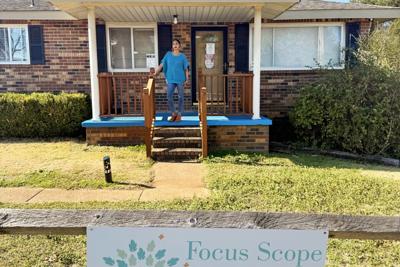
When Talia Shelby heard on the radio the federal government was freezing a program that helps pay for her 3-year-old daughter’s child care, she had to turn the volume down.
“I’m scared to even think about it,” Shelby said. “That’s another anxiety for me to have. It’s hard when you’re a single parent and you’re just trying to figure it out, and then the government fights with each other.”
In a Dec. 30 X post, the U.S. Department of Health and Human Services announced a freeze in funding that assists low-income families with child care costs and promised rules changes that could reduce payments to child-care providers in a Jan. 5 press release.
The catalyst for the announcements was an unverified, viral video by a right-wing influencer that purports to show day-care centers in Minnesota that are receiving federal funds but aren’t serving children.
Details about the federal government’s plans and how they will affect states across the nation remain uncertain. State agencies administer the federal child-care funds, and administrators in some states, including Alabama, say the federal government hasn’t notified them of any changes. A spokesperson for the Alabama Department of Human Resources said Friday the agency received a payment from the federal government on Jan. 21.
“Alabama DHR has not received any official guidance/correspondence from the Office of Child Care regarding this matter,” a Jan. 7 statement from Alabama DHR reads. “Also, we have not received any notification of funds being frozen.”
Mississippi Today and a Georgia House of Representatives member reported similar responses from administrators in those states.
But based on the sparse information the U.S. Health and Human Services Department has shared publicly, child-welfare advocates and policy analysts in Alabama said the consequences of threatened actions could be devastating for child-care businesses and the families they serve. Employers and the state’s economy also could suffer if parents drop out of the workforce, they said.
Shelby, who lives in Florence, Alabama, and has worked at an area hotel for nine years, said if her child-care subsidy payments were interrupted or the center her daughter attends closed due to changes in how providers are paid, she likely wouldn’t be able to keep her job. Shelby’s daughter has autism and is non-verbal. The daycare where she’s enrolled full time is the only one Shelby could find that participates in the subsidy program and employs teachers trained to work with children who have autism.
“That’s hard, taking away the ability for us to pay them,” she said.
Sa-Vaughnie Johnson, senior program director of early care and education services with the Family Guidance Center of Alabama, which helps families secure child care assistance, said potential funding changes would deal a significant blow to all child-care providers in Alabama that participate in the subsidy program – and a vast majority do. Those in rural and high-poverty areas are especially vulnerable, she said.
“I don’t know if they could sustain themselves if that happened,” Johnson said. “We know that centers that take subsidy really need that subsidy to survive. They have to pay their workers, they have to feed these kids.”
The Family Guidance Center is one of a handful of nonprofit child-care management agencies that partner with the Alabama Department of Human Resources to administer the federally funded subsidized child-care program. Qualifying families receive assistance on a sliding scale based on income, Johnson said. Parents have to be working or in school full time, and they pay a portion of child-care costs. Alabama DHR covers the rest by making subsidy payments directly to providers using federal funds.
The average annual cost in Alabama for a toddler in center-based care was $8,424 in 2024, according to Child Care Aware of America.
Attempts to freeze funds met with lawsuits
The X post by HHS Deputy Secretary Jim O’Neill states: “Starting today, all ACF payments across America will require a justification and a receipt or photo evidence before we send money to a state.”
“ACF” is the Administration for Children and Families, a division of HHS that oversees the Child Care and Development Fund, Temporary Assistance for Needy Families, and the Social Services Block Grant – all federal funding sources for states to assist families with children. The Child Care and Development Fund subsidizes child care for 1.4 million children nationwide and 40,226 in Alabama, according to the HHS website and Alabama DHR, respectively.
HHS announced Jan. 6 it had sent letters to the governors of five states led by Democrats – California, Colorado, Illinois, Minnesota and New York – notifying them that access to all three funding streams was restricted pending further review. The decision followed “serious concerns about widespread fraud and misuse of taxpayer dollars in state-administered programs,” according to a press release.
The federal government asked those states to provide data including the names and Social Security numbers of those who received benefits from some programs going back to 2022.
The five states filed a lawsuit challenging the freeze, and a federal judge ruled on Jan. 9 funding must continue for at least two weeks while arguments play out in court.
In a Jan. 13 statement to the Alabama Reflector, HHS said the department is asking for records of attendance, inspections, complaints and internal state discrepancies for centers suspected of fraud in Minnesota.
“For those centers NOT suspected of fraud in Minnesota or in other states, there is still additional verification, but not as extensive,” the statement reads. “Other child care centers will be expected to provide administrative data.”
The federal government typically distributes CCDF funds to states in quarterly installments, although the grants are awarded annually, according to the First Five Years Fund, a nonprofit that works to build federal-level bipartisan support for quality child care and early learning programs.
Any delay in payments would be a stressor for many child-care providers in Alabama, said Camille Bennett, an advocate and co-owner of two child-care centers.
“Most child-care centers depend on the child-care subsidies, if they’re taking in a lot of subsidies, to pay their staff,” she said. “And if it goes away, then they would have to rely on their savings – period. And if they don’t have savings, then they don’t have a center.”
More than 50 state and national organizations issued a joint statement Jan. 13 asking Congress members to ensure federal child-care resources continue to reach eligible families.
“We urge leaders to act with urgency to ensure that the Administration for Children and Families disburses CCDF funding without further disruption, while working in partnership with states as they deliver CCDF funding efficiently and responsibly,” said the statement, submitted during a hearing of the U.S. House of Representatives Education and Workforce Subcommittee on Early Childhood, Elementary and Secondary Education.
Attendance verification and fraud monitoring
DHR said in a statement that it implemented a child-care management system last February which, among other things, tracks attendance and includes several new safeguards to prevent fraud.
“We continue to explore other measures to ensure protocols are in place and followed,” the statement said.
The new system involves QR codes parents scan with their phones when they drop off and pick up their children, said Joycelyn Williams, director of the KinderCare center in Hoover, Alabama.
“We don’t have to do anything with it,” Williams said of the attendance data. “We just print out the code and it goes straight to DHR.”
Johnson said child-care providers receive a new QR code each day as an anti-fraud measure.
“That was just a cleaner, more efficient way of making sure that we are doing with the funds what we should be done with funds,” she said of the QR-code system.
The Family Guidance Center requires families to provide Social Security cards, birth certificates, drivers’ licenses and pay stubs through its application process, Johnson said.
Currently, if a child is absent 10 consecutive days, based on electronic attendance records, they are automatically unenrolled from the subsidy program and parents have to reenroll them to restore payments, according to Alabama DHR.
Carol Gundlach, senior policy analyst with Alabama Arise, said fraud is extremely rare in Alabama’s child-care subsidy program. She said she’s worked with DHR for 30 years in various capacities, including as an advocate, a contractor and through her tenure on the state’s child-care advisory council.
“We certainly know what children are getting funded under the child care block grant because there are contractors with DHR whose job it is to certify families and children as eligible to receive a subsidy,” she said. “So the idea that there are providers out there who just are not submitting plans or documentation or keeping records is simply incorrect.”


By law, state oversight mechanisms include internal controls, state audits and inspector general reviews, fraud detection and investigations and provider monitoring, according to the First Five Years Fund.
States essentially apply for CCDF funds through state plans they submit to the federal government, according to the statement Alabama DHR provided. Those plans include sections in which states must disclose any fraud they’ve uncovered and describe measures they take to prevent fraudulent activity.
According to Alabama’s 299-page 2025-2027 state plan, the most recent analysis found no improper payments that were a direct result of fraud in 2022. Twenty-two parents and two child-care providers were disqualified from the program for intentional program violations during 2023, per the state plan.
Proposed changes to provider pay could cause closures

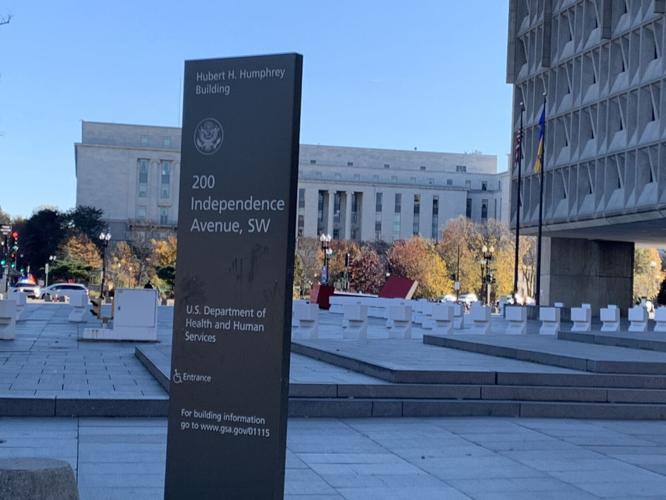
The Hubert H. Humphrey Building, the headquarters of the U.S. Department of Health and Human Services in Washington, D.C., as seen on Nov. 23, 2023. (Jane Norman/States Newsroom)
In the midst of controversy over funding freezes, HHS announced Jan. 5 it was starting a rule-making process to change how providers are paid.
HHS said it was rescinding Biden-era rules that require states to pay child-care providers in advance and based on enrollment rather than attendance and that favored contract slots with providers over parent-directed vouchers.
“When controls are not in place, bad actors can bill for children who aren’t there,” said Alex Adams, HHS assistant secretary for family support. “Families and taxpayers deserve proof that services are being delivered to children. These rule changes emphasize the critical role federal investments in child care play for the American workforce.”
But child-care advocates say a switch to attendance-based billing could push parents out of the workforce and cause child-care centers to close.
In Alabama, child-care subsidies are paid to providers based on enrollment, not attendance, according to the 2025-2027 state plan.
“I’m pretty sure that we have always paid on enrollment, because paying on attendance – it just doesn’t make a lot of sense because the centers’ income would fluctuate drastically,” Gundlach said. “I don’t know how you can operate that way.”
Billing based on enrollment is vital to child-care providers’ financial stability because most of their costs don’t change when children are sporadically absent due to sickness, doctor appointments, family vacations and more, she said. Fixed costs include worker wages, rent or mortgage payments, utility, insurance and tax bills, building maintenance, food expenses and more. Providers typically charge all families, including those who don’t use the subsidy program, based on enrollment vs. attendance to cover these costs, Gundlach said.
“It would be a nightmare if a child doesn’t attend for one day or two days and we’re not getting paid for that,” said Bennett, whose centers receive subsidies for 49 of the 50 children they serve. “That’s ridiculous, because you have to think about it: We’re working with primarily children birth through five. Do you understand how much they get sick? It’s not a viable solution.”
Johnson gives an example of a center with more than five infants enrolled. By law, two teachers would have to be assigned to the infant room in a licensed center. If just three children were present on a given day, only one teacher would be required.
“So now I’ve got to make the decision whether I’m going to send this person home for the day,” Johnson said. “I don’t know how I’m going to pay her because I’m only getting paid for three kids.”
And if absences don’t affect the required teacher-child ratio, sending an employee home isn’t even an option.
If providers were paid subsidies based on actual attendance, the burden to make up the difference in monthly costs initially would fall to parents, said Anita Williams, the Family Guidance Center’s CMA director for Montgomery and Dothan regions.
“And the parent can’t afford to pay the difference,” she said. “That’s why they’re on subsidy.”
Those parents might have to remove their children from care, said Joycelyn Williams of Hoover KinderCare, which receives subsidies for 30% of children in its program. “It would mean a lot of hardship and stress,” she said. “It will cause a lot of problems.”
Alabama already faces a shortage of child-care providers. According to the Buffett Early Childhood Institute at the University of Nebraska, there’s a 41% gap in child-care supply vs. potential need in Alabama.
“That’s going to be trouble on the economy also because a lot of our parents depend on subsidy to go to work or go to school,” Anita Williams said.
The long-term economic impact of Alabama’s current child-care supply gap is between $3.9 billion and $5.9 billion per year, according to the Buffett Early Childhood Institute.
Ultimately, children would suffer if providers closed or their parents couldn’t afford care, Bennett said. Many parents can’t quit work, so their children would likely stay with relatives or neighbors – whoever was available on a given day – with no consistency or educational curriculum, which is required for licensed child-care providers, she said.
“I think it would look like a crisis for children,” Bennett said. “I think it would look like children not receiving educational preparation for pre-K and kindergarten. I think you’ll see behavioral issues as well. A lack of consistency for children, particularly birth through five, is never a good thing.”
Other changes not likely to affect Alabama
Paying child care providers in advance also helps with business stability, Gundlach said, and that was the reasoning the Biden administration gave for the 2024 rule change. Alabama, however, did not implement the upfront payment model, DHR said in its statement. The agency said in its 2025-2027 state plan that it had requested a waiver to give the state more time to implement the policy change.
The state currently pays providers on a three-week delay, Anita Williams said. DHR also did not implement a model to steer clients toward contract providers, the agency’s statement said.
“It remains up to the parents as to which provider they choose for their child(ren),” the statement reads.
Families using the subsidy program are somewhat limited in that they have to choose a provider that participates in the voluntary program. According to DHR, 1,675 of 1,915 licensed centers and licensed home daycares in Alabama participated in the subsidy program as of Dec. 31. Most families who sign up for subsidies have options to choose among, but their selected provider might have a waitlist, Anita Williams said. Because of a severe shortage in rural areas, some families don’t currently have a choice, she said.
What’s next
Once the proposed rules changes are published in the Federal Register, a 30-day public comment period will ensue.After HHS reviews comments, it could publish a final rule, with an effective date 30 days after publication.
Some language in HHS’s press release says states “may” require payment based on verified attendance and “may” provide payment after care is delivered. It’s possible current law doesn’t allow HHS to make the proposed changes mandatory, Gundlach said, which would leave states to decide what route to take.
Wording in the formally proposed rules should provide clarity, she said.
Alabama DHR said it would make changes as necessary to follow federal law. Alabama’s subsidy program operates pursuant to its state plan, which is written to follow federal requirements in place at the time it’s submitted, DHR said.
“If the rescissions are finalized, the state plan will be amended in compliance with the new rules,” the agency’s statement continued.
Shelby said she wishes government officials making those decisions could see things from the perspective of those who will be affected.
“They’re basing everything on money, but not considering the kids’ lives, not considering the help that this actually gives the parents to get up and go to work,” she said. “Everybody always talks about parents sitting at home. We are the working class, just needing the help. It’s our children that affect us most.”
(0) comments
Welcome to the discussion.
Log In
Keep it Clean. Please avoid obscene, vulgar, lewd, racist or sexually-oriented language.
PLEASE TURN OFF YOUR CAPS LOCK.
Don't Threaten. Threats of harming another person will not be tolerated.
Be Truthful. Don't knowingly lie about anyone or anything.
Be Nice. No racism, sexism or any sort of -ism that is degrading to another person.
Be Proactive. Use the 'Report' link on each comment to let us know of abusive posts.
Share with Us. We'd love to hear eyewitness accounts, the history behind an article.