


(SWNS)
By Lauren Wilkin
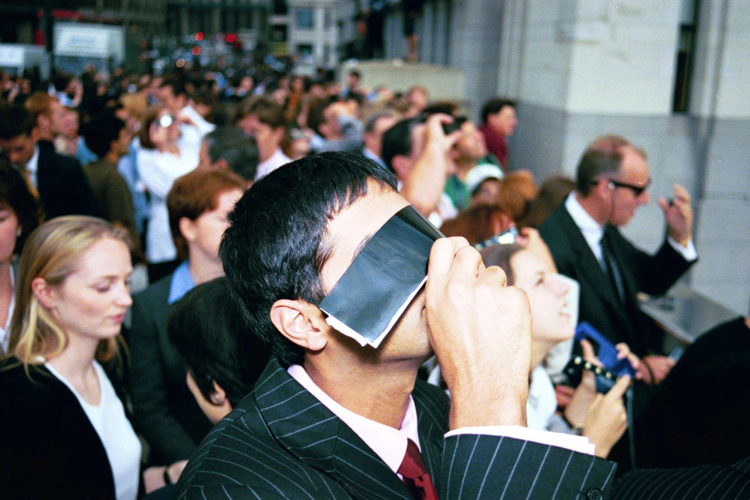
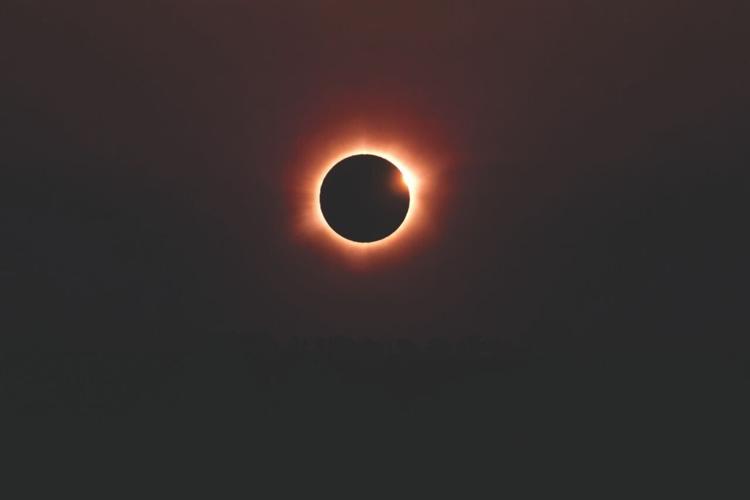
A significant solar eclipse is set to darken the sun tomorrow - and an astrophysicist has revealed the easiest and most effective ways to watch it.
"As the eclipse is not total in the UK, there is no point during the eclipse when it will be safe to look directly at the Sun with unprotected eyes," Mark Gallaway, an astrophysicist, warned.
"If you want to look directly at the eclipse, you will need proper eclipse glasses designed specifically for solar viewing."
"Ordinary sunglasses, no matter how dark, are not safe," added the fellow of the Royal Astronomical Society.
But if it's too late to purchase eclipse glasses, there's no need to panic.
"There are a number of ways you can make a cheap and safe solar projector," he explains.

Zoshua Colah
1) A cardboard box projector
"The first uses a cardboard box... even a cereal box will work," Mark says.
"At one end, make a small hole and cover it with a piece of aluminum foil.
"Use a pin to make a tiny hole in the foil — the smaller and cleaner the hole, the better.
"At the opposite end of the box, place a piece of white paper or card to act as a screen.
"Make another opening in the box so that you can look at the screen without looking towards the Sun.
"You have made a solar projector!"
To use it, he explains: "With the Sun behind you, point the end containing the pinhole towards the Sun. You should see a small image of the Sun projected onto the white paper inside the box.
"As the eclipse progresses, you will see the Moon gradually taking a bite out of the Sun."

Photo by Anna Tarazevich via Pexels
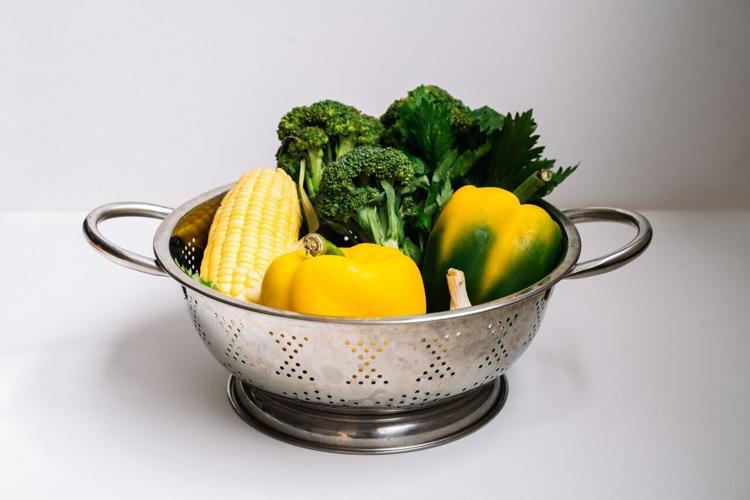
2) The cookie method





"An even simpler method is to use something with lots of small holes in it and a sheet of white paper.
"A kitchen colander works very well. I've also found that Ritz biscuits are surprisingly effective!" says the expert, who also lectures for the Royal Observatory Greenwich.
"Hold the colander or biscuit in the sunlight so that its shadow falls onto the white paper.
"Each little hole acts as a pinhole projector, producing its own tiny image of the eclipsed Sun."

Photo by Laker via Pexels
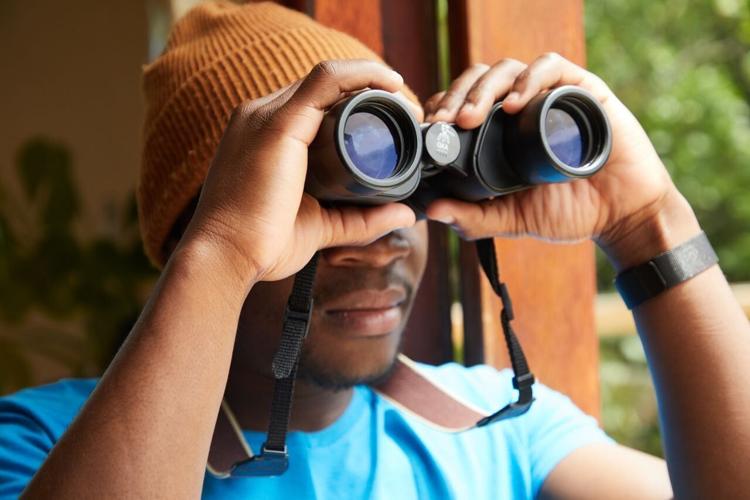
3) Binoculars and paper method
"There is one final method, using a small telescope or pair of binoculars to project an image of the Sun," the expert explains. "This can produce a much larger and clearer image, but it needs considerably more care."
But Mark warns: "You must NEVER look through an ordinary telescope or pair of binoculars at the Sun. Doing so can cause severe and permanent eye damage."
"If you are using binoculars, completely cover one of the objective lenses so that only one side is being used. If you are using a telescope, remove or completely cover the finder scope.
"Instead, point the telescope or binoculars towards the Sun using their shadow.
"When the shadow is at its smallest, the instrument should be pointing towards the Sun.
"Without ever looking through the eyepiece, hold a piece of white card or paper roughly 30 cm behind it. Adjust the focus until you obtain a sharp projected image of the Sun."
He does say that this level of concentrated sunlight can heat and damage some eyepieces, particularly those containing plastic components, so this method should only be used with care and under adult supervision.
"Never leave the instrument unattended where somebody might look through it."

Photo by Gleive Marcio Rodrigues de Souza via Pexels
Essentials to know ahead of the eclipse
From the UK, you will see the Moon slowly cover the Sun until it is 89-96% covered, depending on where you are in the country. But Mark says it is unlikely to get that dark.
"The eclipse is quite late in the day, with the maximum occurring between 7:05 p.m. and 7:16 p.m. BST," he explains.
The further south and southwest you are, the more coverage of the Sun you will see, but it will never be totally covered from the UK.
"Almost anywhere will see it as long as you have a clear view of the western horizon," Mark explains.
"Whatever method you use, remember the most important rule: unless you are using proper eclipse glasses or a correctly fitted solar filter, never look directly at the Sun," he says.
Mark's final piece of advice? "Enjoy the eclipse, and be safe!"

(0) comments
Welcome to the discussion.
Log In
Keep it Clean. Please avoid obscene, vulgar, lewd, racist or sexually-oriented language.
PLEASE TURN OFF YOUR CAPS LOCK.
Don't Threaten. Threats of harming another person will not be tolerated.
Be Truthful. Don't knowingly lie about anyone or anything.
Be Nice. No racism, sexism or any sort of -ism that is degrading to another person.
Be Proactive. Use the 'Report' link on each comment to let us know of abusive posts.
Share with Us. We'd love to hear eyewitness accounts, the history behind an article.