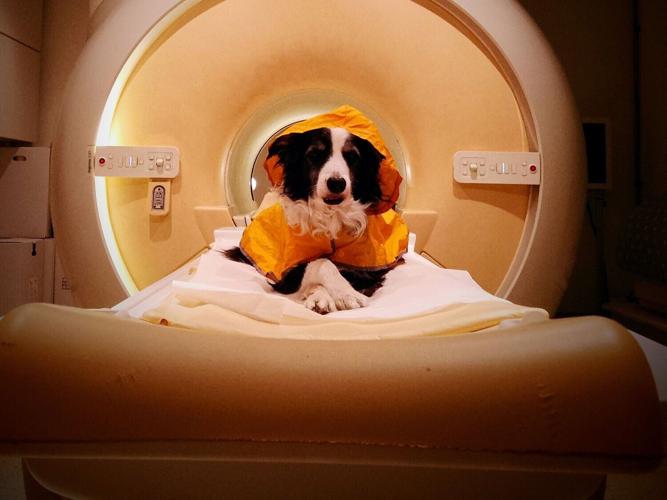
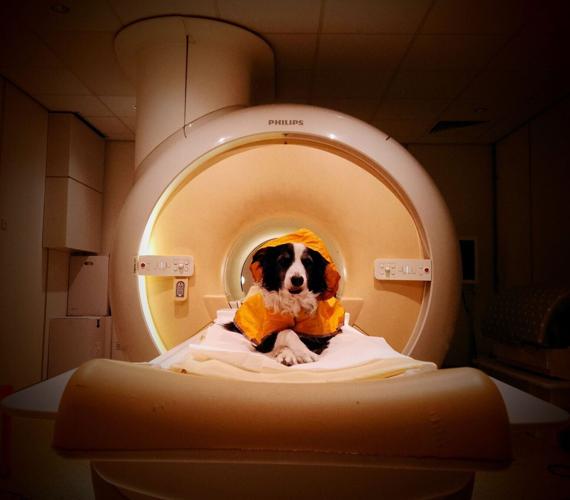




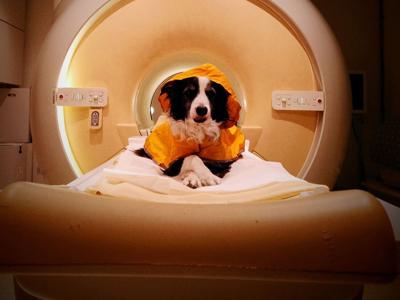

Trained pet dogs remained awake during fMRI scans as researchers measured their brain activity while they viewed images of human faces expressing happiness, anger, fear, and sadness. (Laura V. Cuaya via SWNS)
By Stephen Beech
Dogs really can distinguish between human fear and sadness, reveals new research.
Dog lovers have long known that their four-legged friends are remarkably good at interpreting the laughs, frowns and tears of people around them.
But the biology behind that ability has remained largely unexplored until now.
Researchers peered inside the brains of dogs as they viewed images of various human expressions for the new study.
Scans revealed that dogs process smiles in a "unique" brain region.
The study also provided evidence, for the first time, that dogs can distinguish between negative facial expressions — including anger, sadness and fear.

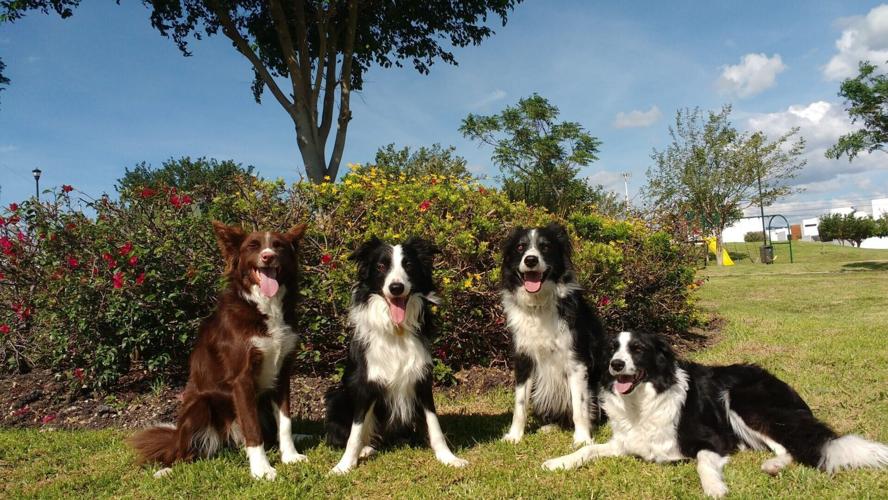
Four of the canine participants who took part in the study: Morante, Kunkun, Odin, and Molly (from left to right). Researchers scanned their brains to explore how dogs process human emotional expressions. (Laura V. Cuaya via SWNS)
Study first author Raúl Hernández Pérez, from the University of Vienna in Austria, said: "Humans are really good at picking up small details on the face, and so are dogs.
"This makes dogs very interesting.
"By studying their brains, we can understand what adaptations have developed to support their remarkable social and emotional understanding of humans."
The research team first focused on happiness — an expression that previous studies suggest holds particular significance for dogs.
They scanned eight dogs while showing them images of strangers with either happy or neutral expressions.
The happy faces lit up the temporal cortex and caudate nucleus in the dogs' brains — regions associated with higher cognitive and reward processing, respectively.
Study senior author Laura Cuaya, also of the University of Vienna, said: "The activity in the caudate nucleus is particularly interesting.
"It suggests that happy human faces may have emotional significance for dogs."

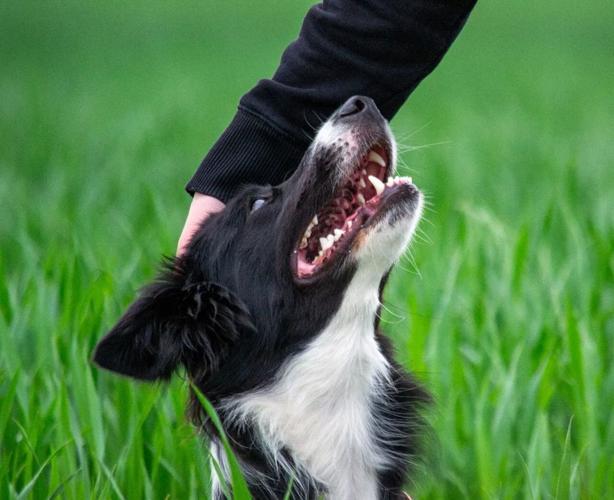
(Photo by Zander_world14 via Pexels)






The research team then looked at whether the same brain regions respond to other emotions.
They showed images of people displaying happiness, anger, fear and sadness to 12 dogs and analyzed their brain activity using machine learning.
The findings, published in the journal iScience, showed that the dogs did not react in the same way to the negative emotions.
The temporal cortex-caudate nucleus network responded uniquely to happiness, allowing researchers to easily distinguish brain reactions to smiles from all three negative expressions.
But the team found that the canine brain was not merely sorting the world into good and bad.
A whole-brain analysis revealed "distinct" patterns of activity that separated fear from anger and sadness, providing the first evidence that dogs can distinguish between specific negative facial expressions.

(Photo by Elina Volkova via Pexels)
The researchers say that the ability does not mean that dogs experience emotions exactly as humans do.
They explained that, just as a still photograph of a human face doesn't tell the whole story, in real life dogs watch human body language, listen to nuances in our voices and detect information from our scent.
Cuaya said: "When we compare humans with primates, we are looking at abilities that may have come from a common ancestor.
"With dogs, the story is totally different.
"They followed a very different evolutionary path, yet through domestication, they developed the social abilities needed to understand and cooperate with us."
The researchers said that the canine study participants were all pets from loving families and free-ranging dogs, such as those that live on the street, navigate a different social world so may process human cues differently.
The team is planning to adopt a more "dog-centric" perspective to understand how dogs integrate the brain signals to make sense of humans around them.
They also intend to compare how human and dog brains process the same emotional signals.
Cuaya added: "I would like people to see dogs as emotional beings.
"They have evolved with us to understand our expressions and cooperate with us, and recognizing that can change how we communicate with and care for them."

(0) comments
Welcome to the discussion.
Log In
Keep it Clean. Please avoid obscene, vulgar, lewd, racist or sexually-oriented language.
PLEASE TURN OFF YOUR CAPS LOCK.
Don't Threaten. Threats of harming another person will not be tolerated.
Be Truthful. Don't knowingly lie about anyone or anything.
Be Nice. No racism, sexism or any sort of -ism that is degrading to another person.
Be Proactive. Use the 'Report' link on each comment to let us know of abusive posts.
Share with Us. We'd love to hear eyewitness accounts, the history behind an article.