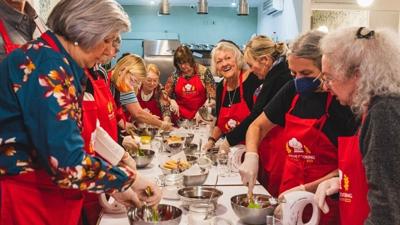


Photo Credit: Road Scholar
Italian cuisine, long celebrated for its global influence and regional roots, has become the first national cuisine to receive UNESCO recognition, a milestone for food culture worldwide.
The United Nations cultural agency announced the decision during a meeting in New Delhi, adding Italian cuisine to its Representative List of the Intangible Cultural Heritage of Humanity.
Unlike previous designations that focused on individual dishes or food practices, the recognition honors Italy’s cuisine as a whole, from daily home cooking to communal food rituals passed down through generations.
Why Italy’s Cuisine Stands Apart
No national cuisine has previously received this level of recognition from UNESCO.
While individual food traditions such as the Mediterranean diet and the art of Neapolitan pizza-making have already earned cultural heritage status, this is the first time an entire national cuisine has been recognized.
UNESCO described Italian cooking as a “living cultural heritage,” emphasizing how culinary knowledge is shared informally through families, communities and local traditions.
The agency said food plays a key role in bringing people together, shaping cultural identity and passing traditions between generations.
Italian cuisine was also described as grounded in sustainability, biodiversity and seasonal ingredients, which UNESCO said reflect broader cultural and environmental goals.
Celebrating Food as a Cultural Practice
UNESCO officials stressed that the recognition goes far beyond iconic dishes such as pasta, pizza or risotto.
Instead, it celebrates the social rituals that surround Italian food, including shared meals, local markets, traditional preparation methods and the act of cooking itself.
Italian cuisine is recognized for the everyday practices that bring people of different ages and backgrounds together, from family meals to regional food festivals. UNESCO said those traditions promote moderation, limit food waste and support local agriculture.
Italian officials have long argued that the country’s food culture deserves protection not only for its economic importance, but also for its role in shaping identity and daily life across regions that differ widely in climate, geography and tradition.
Reaction From Italy’s Leaders





Italian leaders quickly welcomed the announcement as a source of national pride. Prime Minister Giorgia Meloni called the recognition a tribute to Italy’s cultural heritage and the generations who have preserved food traditions through everyday life.
Foreign Minister Antonio Tajani described Italian cuisine as “a global ambassador of our identity,” saying the UNESCO status would help safeguard authentic food traditions while countering imitation products abroad.
Chefs, farmers and food producers also praised the decision, viewing it as validation of Italy’s vast regional diversity, from Alpine mountain cooking to coastal seafood traditions and centuries-old rural practices.
Food-Driven Travel in Italy
The UNESCO designation is already resonating among travelers seeking cultural experiences tied to food and local tradition.
Road Scholar, an educational travel organization known for immersive learning programs, said interest in Italian food-focused travel continues to grow.
The organization currently offers four food-and-wine itineraries in Italy, including hands-on cooking programs in Sicily and Tuscany, which are among its most popular and highest-rated experiences.
The success of those programs has led Road Scholar to expand its offerings, with plans to launch a new cooking program in the southern region of Puglia, with first departures scheduled for 2027.
“At Road Scholar, we have always believed that food is an important immersive way to experience the local culture,” said Sarah Rita, program manager for Road Scholar’s Italy programs. “Food is a universal language that can bridge cultures and bring people together to learn from each other in a hands-on way. UNESCO’s acknowledgement of Italian cuisine validates that.”
Road Scholar’s food and wine programs are running 41% ahead of plan for 2026, with Italy cooking programs up 10%.
Traveler interest reflects the appeal of blending history, culture and cuisine. “Cooking in Tuscany is a gem of an experience, combining hands-on cooking classes with valuable field trips on the sourcing of the very ingredients we used,” said John, a Road Scholar participant from Columbus, Ohio. “This trip was a powerful combination of history and culture that blended well with the cooking.”
A Milestone for Global Food Culture
With the new inscription, Italian cuisine joins a growing list of cultural practices UNESCO considers essential to humanity’s shared heritage.
The decision signals a broader understanding of food not just as nourishment, but as a cultural language shaped by history, place and community.
For Italy, the recognition affirms something many Italians have long believed: that food is not only what appears on the plate, but how people gather, share and pass traditions from one generation to the next.



(0) comments
Welcome to the discussion.
Log In
Keep it Clean. Please avoid obscene, vulgar, lewd, racist or sexually-oriented language.
PLEASE TURN OFF YOUR CAPS LOCK.
Don't Threaten. Threats of harming another person will not be tolerated.
Be Truthful. Don't knowingly lie about anyone or anything.
Be Nice. No racism, sexism or any sort of -ism that is degrading to another person.
Be Proactive. Use the 'Report' link on each comment to let us know of abusive posts.
Share with Us. We'd love to hear eyewitness accounts, the history behind an article.