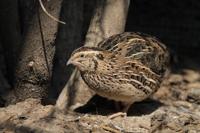
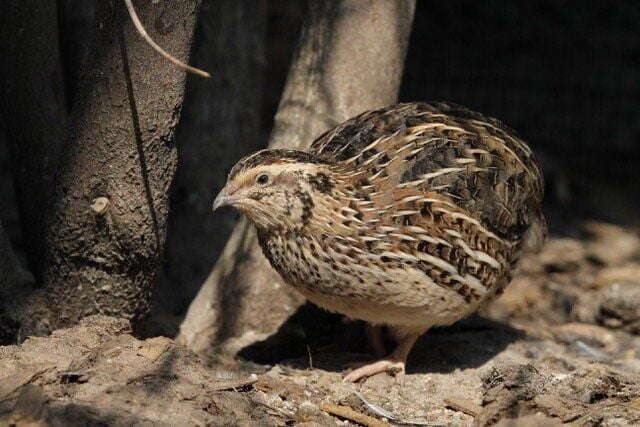
Researchers bred Japanese quails into two groups for the study, those that laid larger and smaller eggs. (Dennis Hansen via SWNS)
By Stephen Beech
Birds that put more energy into parenthood age faster — and die younger, reveals new research.
The findings support a fundamental evolutionary theory that high "investment" in offspring unavoidably leads to faster aging and a shorter life, say scientists.
Researchers from the University of Exeter selectively bred Japanese quails into two groups for the study, laying either relatively large or small eggs.
The team explained that, as the quails don't do much "parenting" after eggs hatch, mothers' main contribution is the resources they transfer to their eggs, with chicks from larger eggs more likely to survive.
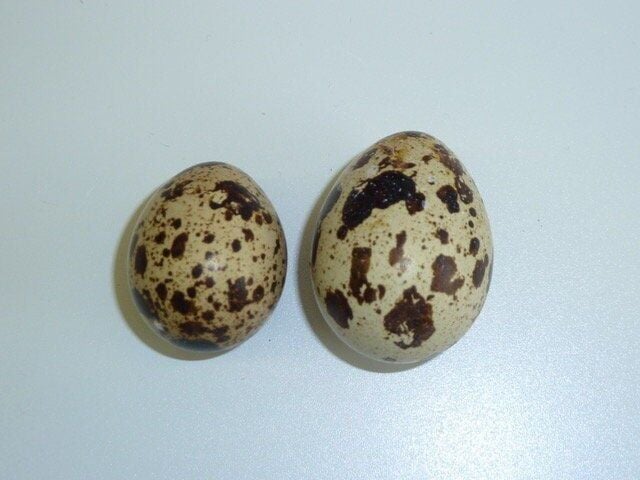
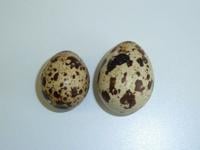
Japanese quail eggs. (Dr. Barbara Tschirren via SWNS)
After five to six generations of selective breeding, females bred to lay larger eggs aged faster and died about 20% younger than females bred for small eggs.
Study lead author Barbara Tschirren, from the Centre for Ecology and Conservation at Exeter's Penryn Campus in Cornwall, said: "All living things have limited energy and resources, and face trade-offs between competing priorities.






"Evolutionary theory suggests there's an intrinsic link between aging and reproductive effort — but this is quite difficult to test.
"Our study does just that; it shows there is substantial genetic variation in reproductive effort and aging, that this genetic variation is linked, and that it can evolve quickly."
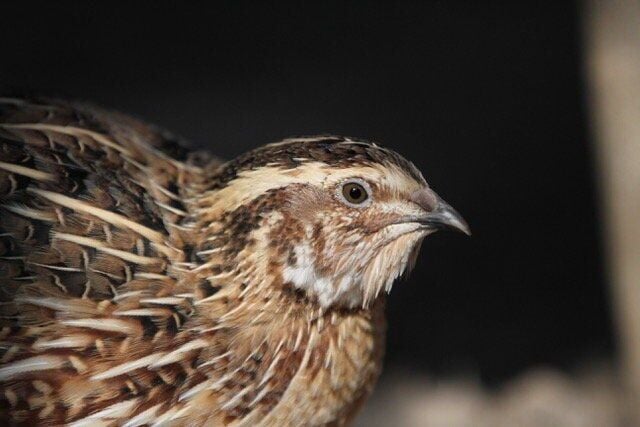
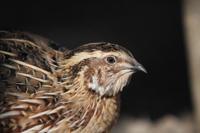
Japanese quail was the bird researchers studied. (Dennis Hansen via SWNS)
She says the study, published in the journal Proceedings of the Royal Society B Biological Sciences, is the first to use an artificial selection approach in a vertebrate species to test the theory.
Tschirren explained that the trade-off is whether to put energy into reproduction or "self-maintenance."
For example, previous research has showed that quails selected for high egg investment have lower rates of cell repair and immune function.
In the final fifth/sixth generation of the quail study, large-egg-laying females lived 595 days on average, compared to 770 days for females bred to lay small eggs.
Tschirren added: "Males live much longer, so the study was too short to reach firm conclusions about the impact of selective breeding on male lifespan."

(0) comments
Welcome to the discussion.
Log In
Keep it Clean. Please avoid obscene, vulgar, lewd, racist or sexually-oriented language.
PLEASE TURN OFF YOUR CAPS LOCK.
Don't Threaten. Threats of harming another person will not be tolerated.
Be Truthful. Don't knowingly lie about anyone or anything.
Be Nice. No racism, sexism or any sort of -ism that is degrading to another person.
Be Proactive. Use the 'Report' link on each comment to let us know of abusive posts.
Share with Us. We'd love to hear eyewitness accounts, the history behind an article.