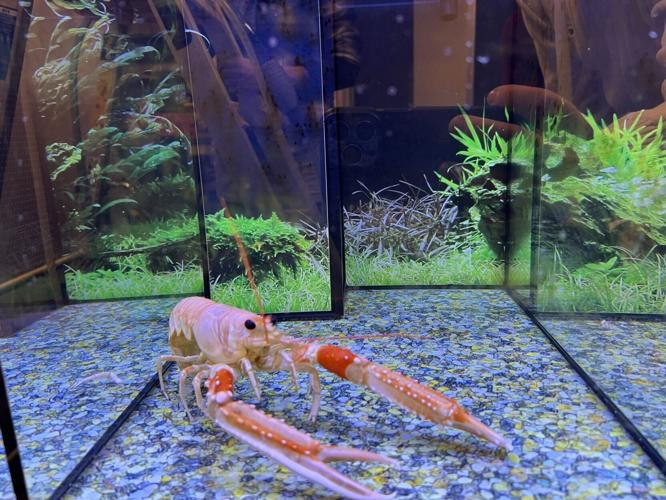


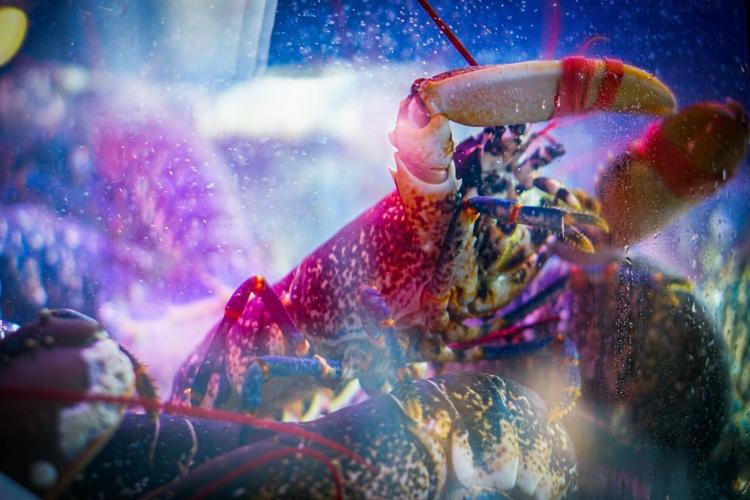
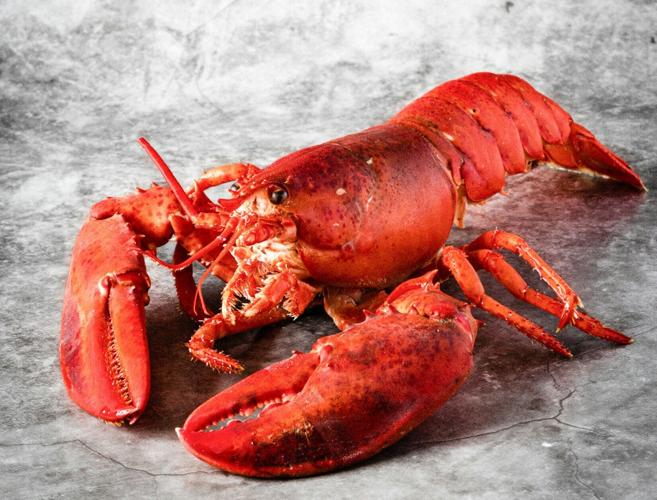

The Norway lobster is important in fisheries and was used to explore whether human pain-relieving drugs also prevented pain responses in a decapod crustacean. (Eleftherios Kasiouras via SWNS)
Painkillers work for lobsters too, reveals new research.
Scientists found that over-the-counter tablets prevent pain in the crustaceans — regarded as a delicacy — as well as humans.
The research team say their findings are further evidence that lobsters may feel pain — and that more humane methods of killing them before they are cooked and eaten need to be developed.

Lynne Sneddon, Professor of Zoophysiology at the University of Gothenburg. (David Wolfenden via SWNS)
Norway, New Zealand and Austria have already banned boiling of live crustaceans on ethical grounds.
Similar legislation is now being proposed in Britain.
The fishing industry is investigating whether electric shocks could be used to stun crustaceans before cooking.
But scientists say more research is needed into how they react to pain in order to develop the most humane slaughter method.
Lynne Sneddon, from the University of Gothenburg in Sweden, said: "There is already evidence that decapod crustaceans exhibit signs of discomfort and stress, when exposed to injuries such as forced removal of a claw.
"Our latest experiments show that Norway lobsters react adversely to electric shocks which are painful to humans."
As part of a new study, published in the journal Scientific Reports, researchers observed that when Norway lobsters were exposed to electric shocks in water, they attempted to escape by rapidly flipping their tail.
But if the lobsters were treated in advance with common painkillers, tail flipping was reduced or eliminated when they were exposed to the potentially painful electric shocks.






Aiva Apsite
Sneddon said: "The fact that painkillers developed for humans also work on Norway lobsters shows how similar we function.
"That's why it's important to care about how we treat and kill crustaceans, just as we do with chickens and cows."
The research team gave Norway lobsters pain relief before the electric shock using two different painkillers, aspirin and lidocaine, which had slightly different effects.
Aspirin was injected into the Norway lobsters, causing the animals to start grooming their legs and claws, which is a sign of stress.
At the same time, tail flipping decreased when they received the electric shock.

Monika Borys
The lidocaine was dissolved in water with relatively few side effects and also acted to prevent tail flips.
Sneddon said: "Our results emphasise the importance of ethical responsibility for the welfare of crustaceans not only in the food industry.
"There are campaigns to include these crustaceans in the science laws where we must reduce pain in laboratory animals.
"This study can help inform how to make experiments gentler for the animal with the use of pain-relieving drugs."
She added: "We need to do further experiments to find out the most humane way to treat and kill crustaceans if we still want them as food in the future."

(0) comments
Welcome to the discussion.
Log In
Keep it Clean. Please avoid obscene, vulgar, lewd, racist or sexually-oriented language.
PLEASE TURN OFF YOUR CAPS LOCK.
Don't Threaten. Threats of harming another person will not be tolerated.
Be Truthful. Don't knowingly lie about anyone or anything.
Be Nice. No racism, sexism or any sort of -ism that is degrading to another person.
Be Proactive. Use the 'Report' link on each comment to let us know of abusive posts.
Share with Us. We'd love to hear eyewitness accounts, the history behind an article.