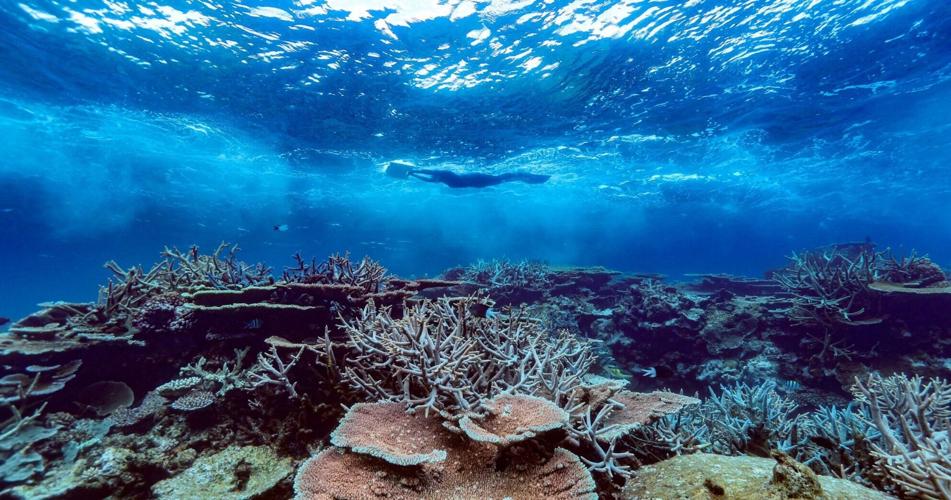
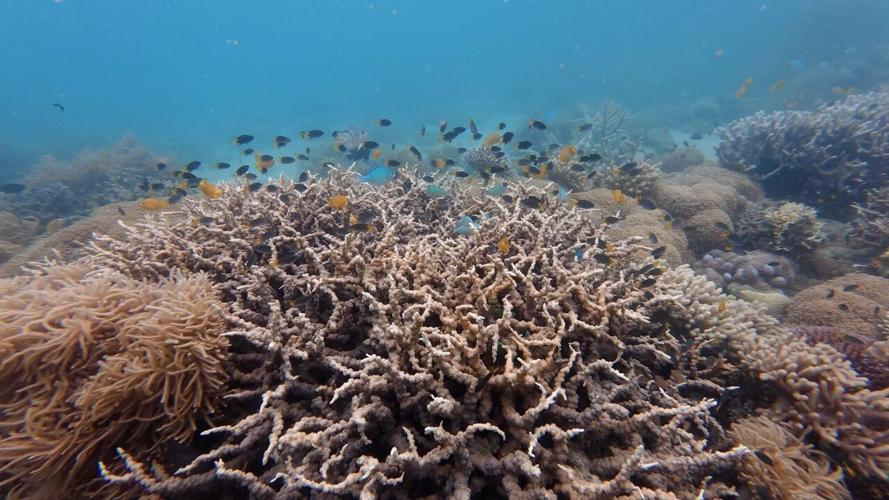
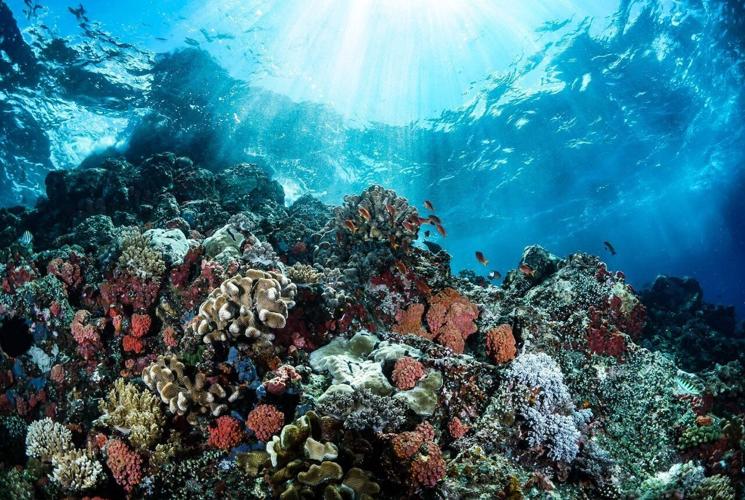

An AIMS scientist conducts a manta tow survey over corals on the Great Barrier Reef. (AIMS | LTMP via SWNS)
By Stephen Beech
The Great Barrier Reef's recovery from damage caused by climate change was aided by a late summer monsoon, reveals new research.
The rainy period increased cloud cover and reduced sea temperatures — limiting the severity and extent of bleaching, say conservationists.
The world's largest coral reef system, stretching more than 1,400 miles off the northeastern coast of Australia, suffered six mass bleaching events between 2016 and 2025.
Before the 1990s, bleaching events were "exceptionally rare" on the natural wonder of the world which is home to a huge diversity of marine life.
But a late summer monsoon earlier this year brought the Great Barrier Reef a reprieve from coral bleaching — aiding its initial recovery from recent climate-induced disturbances.
The annual report on the ecosystem by the Australian Institute of Marine Science (AIMS) shows that coral cover across all three regions of the Reef increased slightly or remained at similar levels to that recorded last year.

(Photo by Rob McSwain via Pexels)
Conservationists say the findings indicate "limited" impacts from 2025's mass bleaching event, and the regional bleaching event in the Northern and Central regions recorded earlier in 2026.
The reports showed that coral cover levels increased by 16.7% in the Northern Region and were up 10.2% in the Central region, but decreased by 2% relative to 2025 levels in the Southern region.
Coral cover levels in all three regions of the Reef continue to be above or just below the long-term average, according to the report.
AIMS Long-Term Monitoring Program (LTMP) leader Mike Emslie says coral cover levels increased "modestly" or remained stable on many reefs and substantial declines were uncommon.
He said: "The Reef experienced a summer of above average sea temperatures once again, but the late summer monsoon activity, which increased cloud cover and reduced sea temperatures, likely limited the severity and extent of bleaching in the 2025/26 summer.
"We did not see a repeat of the 2024 and 2025 mass bleaching events, or a repeat of the significant impacts from the 2024 event.
"Bleaching events vary markedly and do not always result in coral mortality. It depends on the intensity and duration of the heat stress."
A total of 121 coral reefs were surveyed for the 40th annual report.
Most of the reefs surveyed (106) had moderate to high coral cover, and only three reefs had hard coral cover less than 10%.

(Photo by adiprayogo liemena via Pexels)
Of the reefs surveyed, 16% showed a decline in coral cover, 56% showed no change and 28% had an increase.






Emslie said: "While many reefs did not lose coral cover, bleaching likely prevented the continued increases in coral cover that would normally be expected in the absence of disturbance."
The report includes a detailed examination of impacts from the 2024 mass bleaching event on different types of corals, finding shifts in coral communities not revealed by declines in total hard coral cover.
In last year's report, AIMS detailed "substantial" declines in coral cover from the high levels of recent years mostly due to the 2024 bleaching event.
Emslie said: "From our detailed surveys of permanently marked sites at 71 reefs, we found that reefs dominated by fast-growing, habitat-building, bleaching-sensitive Acropora corals were the most severely impacted by the event.
"The reefs with high levels of Acropora now exist in a highly vulnerable state.
"It's possible that what looks like complete recovery on these reefs can be reversed in just a year.
"The acute heat stress in the Southern Great Barrier Reef during the 2024 event also increased the prevalence of bleaching and mortality in reef habitats 10 to 15 meters deep across most types of coral.
"Normally coral bleaching mostly impacts shallow water corals because this is where sea temperatures are highest.

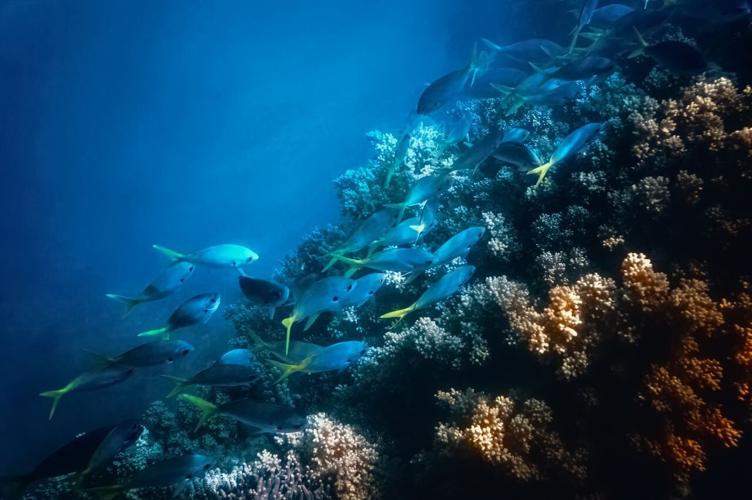
(Photo by Gilberto Olimpio via Pexels)
"Future warming trends are likely to put corals at deeper depths at greater risk of impacts from intensified coral bleaching severity and mortality as found in the Southern Great Barrier Reef in 2024."
Emslie says while this year's results provided evidence of "initial recovery" and that coral cover levels are higher than that of many coral reef ecosystems globally, the Great Barrier Reef remained a system under pressure.
He added: "We have seen six mass bleaching events between 2016 and 2025.
"Before the 1990s, bleaching events were exceptionally rare on the Great Barrier Reef.
"This increased frequency and escalating impact is compounded by the damage from cyclones, floods and outbreaks of crown-of-thorns starfish.
"While the Reef is showing resilience, it is being pushed and its capacity to recover is limited."
AIMS CEO Selina Stead said the long-term value of the 40-year-old LTMP dataset was growing in importance.
She said: "It underpins management considerations like zoning and crown-of-thorns starfish control and provides a barometer of reef health at a time when coral reefs globally face increasing existential threats from warming oceans and other stressors."
Stead added: "While evidence of recovery is encouraging, the risks for coral reefs are increasing.
"We can help them survive the threats posed by climate change through reducing global emissions, good reef management, and developing evidence-based science interventions that support reef adaptation and recovery."

(0) comments
Welcome to the discussion.
Log In
Keep it Clean. Please avoid obscene, vulgar, lewd, racist or sexually-oriented language.
PLEASE TURN OFF YOUR CAPS LOCK.
Don't Threaten. Threats of harming another person will not be tolerated.
Be Truthful. Don't knowingly lie about anyone or anything.
Be Nice. No racism, sexism or any sort of -ism that is degrading to another person.
Be Proactive. Use the 'Report' link on each comment to let us know of abusive posts.
Share with Us. We'd love to hear eyewitness accounts, the history behind an article.