From the top of a 140-foot water slide at the Fairmont Kea Lani, the view of the Pacific Ocean is punctuated by the sound of children laughing and splashing in the multi-tiered pools below. It’s a scene far removed from the images that dominated recent headlines after the devastating Lahaina wildfire and subsequent flooding that challenged communities across Maui.
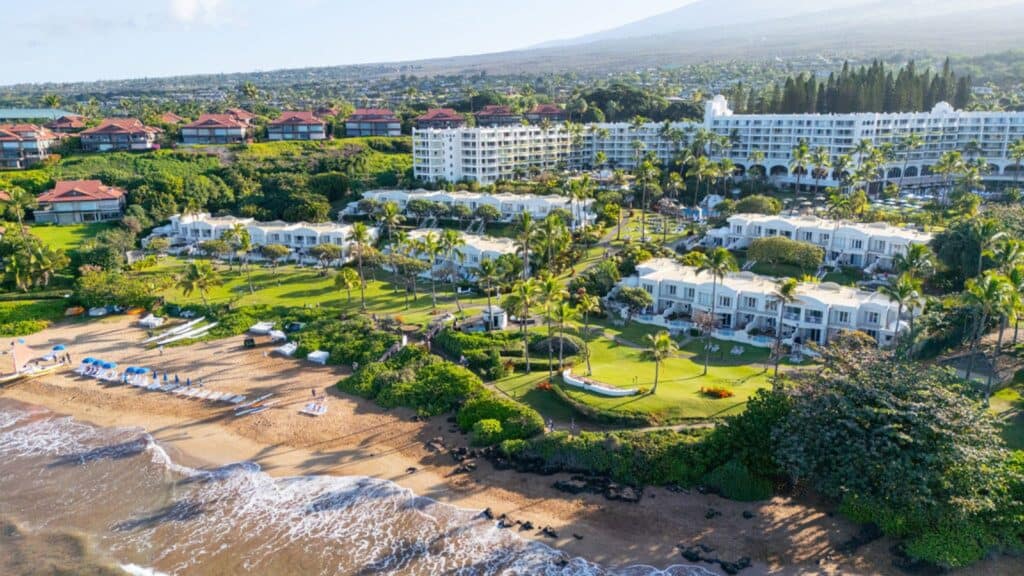
New economic forecasts from UHERO reveal that early 2026 hotel occupancy on Maui approached 70% as travel demand slowly rebounds. Maui’s premier resorts, fairways and cultural centers are fully operational.
The county’s average daily visitor census projects a 7.5% growth rate for the year, vastly outperforming the rest of the state. For families touring the island right now, the reality on the ground reveals a deeply felt “Aloha.”
The cultural heartbeat
To walk through the open-air, white-columned grand atrium of the Fairmont Kea Lani feels like coming home. The last time I visited was in 2017 with my young family of four. The hotel recently completed an extensive, multi-million-dollar remodel that emphasizes cultural authenticity, yet the familiar feeling remains.
That connection appears to strike a chord with guests. Michael Pye, regional vice president of Hawaii and general manager of Fairmont Kea Lani, says the response to the renovation has gone beyond the refreshed design and upgraded amenities. “Guests often share that the accommodations feel distinctly tied to Maui rather than interchangeable with a luxury resort anywhere else in the world.”
At the heart of this refresh is “Hale Kukuna,” a dedicated cultural space whose name translates to The House of the Rays of the Sun.
“The essence of this was to be able to reach all edges of the world, to share more of our cultural experience, our heritage and the purpose behind our practices,” explains Jobi Miguel, Hale Kukuna’s manager of Hawaiian culture. “Just like the rays of the sun shed light everywhere, this space is meant to share that warmth, share the history and have those comfortable conversations.”
For visiting families, those discussions materialize in daily interactive experiences. Rather than passive tourist entertainment, Miguel and his team of cultural ambassadors guide guests through introductory Hawaiian language classes, traditional lei making using foraged ti leaves from the property and “Kōnane,” a complex, ancient Hawaiian strategy board game played with black lava rock and white coral pieces.
“Traditionally, Kōnane was used by the aliʻi (chiefs) for strategic war planning and resource management,” Miguel says, gesturing to the dimpled boards. “Today, it helps build mental fortitude for the next generation. We have guests who spend pretty much their whole vacation returning here daily to dive deeper. They find a comfort spot here. They tell us it feels like home.”
That sense of home is deeply tied to “mālama ʻāina,” or land stewardship, a concept Miguel notes many families take back to their own communities to address environmental or cultural conflicts.
The space also bridges Maui’s past directly into its present-day resilience. Hale Kukuna prominently features a gallery of artwork, including a striking exhibit titled “Rising from the Ashes: Spirits of Aloha.“ The sculptures were carved by resident artist Dale Zarrella, who salvaged charred wood discarded by the historic Lahaina fires to create physical symbols of the island’s persevering spirit.
“He wanted to represent how there is still beauty beyond the chaos,” Miguel says. “To continue to educate people, perpetuate the culture and lead with Aloha as we do everything.”
Room realities and the ideal footprint
The guest rooms received an aesthetic refresh, and the immediate silver lining for families is the sheer size of the accommodations. Because the resort is entirely made up of all-suite layouts, you start with an incredible amount of space, far more breathing room than a standard hotel room offers when you’re traveling with an entire household.
While the resort’s rooms and public spaces feel completely transformed, the renovation leaves a few practical hurdles for traveling families. Parent groups should note that the two-bed layouts still feature double beds rather than queens. That setup can feel cramped quickly if you are traveling with older kids or teenagers.
The property’s crown jewels are its two-story, 37 multi-bedroom villas. They feel more like private residential enclaves than hotel accommodations at 1,800 to 2,200 square feet. The true crowd-pleaser is the outdoor living space. Each villa features a private courtyard with a plunge pool and a built-in barbecue grill. You can transition from a beach swim to a private backyard dinner without ever setting foot in a public hallway.






If you’re booking a stay in the main buildings, my absolute favorite room is still the ocean-view suite sitting right on the corner of the upper pool. In my opinion, this is the best location on the entire property. Having immediate access to the pool deck means you eliminate those wet-footprint trips back and forth to the room throughout the day. It makes grabbing a quick snack or stepping out of the intense Maui sun incredibly easy. It’s also a gorgeous and private spot to watch the sunset.
The resort’s wellness spaces also received a much-needed overhaul. The gym has been relocated from its old, windowless lower-level digs and now directly overlooks the adult pool.
Culinary updates lean heavily into local heritage. The signature Kō restaurant has a fresh look and a menu focused on local cultural fusion. The dinner entrees are delectable, but the real showstopper is hidden on the dessert menu: the Portuguese sweet donuts, “malasadas, which genuinely put New Orleans’ famous beignets to shame.
Pilina, the new open-air lounge addition just off the main, is easily my favorite restaurant. The axis venison is outstanding, but the highlight for a family dinner is the interactive setup. My kids loved the novelty of cooking their own premium meats directly on a blazing-hot volcanic stone right at the table.
Award-winning sustainability
It is one thing for a resort to claim it cares about the environment, but another to see it built right into your daily routine. The Fairmont Kea Lani was recently recognized as a leader in sustainable tourism, officially securing its prestigious LEED Silver Certification from the United States Green Building Council following the renovation of its 413 suites and 37 villas. It’s not hard to see why once you look closely at how the property operates.
The most evident shift is the complete elimination of single-use plastic. Upon check-in, you’re given beautiful, resort-branded, refillable metal water bottles, and automatic filtered-water filling stations are scattered throughout the campus. Evening turndown service replaces standard plastic bottles with elegant glass ones.
Even the upgraded fitness center offers recyclable headphones rather than the usual disposable plastic pairs. These small daily choices add up to impressive results. The resort has reduced indoor water use by more than 32% using low-flow fixtures and smart technologies.
Down at the pools, the resort targets reef protection, a massive priority for anyone snorkeling around the island right now. Stations at each pool deck are fully stocked with complimentary reef-safe sunscreen and soothing cooling lotion, complete with tiny, biodegradable cups for easy application.
But the biggest sustainability flex is actually hidden overhead. The resort has blanketed its rooftops with an 800 kW rooftop solar system to help combat Maui’s notoriously rising electricity costs.
It works alongside green power and REC purchases to ensure that a staggering 83% of the property’s energy is supplied by green power. This infrastructure drives a 30% reduction in overall energy costs.
The resort even carried this eco-conscious blueprint into its grand, open-air arrival lobby and Hale Kukuna cultural center. By cleverly reusing 84% of existing surfaces during the massive overhaul — including walls, doors, flooring and ceiling finishes — the project successfully diverted 36% of construction waste away from landfills.
It’s a quiet, humble approach to luxury mālama ʻāina that proves you can protect the island without sacrificing a world-class family experience. “Hawaiʻi’s future depends on our ability to welcome visitors in a way that actively supports the health of our environment, culture and communities,” Pye explains.
A rare balance of aloha
There are very few resorts in the world that truly feel like coming home, but the Kea Lani is easily one of them. Walking the grounds, you can feel that the Hawaiian spirit is alive and well here. What makes it so unique is how easy it is to navigate multi-generational travel without ever intruding on honeymooners and couples who are looking for a quiet escape. You get the energy of a family vacation and the peace of a tropical getaway, all in one beautiful place.
Casandra Karpiak is a Lowell Thomas Gold Award-winning writer and luxury travel expert. A regular contributor to Ultimate Experiences Magazine and Global Traveler Magazine, her work also appears in The Globe and Mail, Toronto Star, Kingdom and Discovery Life.
The post Maui eyes a 7.5% growth in visitors, and this luxe Wailea resort is ready for the big comeback appeared first on Food Drink Life.

(0) comments
Welcome to the discussion.
Log In
Keep it Clean. Please avoid obscene, vulgar, lewd, racist or sexually-oriented language.
PLEASE TURN OFF YOUR CAPS LOCK.
Don't Threaten. Threats of harming another person will not be tolerated.
Be Truthful. Don't knowingly lie about anyone or anything.
Be Nice. No racism, sexism or any sort of -ism that is degrading to another person.
Be Proactive. Use the 'Report' link on each comment to let us know of abusive posts.
Share with Us. We'd love to hear eyewitness accounts, the history behind an article.