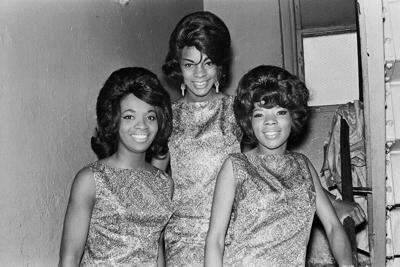
(MORGANTOWN, WV) The CBS television show “It’s What’s Happening Baby” aired a music video featuring Martha and the Vandellas performing their hit song “Nowhere to Run” to kick off its national broadcast dedicated to Detroit on June 28, 1965.
In the video, the Detroit-based trio sang about how they could not escape missing an ex-lover after a breakup while sitting in a white Mustang moving slowly down the assembly line in the Ford Motor Co.’s River Rouge plant.
As a cultural and labor historian, I see the “Nowhere to Run” video as an iconic testament to Detroit’s reputation as the “Motor City” and the role of the autoworker in the American imagination.
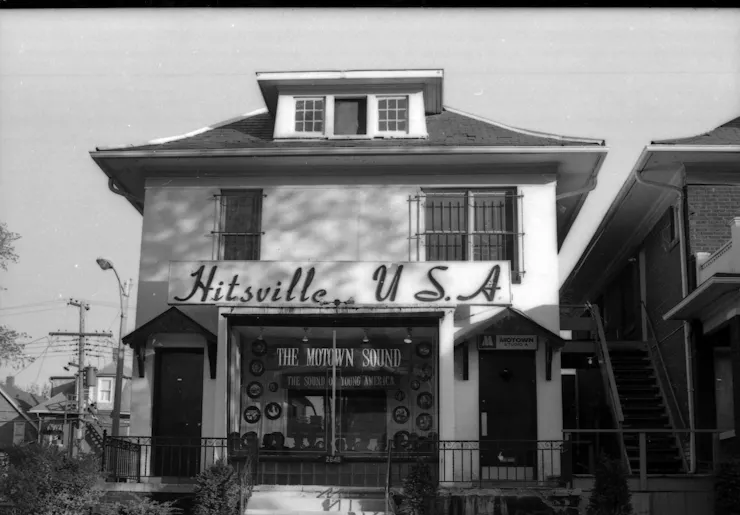
Motown founder and CEO Berry Gordy, Jr. worked on the Ford assembly line and used it as inspiration for Hitsville U.S.A., the famed headquarters and music recording studio that served as a space to train performers and perfect the “Motown sound” for the masses.
Martha and the Vandellas were part of Motown’s illustrious roster of artists in the 1960s. Initially comprised of Martha Reeves, Rosalind Ashford and Annette Beard, and with members changing over the next three decades, they helped establish the Black “girl group.” They presented themselves as working class in videos like “Nowhere to Run.”
Their classic anthem “Dancing in the Street” reflected the revolutionary mood of civil rights protesters, especially Black Americans in the 1960s. As lead singer, Reeves also emerged as a pioneering R&B “diva,” helping pave the way for Black female solo vocalists like Whitney Houston, Janet Jackson, Mary J. Blige and Beyoncé.
A patient path to stardom
Martha Reeves was born in Eufaula, Alabama, on July 18, 1941. Soon after, her family moved to Detroit’s east side. Music occupied a central place in her life from childhood.
Reeves writes in her 1994 memoir, “Dancing in the Street: Confessions of a Motown Diva,” about her father serenading her mother with his guitar while she was pregnant with Martha. Her mother, Ruby, also sang. Reeves’ parents passed their love for music to her, and she sang in her church choir and aspired to a life of performance.
“At that young age I was already hooked on pleasing the crowd with my singing,” Reeves wrote.
Reeves graduated from Northeastern High School. As a teenager, she used fake IDs to get into night clubs to watch singers perform, and she sang in open mics and talent shows. She scored her first break after earning a three-night performance at the 20 Grand, a popular Detroit night club located on 14th Street and Warren Avenue.
It was after one of those performances when she met William Stevenson, Motown Records’ executive for discovering new talent. Stevenson invited Reeves to the label’s headquarters.
Reeves came to the studio, but she didn’t audition for reasons that aren’t entirely clear today. Instead, Stevenson told her she could answer the phones. That’s how she got a job in the A&R Department and began working with other Motown artists.
In 1957, Reeves joined her first group, the Del-Phis. Formed by Edward “Pops” Larkins, the Del-Phis also included leader Gloria Jean Williamson, Rosalind Ashford and Annette Beard.
Reeves soon caught another break. In September 1962, Stevenson called for her to fill in for Mary Wells in a Marvin Gaye studio session. Reeves enlisted the other Del-Phis, and they performed so well that they became the supporting vocal group for Gaye.
After the Del-Phis toured with Gaye and recorded “I’ll Have to Let Him Go,” Gordy offered Reeves, Beard and Ashford a recording contract. The group also took on a new name, Martha and the Vandellas.
Martha and the Vandellas enjoyed commercial success soon after, with songs like “Come and Get These Memories,” “Quicksand” and “Heatwave.”
An anthem for revolution set to a groove
“Dancing in the Street,” written by Gaye, Stevenson and Ivy Jo Hunter, was released in the summer of 1964 and became a signature hit for Martha and the Vandellas.
Reeves wrote in her autobiography that she did not like “Dancing in the Street.”
However, she made it her own, and Reeves later acknowledged that the song embodied the spirit of civil rights protests.
“It became the anthem of the decade,” Reeves wrote.
She was right.





At the time of the song’s release, the Civil Rights Movement was in full swing. Black Americans in Harlem took to the streets to protest the killing of 15-year-old James Powell by an off-duty New York Police Department officer.
The 1960s set off a string of “long, hot summers” as racial tensions intensified. Black folks in the Watts neighborhood in Los Angeles in 1965 protested in the streets in response to police violence.
More than 100 protests were organized in response to Martin Luther King Jr.’s assassination in 1968, from Chicago to Washington and Baltimore.
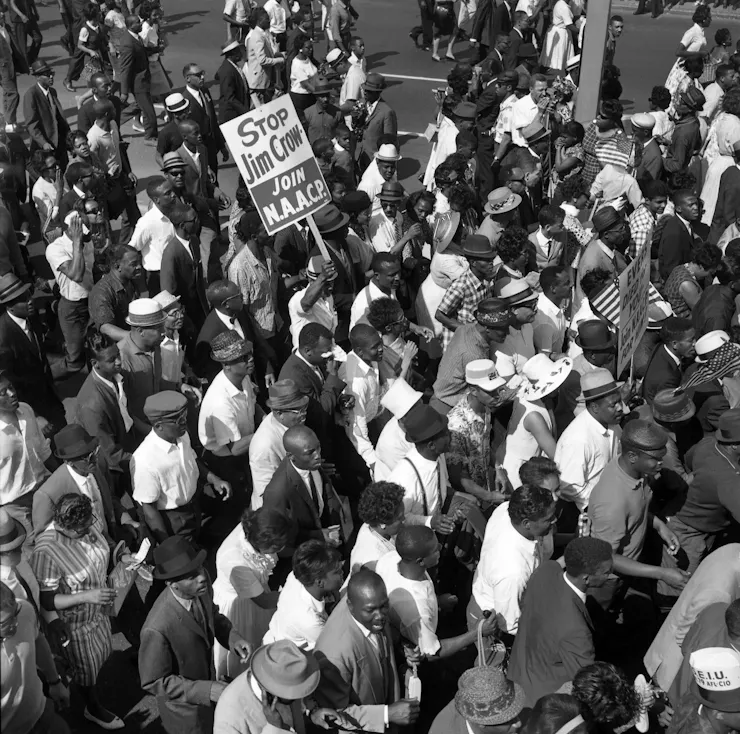
Detroit erupted a year earlier, in July 1967, after Detroit police officers raided a “blind pig,” or an unlicensed bar, on 12th Street.
The iconic opening lines of “Dancing in the Street” announced a new attitude among Black folks: “Calling out around the world/ Are you ready for a brand new beat?”
The high-octane, optimistic song is laced with slogans interpreted as invitations to take action. Martha and the Vandellas’ declaration that “Summer is here and the time is right for dancing in the street” reflected Black Americans’ willingness to not only march, but to take measures in their own hands and fight for equality and justice.
Battle for fair pay and recognition
The late 1960s and early 1970s were a time of transition for Reeves and the Vandellas. The Supremes were on the rise and threatened to displace them as the most prominent girl group on the Motown label. Reeves also experienced creative differences with Motown executives and struggled with drug addiction. Then, in 1972, Gordy moved Motown to Los Angeles so he could try his hand at filmmaking.
Martha and the Vandellas broke up later that year after the release of their album, “Black Magic.” However, Reeves continued as a solo artist, releasing five albums, including her self-titled debut “Martha Reeves” in 1974, “The Rest of My Life” in 1976 and “We Meet Again” in 1978, among others.
Martha Reeves and the Vandellas, along with many Motown artists, experienced a resurgence in popularity during the 1980s. Motown Records’ 25th anniversary show in Pasadena, California, in 1983 launched them back into the mainstream. The group reunited and started performing again in 1989.
Also, Reeves and the group sought to resolve their old conflicts with Motown Records. Reeves and various members of the Vandellas sued Gordy and Motown in 1989 for unpaid royalties. Motown Records settled the suit in 1991 for an undisclosed amount.
Four years later, the B-52s inducted Reeves and the Vandellas into the Rock and Roll Hall of Fame.
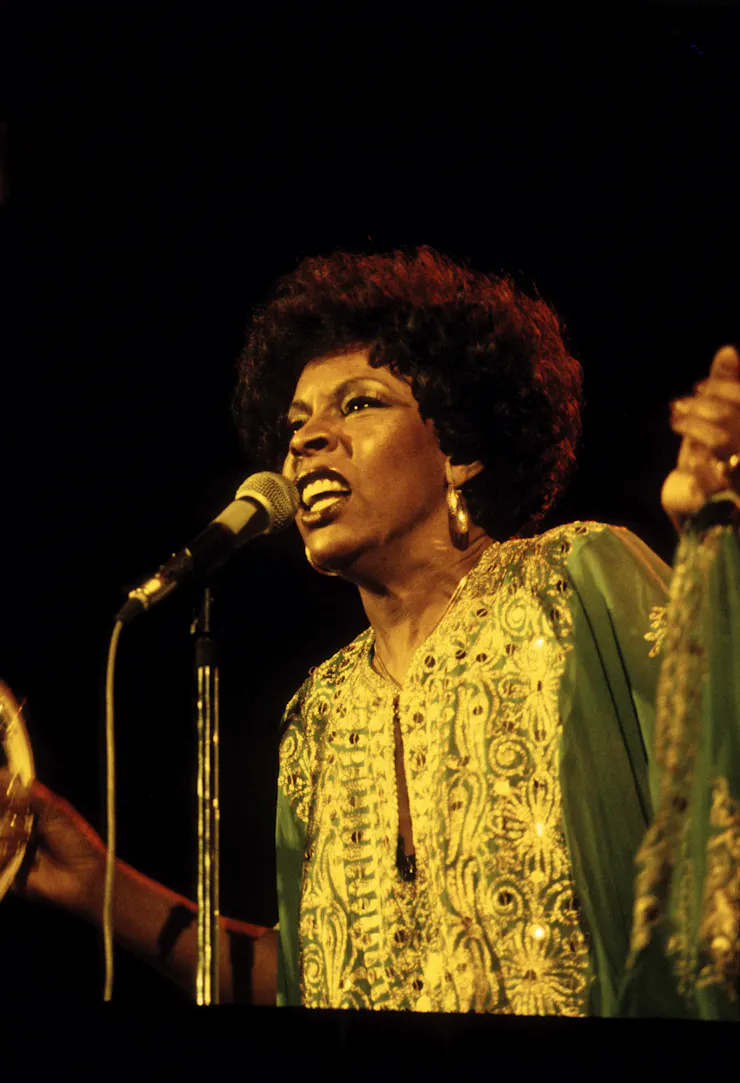
The diva archetype
Martha and the Vandellas played a vital role in laying the foundation for future all-Black female groups like En Vogue, TLC, SWV and Destiny’s Child.
They helped set the standard for turning songs about the trappings of love and heartbreak into anthems. Reeves embraced being an “R&B Diva” long before music critics applied the persona to singers like Mary J. Blige and Beyoncé. Reeves was not just a larger-than-life vocal presence; she showed future generations of Black female vocalists that, to be a diva, one must have control of one’s own career.
“We became the Vandellas and with me being the only lead singer, my name was put out there because I did all the work,” Reeves said in a 2020 interview. “I did all the singing … I managed to just come up with my own destiny, with my own future in show business.”
This article is republished from The Conversation, a nonprofit, independent news organization bringing you facts and trustworthy analysis to help you make sense of our complex world. It was written by: Austin McCoy, West Virginia University
Read more:
- ‘What’s Going On’ at 50 – Marvin Gaye’s Motown classic is as relevant today as it was in 1971
- Streaming platforms give us access to new music, so why are fewer people listening to it?
- How Detroit techno is preserving the city’s beating heart in the face of gentrification
Austin McCoy does not work for, consult, own shares in or receive funding from any company or organization that would benefit from this article, and has disclosed no relevant affiliations beyond their academic appointment.


(0) comments
Welcome to the discussion.
Log In
Keep it Clean. Please avoid obscene, vulgar, lewd, racist or sexually-oriented language.
PLEASE TURN OFF YOUR CAPS LOCK.
Don't Threaten. Threats of harming another person will not be tolerated.
Be Truthful. Don't knowingly lie about anyone or anything.
Be Nice. No racism, sexism or any sort of -ism that is degrading to another person.
Be Proactive. Use the 'Report' link on each comment to let us know of abusive posts.
Share with Us. We'd love to hear eyewitness accounts, the history behind an article.