
By Stephen Beech
A newly discovered species of frog has been named in honor of an Olympic champion.
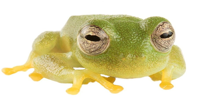
The glassfrog was named after Neisi Dajomes - the first Ecuadorian woman to win an Olympic gold medal.
Scientists say the El Quimi Nature Reserve in Ecuador, where the Dajomes glassfrog was found, might be a "lost world" of amphibian diversity.
The research team explained that glassfrogs are a group of around 167 species of frogs that live in trees in tropical forests in Central and South America.
While most glassfrogs are green on top, they get their name from the transparent skin that covers the underside of some species in the group.
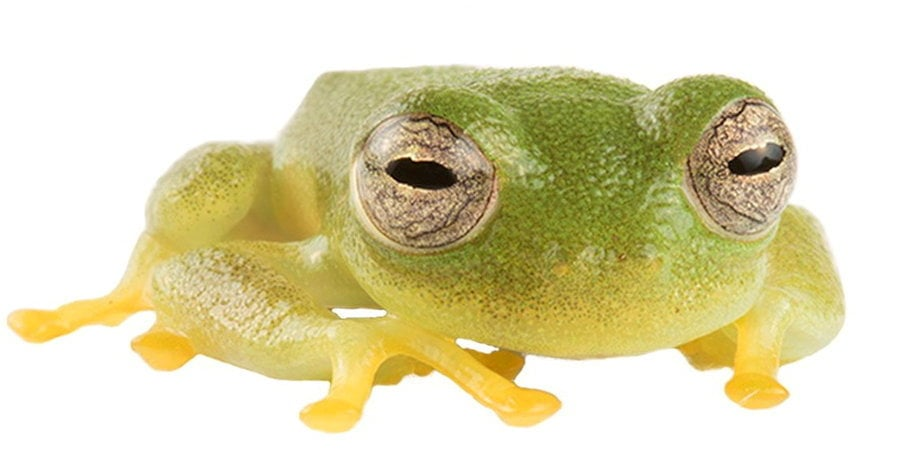
(Masache-Sarango et al., 2026 via SWNS)
The see-through skin sometimes reveals their heart and other organs in great detail.
Researchers encountered the Dajomes glassfrog in 2017 and 2018 during biological surveys conducted in El Quimi Nature Reserve, which is located in a mountainous region in southern Ecuador.
It is described in a new study published in the journal PLOS One.
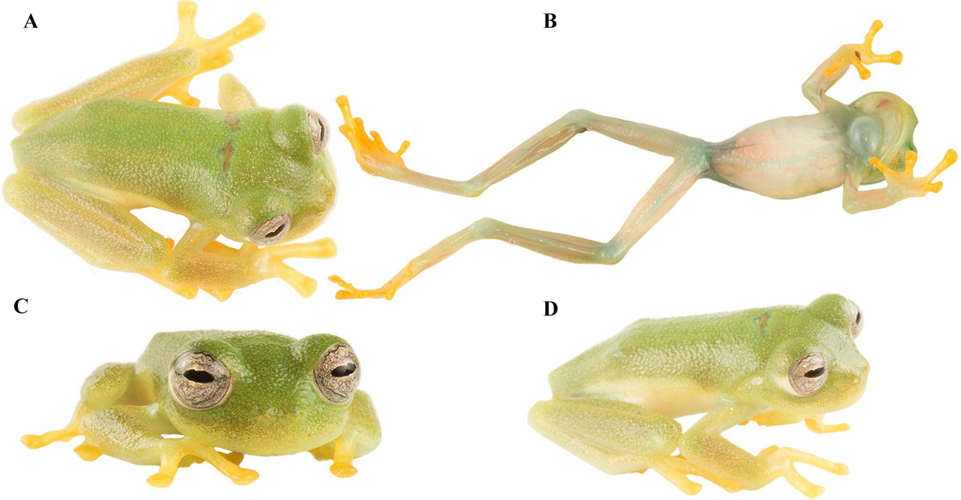
Co-author Mylena Masache said: "The new species has uniformly green skin with a pebbly texture across the top of its body.
"On its underside, it has a white membrane covered in specialized light-reflecting cells that covers its heart, oesophagus, stomach and kidneys, but other internal membranes are clear."







Asamblea Nacional del Ecuador via Wikimedia Commons
Based on comparisons of its DNA to related species, Masache’s team estimated the new species likely originated during the Pliocene Epoch, about 4.5 million years ago.
Masache, a biology student at the Pontifical Catholic University of Ecuador, Quito, added: "Currently it is unknown whether the frog is threatened or endangered.
"The first Dajomes glassfrog was found just a few miles from an agricultural region and a large-scale mining operation.
"Mining in the area has caused a decline in local amphibian populations and may threaten this species in the future."
During the two expeditions to El Quimi Nature Reserve that yielded the Dajomes glassfrog, more than 85% of the amphibian species observed were previously unknown.

(Masache-Sarango et al., 2026 via SWNS)
The researchers suggest the region could be a "lost world of amphibian diversity" - and called for continuing biodiversity surveys and species identification efforts in southeastern Ecuador and across the border in northeastern Peru.
Masache said: “We were astonished by the high number of new species found at the site.
"Few places in the tropical Andes harbor amphibian assemblages as novel as the one found at El Quimi.”
Dajomes won Olympic gold medal when she triumphed in the women's 76 kilo weightlifting event at Tokyo 2020.
Co-author Dr. Diego Cisneros said: “It is especially meaningful that this discovery is led by a young woman scientist and honors an Ecuadorian Olympic champion.
"This species becomes a symbol of how science and society can recognise and celebrate women shaping the future.”
(0) comments
Welcome to the discussion.
Log In
Keep it Clean. Please avoid obscene, vulgar, lewd, racist or sexually-oriented language.
PLEASE TURN OFF YOUR CAPS LOCK.
Don't Threaten. Threats of harming another person will not be tolerated.
Be Truthful. Don't knowingly lie about anyone or anything.
Be Nice. No racism, sexism or any sort of -ism that is degrading to another person.
Be Proactive. Use the 'Report' link on each comment to let us know of abusive posts.
Share with Us. We'd love to hear eyewitness accounts, the history behind an article.