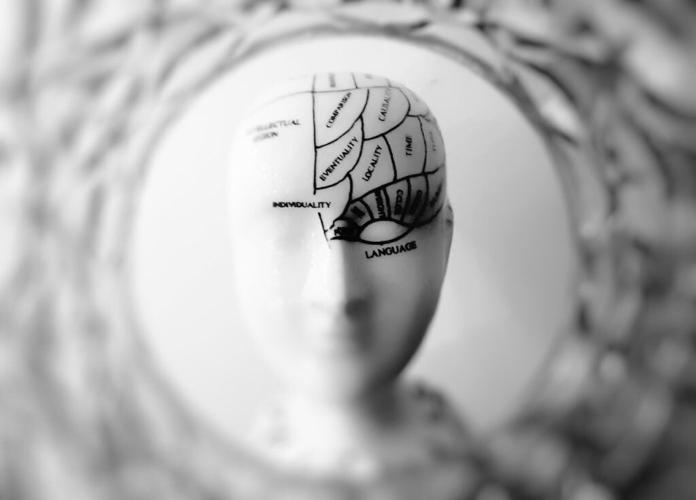

Photo by Amel Uzunovic via Pexels
By Lauren Wilkin
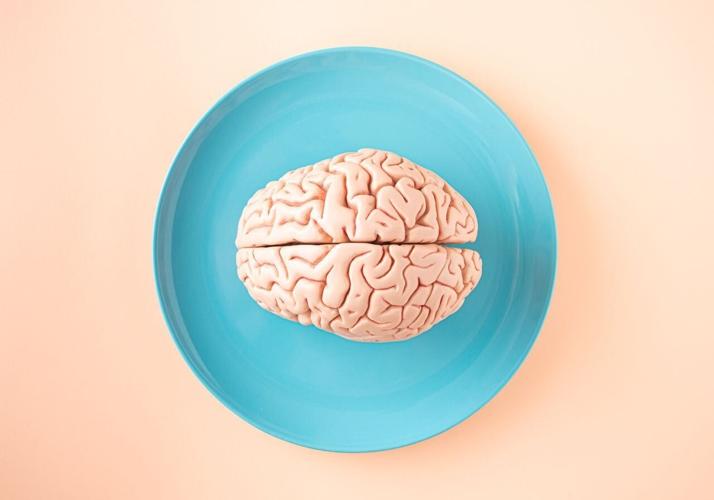
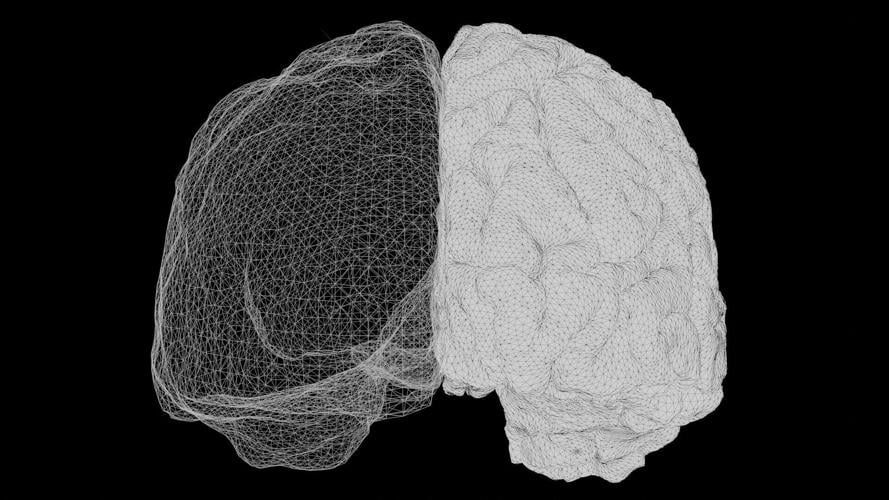
New research has revealed that the brain is actually two different organs that have evolved independently.
Previously, researchers believed that a single cell developed into the brain - but now, a study by Stanford Medicine has disproved the theory.
Instead of the brain sharing a common developmental origin, the scientists have discovered the human brain consists of "two ancient nervous systems cleverly packaged together."
The researchers said that the more primitive part of the brain regulates functions like breathing and keeping our heart beating.
Whereas the second organ makes us "distinctly human," allowing us to think creatively and with reason. The researchers said this part of the brain made us "capable of poetry, mathematics, and wondering about our own origins."

Shawn Day
"We've shown for the first time that the front of the brain arises from a totally different progenitor cell than the back of the brain," said Kyle Loh, PhD, associate professor of developmental biology.
"Our discovery means that we can now grow neurons from the back of the brain, the hindbrain, in a petri dish and study their functions."
In simple terms, the scientists discovered that the forebrain and midbrain developed from one cell, while the hindbrain developed from a completely different type of early cell - making it a different organ.
The forebrain handles higher-level thinking like language, consciousness and abstract reasoning.






While the hindbrain controls automatic functions that keep us alive like breathing, sleeping, and regulating our heartbeat.
The researchers said that despite the "critical importance of the hindbrain," scientists have been unable to generate these hindbrain neurons in the laboratory, stunting research into many brain stem diseases.
"Previous attempts to make hindbrain neurons likely tried to coax forebrain and midbrain progenitors into hindbrain cells, which our study shows is not possible," said Rayyan Jokhai, a co-first author of the study.

Photo by meo via Pexels
After this discovery, scientists were able to generate hindbrain neurons for the first time - sparking a huge breakthrough in disease research.
The researchers then looked back over 550 million years of evolutionary time.
They found the same two-origin brain pattern in chickens, zebrafish, and, remarkably, in acorn worms, tiny creatures living on the ocean floor that share a distant common ancestor with humans.
"Our research suggests that evolution took two existing neural systems and pushed them together spatially," Loh said.
"Having the brain as one organ would probably be more efficient, but we rely on this primordial way to make the brain as two separate pieces," he added.
Jokhai said: "I was surprised at our findings because the word 'brain' implies a contiguous organ that likely has a singular origin."
"But even 500 million years ago, there were these separate neural systems, which now almost operate as one, which is very cool."
(0) comments
Welcome to the discussion.
Log In
Keep it Clean. Please avoid obscene, vulgar, lewd, racist or sexually-oriented language.
PLEASE TURN OFF YOUR CAPS LOCK.
Don't Threaten. Threats of harming another person will not be tolerated.
Be Truthful. Don't knowingly lie about anyone or anything.
Be Nice. No racism, sexism or any sort of -ism that is degrading to another person.
Be Proactive. Use the 'Report' link on each comment to let us know of abusive posts.
Share with Us. We'd love to hear eyewitness accounts, the history behind an article.