American travelers abandon the multi-city Italy itinerary in record numbers, turning instead to lesser-known regions where a single base can anchor a week or more of unhurried exploration. Italy has emerged as one of the year’s standout destinations for travelers who want depth over distance, with Puglia, Sicily, Le Marche and the Italian Lakes absorbing much of that demand.
Italy’s popularity indicates a measurable change in how people structure trips. The European Travel Commission and Eurail’s Long-Haul Travel Barometer for 2026 found that the share of vacationers identifying as slow travelers rose from 22% in 2025 to 26% in 2026. Longer stays in fewer places are outpacing multi-stop itineraries across every major outbound travel market, driven by a combination of rising trip costs, remote work flexibility and a growing awareness that a week spent racing between Rome, Florence and Venice produces exhaustion more reliably than it produces experience.
Italy was built for this
Search interest in “slow travel Italy” doubled in a single month, and Italy didn’t have to manufacture a reason why. The passeggiata, the long Sunday lunch, the fierce regional pride in what gets grown and made by hand aren’t selling points for tourists; they’re infrastructure.
That cultural foundation is part of why Italy absorbs the slow travel surge more naturally than almost any other destination. The regions that get attention aren’t new discoveries, but are places that have always operated at this pace, finally getting the visitors they’ve long deserved.
Puglia
Staying a week in Lecce rather than passing through on a train reveals the distinction. The city runs on baroque architecture, a university population and a food culture so confident it barely acknowledges outside influence.
Orecchiette with cime di rapa is the dish that defines the region, the bitter greens cut by garlic and anchovy into something that couldn’t come from anywhere else. Burrata, made nearby in Andria, arrives so fresh the outer shell tears like warm bread. The surrounding countryside reaches the Adriatic on one side and the Ionian on the other, giving a week-long stay a different coastline for every direction.
Sicily
Sicily resists the idea that a single week is enough, and that resistance is one of its better qualities. A base in Taormina puts Etna close enough for a morning excursion and a Greek theater in the center of town that frames the volcano on a clear day.
The food makes the strongest case for staying longer. Markets sell street food that traces directly to Arab kitchens, with arancini filled with ragu and caponata made with eggplant, capers and vinegar. Harbor restaurants grill swordfish over open flames, and cannoli are filled to order rather than left to soften in a case. These are the kind of meals that lose something when you try to describe them afterward.





Le Marche
Le Marche sits between the Apennines and the Adriatic and has absorbed almost none of the tourist pressure that defines Tuscany to its west. Urbino, a Renaissance hill town and UNESCO World Heritage Site, represents the region, with the Ducal Palace and the birthplace of the master painter Raphael within the same compact historic center.
The local food rewards the slower pace. Vincigrassi, a baked pasta built on a meat-and-truffle ragu, is served in the kind of trattoria that doesn’t appear on any list. Olive ascolane from Ascoli Piceno, large green olives stuffed with seasoned meat and fried, are best eaten at the source. Truffle from the Apennine valleys runs through menus at prices that disappear once you cross into Umbria or Tuscany.
The Italian Lakes
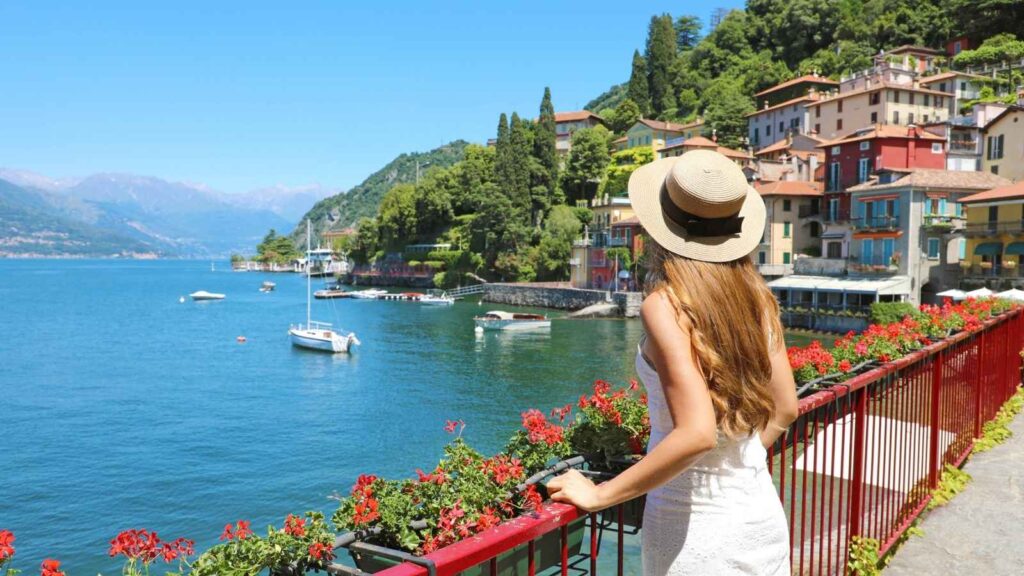
The lakes, Como, Maggiore and Garda, operate on a different logic than the south, but the slow travel structure fits. Varenna on Lake Como is small enough that a morning walk covers the town and an afternoon on the ferry spans the lake, giving the day a shape that doesn’t require a plan.
“I wanted to add the Italian Lakes to my trip because I’m naturally drawn to outdoor spaces and quieter destinations over big cities and crowds,” said Bella Bucchiotti of xoxoBella. “The combination of hiking, scenery and smaller lakeside communities really appealed to me, and Lake Orta especially stood out for its peaceful atmosphere and slower pace. It felt like a completely different side of Italy and exactly the kind of experience I enjoy most.”
The food is unmistakably northern: missoltino, a lake fish dried, pressed and preserved in oil, appears alongside mountain cheeses and cured meats. Risotto al pesce persico, made with lake perch, is a dish that the region seriously protects. Train lines to Milan and into Switzerland make the lakes accessible without a car.
The shift has numbers behind it
The share of tourists who identify as slow travelers rose by four points in a single year, according to the European Travel Commission, and that growth compounds amid real pressure on Italy’s most-visited cities. Rome and Florence have both introduced measures to manage visitor volume, and the experience of both during peak season has changed accordingly.
The regions have absorbed almost none of that pressure. They’re cheaper to stay in, easier to move through and built around exactly the local food culture and unhurried rhythm that travelers are now searching for by name. Italy has always been the country that does this best, and the way travel is moving in 2026 is about to prove it.
Zuzana Paar, a co-founder of Food Drink Life, is a seasoned traveler and writer who has explored 62 countries and lived in St. Lucia, Dubai, Vienna, Doha and Slovakia. Her work has been featured on Fox News, New York Daily News, MSN and more; she has also appeared live on Chicago’s WGN Bob Sirott Radio Show. When she’s not discovering new destinations, she shares travel tips and insider insights to help others experience the world in a unique and unforgettable way.
The post ‘Slow Travel Italy’ searches just doubled. Here are the 4 regions driving the shift appeared first on Food Drink Life.

(0) comments
Welcome to the discussion.
Log In
Keep it Clean. Please avoid obscene, vulgar, lewd, racist or sexually-oriented language.
PLEASE TURN OFF YOUR CAPS LOCK.
Don't Threaten. Threats of harming another person will not be tolerated.
Be Truthful. Don't knowingly lie about anyone or anything.
Be Nice. No racism, sexism or any sort of -ism that is degrading to another person.
Be Proactive. Use the 'Report' link on each comment to let us know of abusive posts.
Share with Us. We'd love to hear eyewitness accounts, the history behind an article.