For a growing number of Americans, self-care doesn’t look like a meditation app or a structured morning routine. It looks like standing over a hot grill at the end of a long week, not to impress anyone or perfect a technique, but simply to exhale. A recent survey puts a name to something millions of people have quietly been doing for years: treating the grill not as a performance, but as a release.
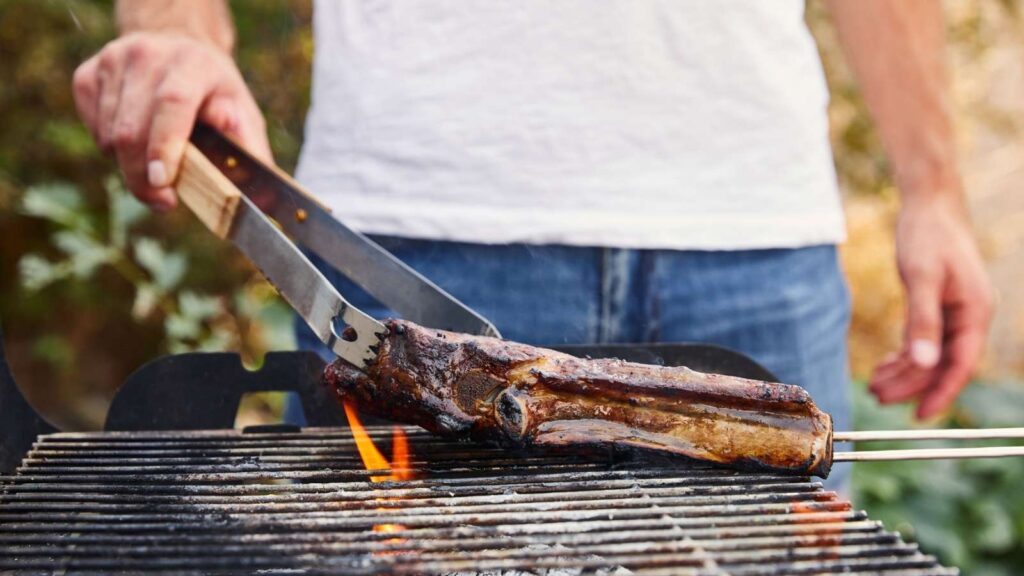
The findings reframe what it means to cook outdoors. For decades, backyard grilling carried a particular image: the competitive cook, the technique obsessive, the person who spent three hours managing a fire to prove a point. That archetype, it turns out, is a minority.
A survey commissioned by Challenge Dairy and conducted among more than 1,150 American grillers identified five distinct grilling archetypes, and fewer than 1 in 3 fit the mastery-driven mold. The rest grill for connection, for calm or simply to get dinner done without fuss. That finding tracks with something happening across American kitchens more broadly. A separate large-scale study found 71% of Americans consider cooking more stress-relieving than stressful, part of a broader reframing of home cooking as one of the more accessible forms of daily self-care.
The Zen Griller
The personality type that best captures this moment has a name: the Zen Griller. This is the person who fires up the grill not to compete or entertain, but to decompress. Grilling, for them, is a sensory reset. The focus it demands, the smell of smoke, the physical act of tending the heat function less like a cooking method and more like an outdoor mindfulness practice.
What makes the Zen Griller notable isn’t the motivation; it’s the frequency. This group grills more than any other archetype, with 78% firing up at least once a week throughout the season. The person least concerned with technique turns out to be the most devoted griller of all.
Matt Moore, host of the Prime Video series Serial Griller, recognizes the instinct firsthand. “Grilling is a daily reset for me,” he said. “The magic of the fire, smoke and ambiance creates a primal, instinctual environment to let go of stress and focus on executing a delicious outcome.” He compares the rhythm of it to a more familiar wellness practice: a grilling session, much like a yoga class or meditation, starts with an idea and ends with enjoyment that has little to do with a final destination.
Grilling as a connection
The Zen Griller isn’t alone in turning the grill into something more than dinner prep. The Host, representing nearly 1 in 5 grillers, finds the same restorative pull in the opposite direction, not solitude, but company. For this group, the cookout is social infrastructure, a way to create shared experiences rather than showcase skill. That instinct is well-documented beyond the backyard. A recent report across 5,000 American households found 83% believe eating with others is better for their mental health than eating alone, a finding that reframes the weekend cookout as something closer to community care than casual entertainment.






Three other archetypes round out the picture. The Pitmaster, the closest thing to the old image of grilling, still chases mastery and technique. The Experimenter treats the grill as a testing ground for new flavors and combinations. The Pragmatist just wants dinner done, valuing convenience over ceremony. Together, all five are a reminder that the instinct to grill runs in more directions than anyone expected.
Curious which one fits your style? Challenge Dairy’s grilling personality quiz matches you to one of the five types.
A broader shift
Neither the Zen Griller nor The Host emerged in a vacuum. They are expressions of a larger recalibration in how Americans relate to food and cooking. The National Restaurant Association’s 2026 culinary forecast placed comfort and stress relief at the top of food culture trends for the year, not as a niche preference, but as the dominant consumer mindset shaping menus and habits across the industry.
Grilling also happens outdoors, and the Cleveland Clinic notes that time spent in nature can lower cortisol and calm the body’s stress response. It requires manual focus, which pulls attention away from screens and toward the present moment. Grilling often ends with a shared meal, which carries its own well-documented mental health benefits.
The grill as a wellness tool
The cultural permission to call grilling self-care has been a long time coming. Wellness culture spent years pointing people toward studios, supplements and structured routines. The data now suggests a meaningful portion of the population found something just as effective with a grill brush and an hour to spare.
The five Challenge Dairy archetypes are a useful mirror, not because most people will recognize themselves in exactly one type, but because together they show how far the definition of grilling has traveled from the Pitmaster ideal. Technique still has its place. But for a growing number of Americans, the point was never the perfect sear. It was the exhale that came with it.
Jennifer Allen is a retired professional chef and long-time writer. Her work appears in dozens of publications, including MSN, Yahoo, The Washington Post and The Seattle Times. These days, she’s busy in the kitchen developing recipes and traveling the world, and you can find all her best creations at Cook What You Love.
The post The backyard grill is America’s new therapy session, and the Zen Griller has figured out something the rest of us missed appeared first on Food Drink Life.

(0) comments
Welcome to the discussion.
Log In
Keep it Clean. Please avoid obscene, vulgar, lewd, racist or sexually-oriented language.
PLEASE TURN OFF YOUR CAPS LOCK.
Don't Threaten. Threats of harming another person will not be tolerated.
Be Truthful. Don't knowingly lie about anyone or anything.
Be Nice. No racism, sexism or any sort of -ism that is degrading to another person.
Be Proactive. Use the 'Report' link on each comment to let us know of abusive posts.
Share with Us. We'd love to hear eyewitness accounts, the history behind an article.