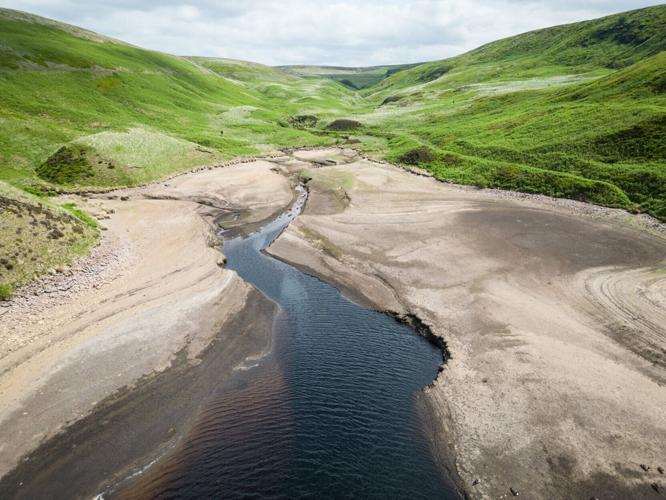

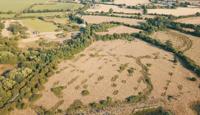

Wesseden Reservoir near Huddersfield when it was at just 8% full in June 2025. (Tom Maddick via SWNS)
The World Meteorological Organization (WMO) has issued a warning that there is an 80% likelihood that we'll see an El Niño event between June and August, and a 90% likelihood after that.
The UN is now urging all countries to bolster early warning systems after confirming the onset of El Niño, warning that the Pacific Ocean-warming phenomenon will bring above-average temperatures "nearly everywhere."
Currently, the temperature of the Pacific Ocean is 6°C above average, which is sparking concerns of a 'super El Niño,' which could result in 2026 potentially being the hottest year on record.
"The science is clear: El Niño is arriving on our doorstep in the coming months with 90% certainty," says UN Secretary-General António Guterres.

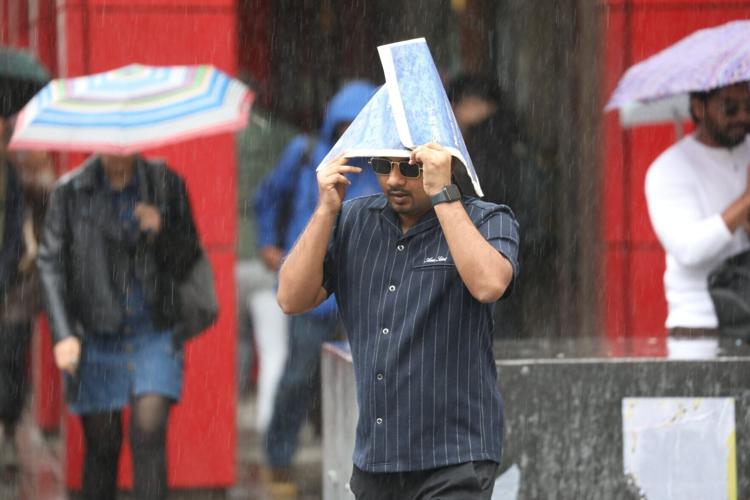
A man in London as rain pours down. (William Lailey via SWNS)
Key takeaways
- The UN and WMO have issued an urgent warning that there is an 80% likelihood of an El Niño event happening before September
- This is caused by warming temperatures in the Pacific Ocean
- This can cause extreme weather around the globe, including heat waves in the U.K. as soon as this month

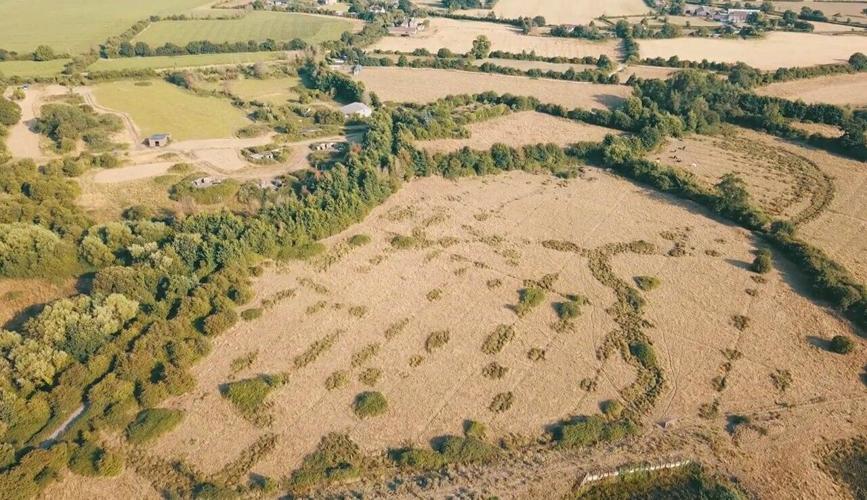
An aerial view of the Portbury nature reserve in Portishead, Bristol shows a scorched landscape as far as the eye can see in 2018. (SWNS)





What is an El Niño event?
The UN describes El Niño as being characterized by the warming of ocean surface temperatures, which then influence global temperatures. "It typically occurs every two to seven years and lasts around nine to 12 months," according to the UN website.
This will lead to more extreme weather events around the world, and "will exacerbate drought and heavy rainfall and increase the risk of heatwaves both on land and in the ocean," said WMO Secretary-General Celeste Saulo.

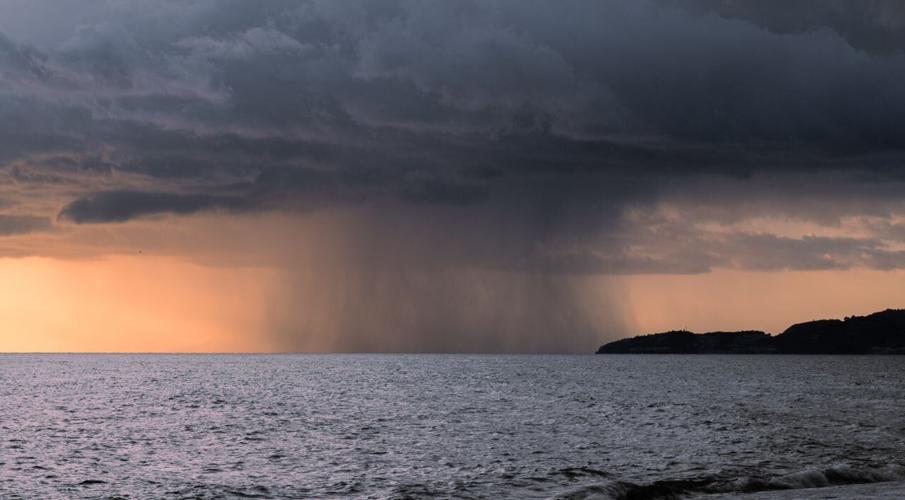
(Photo by Manuel Muñoz via Pexels)
When will El Niño happen?
"For the June-July-August season, forecasts project a nearly universal dominance of above-normal temperatures," the WMO says, meaning we could start to see weather impacts as soon as this month.
There is discussion of the event developing into a 'super' El Niño between November and February.
"A 'super' El Niño is not a term we subscribe to, but it does underpin the fact that this is likely to be a significant event," Grahame Madge, senior press officer and climate science communicator at the Met Office, says.
"Scientists are telling us that this could be the strongest El Niño event so far this century," he adds.

(0) comments
Welcome to the discussion.
Log In
Keep it Clean. Please avoid obscene, vulgar, lewd, racist or sexually-oriented language.
PLEASE TURN OFF YOUR CAPS LOCK.
Don't Threaten. Threats of harming another person will not be tolerated.
Be Truthful. Don't knowingly lie about anyone or anything.
Be Nice. No racism, sexism or any sort of -ism that is degrading to another person.
Be Proactive. Use the 'Report' link on each comment to let us know of abusive posts.
Share with Us. We'd love to hear eyewitness accounts, the history behind an article.