



Mateusz Suski
Age 3 and a half is when kids are the most challenging to travel with, according to new research.
The survey of 2,000 American parents with children under the age of 13 asked respondents about the best — and worst — ages to go on a road trip with their children.
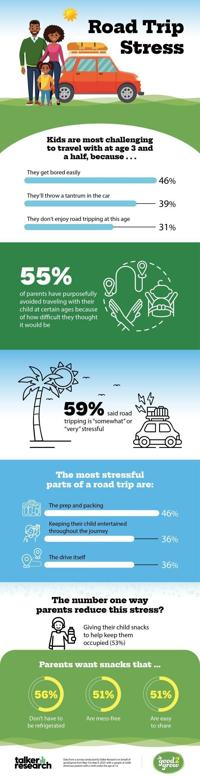
When asked why this was the worst age, parents’ top reason was because their little one gets bored easily (46%).
Others said this was the worst age because their 3-and-a-half-year-old will throw a tantrum in the car (39%) and they don’t enjoy road tripping at this age (31%).
And 55% of parents have purposefully avoided traveling with their child at certain ages because of how difficult they thought it would be.

Commissioned by good2grow ahead of their On The Road campaign and conducted by Talker Research, the survey found that while 3 and a half was pinpointed as the most difficult to road trip with, age 6 was found to be the easiest.
Regardless of their age, parents said seven hours is the cut-off — that’s the maximum length of time they’re comfortable road tripping with a child under the age of 13.
In those seven hours, parents are likely to hear “Are we there yet?” 22 times (3.2 times per hour), experience 18 sibling fights (2.6 per hour) and deal with 14 tantrums (2 per hour) in the car.
Perhaps it’s no surprise, then, that 59% of parents surveyed said road tripping is “somewhat” or “very” stressful.
“Traveling with young kids isn’t always easy, but our research shows that 93% of parents still find road trips to be a fun and memorable experience,” said good2grow VP of Brand Marketing Edzra Gibson. “With our annual On The Road campaign, we want to help take the mess and stress out of family travel — so there’s more room for smiles, laughter and connection for both kids and parents.”
Parents said the most stressful parts of a road trip are the prep and packing (46%), keeping their child entertained throughout the journey (36%) and the drive itself (36%).
The number one way parents reduce this stress? Giving their child snacks to help keep them occupied (53%).
This was followed by having movies or TV shows pre-loaded and ready for the car (52%), as well as giving their child toys to help keep them occupied (47%).
When it comes to the snacks they want to give their children, parents look for snacks that don’t have to be refrigerated (56%), ones that are mess-free (51%) and easy to share (51%) — potentially to help prevent any additional sibling disagreements.






They also prioritize snacks that come in a variety of flavors (44%) and “better-for-you snacks” (i.e., not junk food) (32%)
“Kids’ snacks and beverages are an everyday treat that helps families enjoy smooth, meltdown-free travel,” said Gibson. “This summer, families can go the extra mile with our mess-free options with reusable packaging, packed with flavor and fun for maximum value on every adventure.”

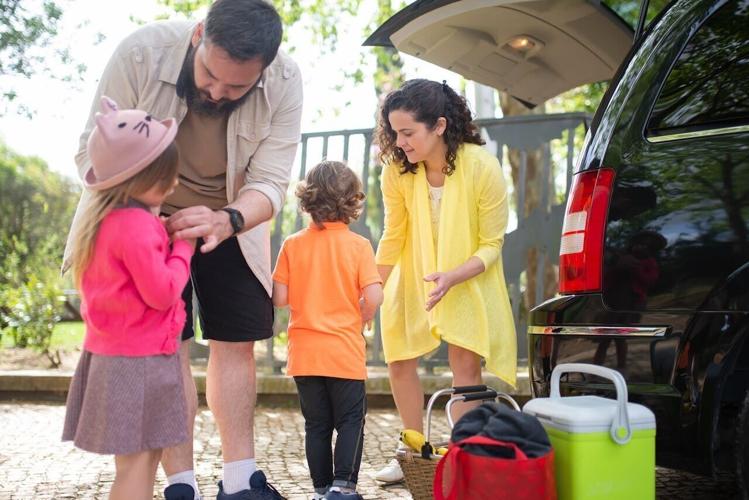
(Photo by Kampus Production via Pexels)
Top tips for parents taking summer road trips with their kids, based on the survey results:
- Pack plenty of snacks
- Ensure there are movies, TV shows and toys to keep their child entertained
- Pick a destination five hours or less away from home, to help ensure the "perfect" trip
- Regardless of the length, make regular stops along the way to get out of the car
- Be a little flexible with the rules — maybe giving more screen time to help make it a smooth journey
Survey methodology:
Talker Research surveyed American parents with children under the age of 13; the survey was commissioned by good2grow and administered and conducted online by Talker Research between May 5–9, 2025.
We are sourcing from a non-probability frame and the two main sources we use are:
- Traditional online access panels — where respondents opt-in to take part in online market research for an incentive
- Programmatic — where respondents are online and are given the option to take part in a survey to receive a virtual incentive usually related to the online activity they are engaging in
Those who did not fit the specified sample were terminated from the survey. As the survey is fielded, dynamic online sampling is used, adjusting targeting to achieve the quotas specified as part of the sampling plan.
Regardless of which sources a respondent came from, they were directed to an Online Survey, where the survey was conducted in English; a link to the questionnaire can be shared upon request. Respondents were awarded points for completing the survey. These points have a small cash-equivalent monetary value.
Cells are only reported on for analysis if they have a minimum of 80 respondents, and statistical significance is calculated at the 95% level. Data is not weighted, but quotas and other parameters are put in place to reach the desired sample.
Interviews are excluded from the final analysis if they failed quality-checking measures. This includes:
- Speeders: Respondents who complete the survey in a time that is quicker than one-third of the median length of interview are disqualified as speeders
- Open ends: All verbatim responses (full open-ended questions as well as other please specify options) are checked for inappropriate or irrelevant text
- Bots: Captcha is enabled on surveys, which allows the research team to identify and disqualify bots
- Duplicates: Survey software has “deduping” based on digital fingerprinting, which ensures nobody is allowed to take the survey more than once
It is worth noting that this survey was only available to individuals with internet access, and the results may not be generalizable to those without internet access.
(0) comments
Welcome to the discussion.
Log In
Keep it Clean. Please avoid obscene, vulgar, lewd, racist or sexually-oriented language.
PLEASE TURN OFF YOUR CAPS LOCK.
Don't Threaten. Threats of harming another person will not be tolerated.
Be Truthful. Don't knowingly lie about anyone or anything.
Be Nice. No racism, sexism or any sort of -ism that is degrading to another person.
Be Proactive. Use the 'Report' link on each comment to let us know of abusive posts.
Share with Us. We'd love to hear eyewitness accounts, the history behind an article.