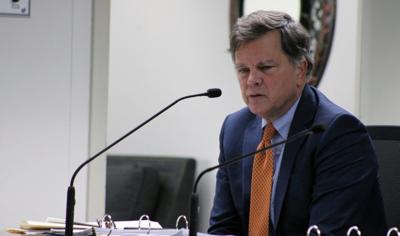
Alabamians receiving federal food assistance would not be able to use it to buy candy or soda under legislation planned for the 2026 session.
The proposal from Sen. Arthur Orr, R-Decatur, would prohibit the purchases under the Supplemental Nutrition Assistance Program, or SNAP, sometimes referred to as food stamps.
The draft bill, shared with ADN, requires the Alabama Department of Human Resources to request a waiver from the United States Department of Agriculture Food and Nutrition Services to ban candy and soda. Several other states have gotten similar waivers in recent months.
“Why should taxpayers be paying for sugary drinks and candy, particularly in a state that is one of the most obese in the country?” Orr told Alabama Daily News.
About 39% of Alabamians are obese, according to the Centers for Disease Control and Prevention.
Paying for unhealthy choices can cost the state even more later, Orr argues.
“If someone is on SNAP, they’re probably on Medicaid,” he said. The health care program for the low-income pays for diabetes and high blood pressure treatment, among others.
“Now we’re paying for Medicaid care for a problem we facilitated with SNAP and taxpayers are getting hit both ways,” Orr said. “It’s just common sense that taxpayers shouldn’t be buying such things.”
The legislation is modeled after a new law in Idaho, where the USDA approved a waiver earlier this year.
Other waivers have been signed in Arkansas and Utah.




“The Trump Administration is unified in improving the health of our nation,” USDA Secretary Brooke Rollins said in a statement last month. “America’s governors have proudly answered the call to innovate by improving nutrition programs, ensuring better choices while respecting the generosity of the American taxpayer. Each waiver submitted by the states and signed is yet another step closer to fulfilling President Trump’s promise to Make America Healthy Again.”
Indiana, Iowa and Nebraska have similar proposals.
“I call on every governor in the nation to submit a SNAP waiver to eliminate sugary drinks—taxpayer dollars should never bankroll products that fuel the chronic disease epidemic,” Secretary of Health and Human Services Robert F. Kennedy Jr. said in the same June statement.
About 750,000 Alabamians receive food assistance through SNAP, including 500,000 families with children, 300,000 families with older adults or disabled people, and 24,000 Alabama veterans, according to Alabama Arise.
A family of four in Alabama qualifies for SNAP if its net income per month is less than $2,600. The average monthly benefit per person is about $121, according to ADHR.
The food benefits have been federally funded, but the tax-cut bill signed by President Donald Trump this month shifts beginning in fiscal year 2028 part of the cost to states based on their error rates. Error rates measure the accuracy of a state’s eligibility and benefit determinations. Using the 2024 rate, Alabama would be responsible for 10% of the benefit costs, which would cost the state about $172 million a year, according to the Center on Budget and Policy Priorities, a left-leaning think tank.
The plan allows states to choose either their payment error rate from fiscal year 2025 or fiscal year 2026 to determine how much they will pay for the benefits in FY 28. States could have to pay up to 15%, but those with payment error rates below 6% would not have to pay for the benefit costs.
Alabama’s 2026 legislative session starts in January.
Read more at aldailynews.com.


(0) comments
Welcome to the discussion.
Log In
Keep it Clean. Please avoid obscene, vulgar, lewd, racist or sexually-oriented language.
PLEASE TURN OFF YOUR CAPS LOCK.
Don't Threaten. Threats of harming another person will not be tolerated.
Be Truthful. Don't knowingly lie about anyone or anything.
Be Nice. No racism, sexism or any sort of -ism that is degrading to another person.
Be Proactive. Use the 'Report' link on each comment to let us know of abusive posts.
Share with Us. We'd love to hear eyewitness accounts, the history behind an article.