
The Perry County Commission District 1 Democratic primary has become one of the most closely watched local races in Alabama.
A single vote separated incumbent Commissioner Albert Turner Jr. and challenger Donald Bennett after provisional ballots were counted. As expected in a race that close, emotions ran high. Questions were asked. Legal procedures were initiated. The Democratic Party became involved.
That is exactly how democracy is supposed to work.
But somewhere along the way, the conversation stopped being about the election and started becoming about destroying people.
There is a difference.
Throughout American political history, candidates have challenged election results. Courts have heard those challenges. Political parties have interpreted their own rules. Election officials have defended their decisions. None of that is unusual. In fact, it is one of the safeguards that gives voters confidence that every lawful vote matters.
The problem arises when disagreement over process evolves into a public campaign of accusations before that process has concluded.
Over the past several days, social media has been flooded with repeated claims suggesting widespread misconduct, unethical behavior, favoritism, manipulation, and corruption involving not only the candidates, but members of the Alabama Democratic Party itself. Posts have questioned motives, suggested secret agreements, implied wrongdoing, and portrayed party leaders as participants in a coordinated effort to undermine democracy.
Those are serious allegations.
Serious allegations deserve serious evidence.
There is an important distinction that too often gets lost in today’s political climate.
One may disagree with a decision. One may appeal a decision. One may criticize a decision.
But repeatedly presenting suspicion as established fact before the process has reached its conclusion risks damaging public confidence far beyond a single election.
That damage does not end when the election ends. It remains.
The irony is that both candidates voluntarily entered the Democratic Party’s nomination process.
Every candidate who qualifies to run as a Democrat places trust in the party’s governing structure. That relationship is not merely symbolic. Candidates pay qualifying fees. They agree to campaign under the Democratic banner. They submit themselves to party rules governing qualification, certification, election contests, recounts, and appeals.
That agreement carries responsibilities on both sides.
Candidates have the right to expect that party officials will administer the rules fairly, consistently, and impartially.
Likewise, the party has a responsibility to hear disputes according to its governing procedures.
Those procedures exist precisely because close elections happen.
The Alabama Democratic Party ultimately distinguished between the formal election contest and the request for a recount. While the formal contest was dismissed, the Party ordered a recount of the District 1 race. Whether one agrees with every procedural decision or not, that distinction demonstrates that the Party recognized there were issues requiring review through its established process.
That is democracy functioning—not necessarily perfectly, but procedurally. Unfortunately, much of the public conversation has ignored that distinction.
Instead, social media has become a courtroom where allegations are issued, motives assigned, and verdicts rendered long before official processes conclude.
That trend should concern every Democrat. Today the target may be Albert Turner. Tomorrow it could be Donald Bennett. The next day it could be any Democrat willing to place his or her name on a ballot.
If every close election becomes an opportunity to publicly accuse party officials of corruption before evidence is established, fewer qualified people will choose to serve. Volunteers will hesitate. Local party leaders will become reluctant to participate. Citizens watching from the sidelines may conclude that the process itself cannot be trusted.
When that happens, democracy loses regardless of who wins.
As someone who has personally disagreed with decisions made by the Democratic Party, I understand frustration.
I have challenged decisions. I have appealed decisions. I have spoken publicly when I believed the Party had made mistakes. Yet I also understood something larger than my own disagreement.
The Democratic Party is bigger than any one candidate. It is bigger than any one county. It is bigger than any one election. Criticizing the Party when necessary is part of being an engaged member.
Attempting to delegitimize the Party every time it reaches a conclusion one dislikes is something entirely different. That distinction matters.
Another question deserves thoughtful consideration. Who benefits when Democrats spend more time attacking one another than advancing Democratic principles?
Political parties inevitably contain disagreements. Healthy debate is expected. Internal elections are often fiercely contested. But there is a point where passionate advocacy becomes counterproductive. When supporters begin expanding the conflict beyond the candidates themselves—drawing in unrelated party leaders, longtime Democratic volunteers, elected officials, and anyone perceived to have political associations—the dispute ceases to be about one election.
It becomes about weakening confidence in the institution itself.
Democrats should be especially careful about that lesson.
History reminds us that political institutions are difficult to build and remarkably easy to undermine.
Our Party has survived ideological divisions, Reconstruction, the Civil Rights Movement, political realignment, and countless internal disagreements because, ultimately, members accepted that there must be rules and there must be processes.
Without process, there is only personality. Without rules, there is only outrage. Without trust, there is no democracy.
This editorial is not an endorsement of Albert Turner. Nor is it a criticism of Donald Bennett.
It is a defense of something larger than either man. It is a defense of democratic process. Citizens should absolutely ask hard questions. Candidates should vigorously defend themselves. Supporters should passionately advocate for those they believe in.
But there comes a point when the pursuit of political victory begins to resemble a campaign of perpetual accusation.
That point deserves recognition. Because when politics becomes less about convincing voters and more about convincing the public that every unfavorable outcome must have resulted from corruption, we all lose.
The strength of democracy has never rested on unanimous agreement.
Its strength has always rested on our willingness to trust lawful procedures, insist upon evidence before accusation, and accept final outcomes once those procedures have run their course.
That is not weakness. That is the discipline democracy requires.
As the Perry County Commission District 1 race now enters its next chapter, with the Alabama Democratic Party setting the bond amount necessary to proceed with the ordered recount, perhaps this is the moment for everyone involved to pause and reflect.
Sometimes leadership is not measured solely by whether we were technically correct.
Sometimes leadership is measured by whether we exercised sound judgment when the stakes were highest.
One aspect of this election continues to stand out to me.
The Honorable Carlton L. Hogue served in two important capacities throughout this process. As Probate Judge, he administered the election. As Chairman of the Perry County Democratic Executive Committee, he also served in a leadership role within the Party’s primary election process.
Those are separate legal responsibilities, but to the average citizen they are represented by the same public official.
Looking back, one cannot help but wonder whether earlier guidance regarding the proper procedure for requesting a recount might have reduced confusion, lowered tensions, and prevented weeks of uncertainty. That observation is not intended as criticism of any individual. Rather, it is an acknowledgment that clear communication from leadership is often just as important as the rules themselves.
Democracy depends upon both.
Today, I do not see two winners. I see two public servants who have each paid a significant price.
Commissioner-elect Donald Bennett earned the Democratic nomination by one vote. Yet because the election remained under challenge, he has reportedly incurred legal expenses defending a victory that had already been certified.
Commissioner Albert Turner, after more than two decades of public service, now faces a substantial bond requirement to continue pursuing the recount authorized by the Alabama Democratic Party. Regardless of one’s position on the merits, few would dispute that such financial obligations can present a significant barrier for candidates.
So I ask a simple question.
Who really won?
Certainly, one man will ultimately hold the office.
But what did Perry County lose? How many hours that could have been spent addressing roads, economic development, public safety, and the daily concerns of our citizens instead became consumed by legal proceedings, procedural disputes, and political division? How many thousands of dollars—whether spent on attorneys, bonds, filings, or litigation—could instead have been invested in the people of Perry County?
That is money our community will never see again. That is time our leaders cannot recover. That is energy that could have been devoted to moving Perry County forward.
Perhaps this election leaves us with a lesson that reaches far beyond District 1.
Democracy should never become so expensive that ordinary citizens are discouraged from seeking public office.
Party leadership should never become so consumed with procedure that communication becomes secondary.
Political supporters should never become so committed to winning that they forget the institutions they are asking the public to trust.
And all of us—candidates, elected officials, party leaders, and citizens alike—must remember that democracy is not merely about declaring a winner.
It is about preserving confidence in the process that produced that winner.
When history remembers the Perry County Commission District 1 election, I hope it remembers more than a one-vote margin.
I hope it reminds future leaders that transparency matters.
Communication matters. Fairness matters. Grace matters.
And sometimes the greatest victory is not proving that one side was right.
Sometimes the greatest victory is ensuring that everyone—even those who disagree with the outcome—believes they were heard, respected, and treated fairly.
Because in the end, that is what democracy asks of all of us. So perhaps the final question is no longer who won by one vote. Perhaps the more important question is this:
When is enough enough?
When does campaigning become character assassination? When does advocacy become manipulation? When does political messaging become an effort to erode public confidence in the very democratic institutions that protect every candidate’s right to be heard?
Those questions deserve thoughtful answers long after this election is over. Because democracy is not preserved by the loudest voice.
It is preserved by integrity, evidence, accountability, communication, and respect for the process—even when the outcome is not the one we hoped for.
When enough is enough, leadership must become greater than politics.
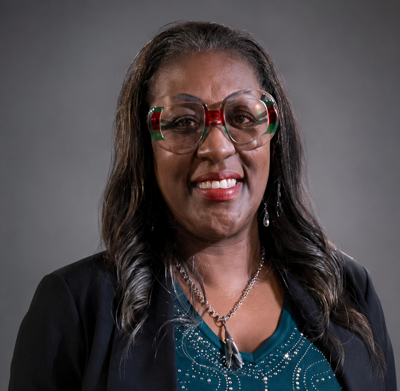
Kimesha Houston Alvarado, also known as “Sunshine” Alvarado, is a Selma-based community advocate, media personality, and civic commentator rooted in the historic Black Belt region. A military veteran with a background in logistics, communications, and public engagement, she uses media, community dialogue, and historical perspective to discuss voting rights, civic engagement, culture, and the evolving role of Black institutions in modern America.
(1) comment
America is a Constitutional Republic and not a democracy.
Welcome to the discussion.
Log In
Keep it Clean. Please avoid obscene, vulgar, lewd, racist or sexually-oriented language.
PLEASE TURN OFF YOUR CAPS LOCK.
Don't Threaten. Threats of harming another person will not be tolerated.
Be Truthful. Don't knowingly lie about anyone or anything.
Be Nice. No racism, sexism or any sort of -ism that is degrading to another person.
Be Proactive. Use the 'Report' link on each comment to let us know of abusive posts.
Share with Us. We'd love to hear eyewitness accounts, the history behind an article.