
I’m not one to make fun of religious beliefs or sacred scriptures. I will call attention to strange, irrational or nonsensical aspects of religion, and I’m particularly irked by superstitious things. Since many colleagues, friends and family are people of faith, and because I lived and worked in FaithWorld for many a year, I’m sensitive to how sensitive these matters can be. Matters such as one subject meandering my mind.
In both college and seminary I studied biblical literature with some excellent professors. These Evangelical, Protestant, Catholic and Jewish teachers challenged us to wrestle with the sacred texts rationally, with our eyes open, seeking knowledge and wisdom with our “god-given” minds. This critical approach often begins at the beginning, with the Genesis Story and the odd tale it tells.
The Maker shapes humans from the sod. Though the universe was created by Divine Fiat—a word, a thought, a nod, a snap of the fingers—these brand new creatures, mini creators, had to be fashioned clod by clod from the muck and mud; literally, the dust of the earth. This is no aloof God of the Heavens, a Cosmic finger snapper. This one directly participates, gets hands dirty, and blows breath into these new divine dolls. But they aren’t playthings (are they?). The garden paradise is their own playground, except for one thing: a tree they are not supposed to touch or eat from. As everyone knows, they heeded the hiss of a snake, disobeyed, and literally all hell broke loose. They broke loose, broke the rules, and got themselves expelled—broken but brilliant Humanity. The oddity of this legend is built into our genes.
What is the moral of the story? The first step in acquiring knowledge was to become aware, particularly aware of one’s nakedness. We suddenly wake up to the fact we are human beings with brains, but also with bodies. Bodies have to be protected, covered, but what about brains? Apparently the Genesis Parent had no concern for covering the bodies of the first children, but the Creator was adamant that their brains needed protective covering, their eyes shaded. The Maker put a limit on their minds, restricting too much knowledge, the kind of knowledge where you can discern what is good and bad, right and wrong, fact from fiction. Once Adam and Eve eat of the forbidden tree and wake up to their bodies, they discover Eve was right: freely choosing to eat what you’re told not to eat, can lead to wisdom, can “make one wise” (3:6). What God feared most came to pass. “See, the man has become like one of us, knowing good and evil"; (3:22). Don’t ask who else the Maker is talking to, it may turn out to be the snake!
This odd story gets more strange, puzzling. The Maker regrets his greatest art project,
Humanity—“I am sorry that I have made them” (6:8)—so makes something called rain to flood the earth and kill everyone but a favored family. Other (flavorful) animal species are saved, only to be barbecued (burned in sacrifice) so life can go on. Then we come to chapter 11 and the odd story of the Tower of Babel. The great city of Babylon was a cosmopolitan crossroads with a diverse population from all corners of the earth. Yet, they all spoke the same language! Babylonians liked to build towers (ziggurats) so their god (Marduk) could have a temple on top. This was displeasing to the Odd God of the Sod who worried once more that these muddy human creatures would climb high to look Him in the eye. How was this a threat to the King of Heaven? “Look, they are one people, and they have all one language … Come, let us go down (with Marduk?), and confuse their language there, so that they will not understand one another’s speech” (11:6-7). Babylon and its tower became “babble on,” the place of confusion, since God scattered humanity throughout the world and disrupted communication. Wait, what?
These ancient stories were told (in Hebrew and other languages) to clear up confusion as to what the Creator truly wants of us: apparently unthinking obedience. Don’t try to know too much, to climb too high, to get too smart, to practice so much wisdom and creativity that we “become like god.”
If there is a moral, or morals, to these ancient tales, perhaps one can be summarized: Odd stories can stir us to open our eyes, take responsibility for our actions, and build our skills at communication across restrictive orthodox boundaries. We may smile at old texts, but they may snap fingers that awaken us to the freethinking creatures we are meant to be.
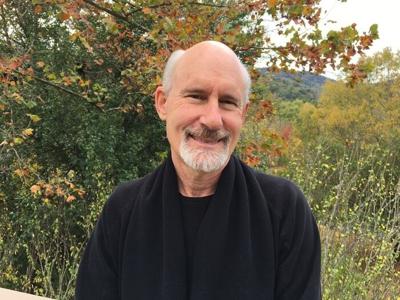
Chris Highland was a Protestant minister and interfaith chaplain for many years before becoming a humanist celebrant and author. He lives in Asheville, North Carolina. His website is www.chighland.com.


(0) comments
Welcome to the discussion.
Log In
Keep it Clean. Please avoid obscene, vulgar, lewd, racist or sexually-oriented language.
PLEASE TURN OFF YOUR CAPS LOCK.
Don't Threaten. Threats of harming another person will not be tolerated.
Be Truthful. Don't knowingly lie about anyone or anything.
Be Nice. No racism, sexism or any sort of -ism that is degrading to another person.
Be Proactive. Use the 'Report' link on each comment to let us know of abusive posts.
Share with Us. We'd love to hear eyewitness accounts, the history behind an article.