


Julia ÐндÑÑй
By Stephen Beech
Children who eat foods containing soy are more focused at school, according to a study.
American researchers found that school-aged youngsters who consumed more isoflavones from soy foods exhibited better thinking abilities and attention.
They explained that isoflavones are naturally occurring compounds found in numerous plants, particularly soybeans and soy products.
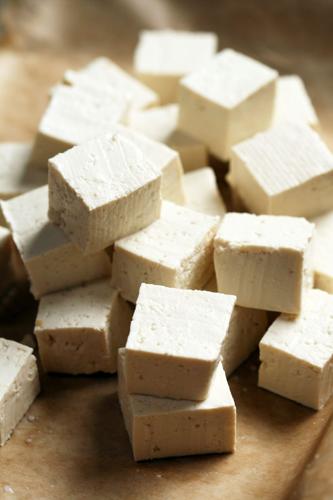
Soy can be found in products including tofu, edamame, soy milk, miso and soy sauce.
Although previous research in adults has suggested that soy isoflavones can improve memory, the benefits haven’t been deeply studied in children.
Ajla Bristina, of the University of Illinois Urbana-Champaign, said: “Soy foods are often not a regular part of children’s diets.
“Our study adds evidence of the importance of nutrients found in soy foods for childhood cognition.”
To examine the potential benefits of soy isoflavones, the research team examined previously available data from a study that included 128 children aged seven to 13. T

Kamala Bright
The team used information from seven-day diet records to calculate each child’s average dietary intake, including the amounts of macronutrients, micronutrients, vitamins and isoflavones consumed.
To assess the youngsters' general intellectual ability, the researchers used a set of pencil and paper tests adjusted for grade level.






The team also measured attentional abilities using a computerized task while electroencephalographic (EEG) activity was recorded and used to measure information processing speed and attention.
Bristina, a neuroscience doctoral student, said: “No other studies have examined the association between soy isoflavones and attentional abilities using EEG or similar measures to record electrical activity generated by the brain."
Overall, the analysis revealed that the children in the study tended to consume low amounts of isoflavone-containing soy foods.
However, those who did consume more soy foods showed faster responses during the attentional tasks and exhibited faster processing speed.
No association was observed between soy isoflavone intake and general intellectual ability.

Nikolai Chernichenko
Bristina said: “The children in our study consumed an average of 1.33mg of isoflavones per day, which, while relatively low, aligns with previously reported values for the United States.
“Soy consumption for individual participants ranged from zero to 35 mg/day.
"To put this into perspective, an 8 fl. oz serving of soy milk provides about 28 mg of isoflavones, a serving of tofu provides about 35 mg and half a cup of steamed edamame provides about 18 mg of isoflavones.”
Bristina says that snacks such as roasted edamame, soy nuts or soymilk are a good way to incorporate more soy into the diet, while tofu, tempeh or soy-based nuggets are also good options for meals.
She added, “Correlational studies like this are only the first step.
“To better understand the effects of eating soy foods on children’s cognitive abilities and the precise amount of isoflavone intake necessary to elicit faster response times will require intervention approaches.”
The findings were presented at the annual meeting of the American Society for Nutrition.


(0) comments
Welcome to the discussion.
Log In
Keep it Clean. Please avoid obscene, vulgar, lewd, racist or sexually-oriented language.
PLEASE TURN OFF YOUR CAPS LOCK.
Don't Threaten. Threats of harming another person will not be tolerated.
Be Truthful. Don't knowingly lie about anyone or anything.
Be Nice. No racism, sexism or any sort of -ism that is degrading to another person.
Be Proactive. Use the 'Report' link on each comment to let us know of abusive posts.
Share with Us. We'd love to hear eyewitness accounts, the history behind an article.