

(Photo by Kampus Production via Pexels)
By Stephen Beech
E. coli could be used to produce a "green" sunscreen ingredient found in fish, suggests new research.
Many marine creatures survive relentless sunlight in open water without getting burned by making their own natural sunscreen, say scientists.
Now humans could be one step closer to using it too, say Chinese scientists.
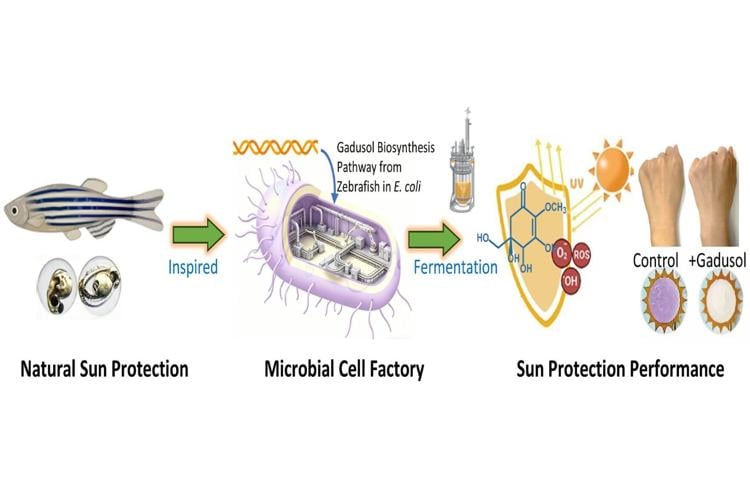
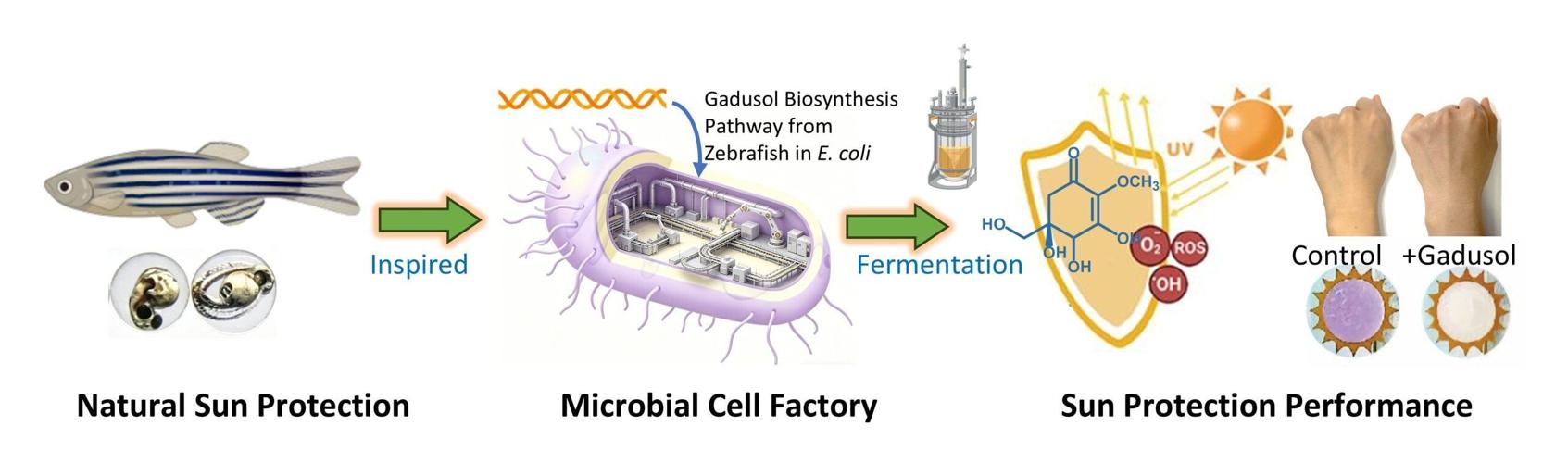
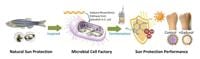
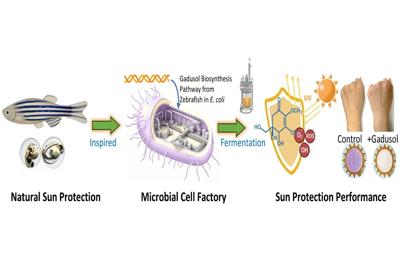
They used E. coli bacteria to create microbial "cell factories" to sustainably produce the UV-protective compound gadusol, which could eventually serve as a sunscreen ingredient and an antioxidant additive.
Gadusol, found in the eggs of various fish and other marine organisms, helps protect against ultraviolet damage.
But study lead author Ping Zhang, of Jiangnan University, Wuxi, said: "It is scarce in nature, and extracting it is inefficient and can carry environmental costs.
"We want to find a scalable and greener way to produce gadusol."

(Jiangnan University / Trends in Biotechnology via SWNS)
Instead of harvesting the molecule from nature, the Chinese team turned microbes into mini chemical factories.
They rebuilt a zebrafish's pathway for making gadusol inside the bacterium Escherichia coli, then tweaked the microbes' genetics and growing conditions.
The modifications increased gadusol yield by nearly 93 times, from 45.2 milligrams per liter to 4.2 grams per liter.
The lab-made compound also showed promise in preliminary UV-protection tests, according to the study published in the journal Trends in Biotechnology.
Zhang said: "Achieving this level of production in the lab is very promising.
"It suggests that we may be able to meet future demand for natural sunscreen ingredients through microbial production."
He says the compound may offer more than just sun protection.







(Photo by Mikhail Nilov via Pexels)
In experiments, gadusol showed antioxidant activity comparable to that of vitamin C, suggesting it may help neutralize cell-damaging free radicals from UV exposure.
That same antioxidant property also inspired a useful shortcut: a color-based screening test.
In the test, a purple chemical signal turns yellow when gadusol neutralizes free radicals.
The color shift allows researchers to quickly identify bacterial strains that produce more of the compound.
Study senior author Ruirui Xu, also of Jiangnan University, said: "Compared with traditional chemical analysis, this approach is more convenient, efficient, and economical."
The study comes amid growing interest in alternatives to some conventional sunscreen ingredients, which can irritate sensitive skin, harm marine organisms, or rely on petrochemicals.

(Photo by Anna Tarazevich via Pexels)
Gadusol's combination of UV protection and antioxidant activity could make it an attractive ingredient for sunscreens and skin-care products, according to the research team.
But gadusol won't make it into our beach bags just yet.
The study did not compare gadusol head-to-head with commercial sunscreens, nor assess long-term safety or large-scale manufacturing.
Regulatory approval would also be needed.
But the researchers believe that their study provides a starting point for moving gadusol toward practical applications.
Based on current technology, they expect to start seeing some products appear on the market within two years.
Zhang added: "For small molecules with application potential, we hope people look beyond traditional extraction methods.
"Microbial cell factories are emerging as a greener and more sustainable way to bring laboratory discoveries into real-world use."

(0) comments
Welcome to the discussion.
Log In
Keep it Clean. Please avoid obscene, vulgar, lewd, racist or sexually-oriented language.
PLEASE TURN OFF YOUR CAPS LOCK.
Don't Threaten. Threats of harming another person will not be tolerated.
Be Truthful. Don't knowingly lie about anyone or anything.
Be Nice. No racism, sexism or any sort of -ism that is degrading to another person.
Be Proactive. Use the 'Report' link on each comment to let us know of abusive posts.
Share with Us. We'd love to hear eyewitness accounts, the history behind an article.