






Vitaly Gariev
By Stephen Beech
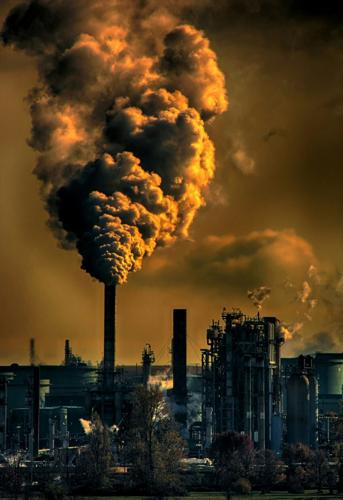
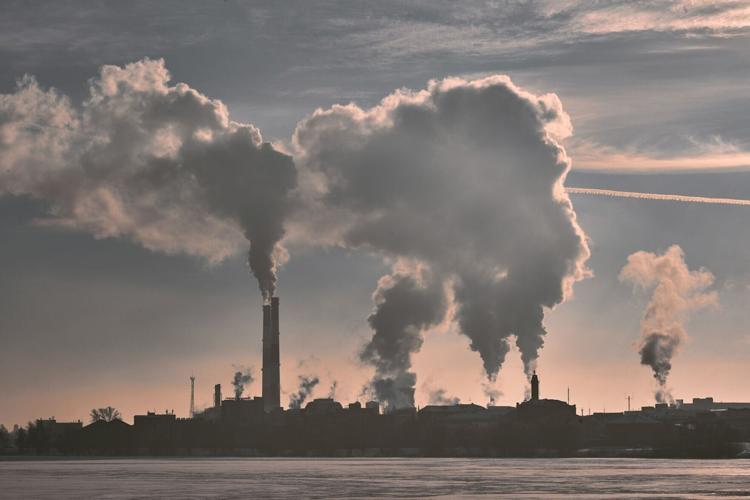
Air pollution can trigger migraine, suggests new research.
Hot and humid weather conditions were also associated with increased likelihood of the debilitating headaches, according to the study.
Scientists say their findings, published in the journal Neurology, could help predict when migraine may be more likely.
They suggest people could stay indoors, use air filters and take preventive medications to help ward off attacks.
Both short-term and cumulative exposure to air pollution as well as climate factors such as heat and humidity were associated with increased migraine activity, according to the Israeli research.
Study author Ido Peles, of Ben-Gurion University of the Negev, Be’er Sheva, said: “These results help us to better understand how and when migraine attacks occur.

Chris LeBoutillier
“They suggest that for people who have a susceptibility to migraine to begin with, environmental factors may play two roles: intermediate-term factors such as heat and humidity may modify the risk for attacks, while short-term factors such as spikes in pollution levels may trigger attacks.”
More than 7,000 people with migraine living in Be’er Sheva in the Negev desert were followed for an average of 10 years.
The research team looked at daily exposure to air pollution from traffic, industry and dust storms, as well as weather conditions.
They then looked at how often and when participants had to visit a hospital or a primary care office with an acute migraine, and compared that to the pollution and weather conditions that day and up to seven days earlier, since pollution effects may take a few days to affect the body.
The team also looked at cumulative exposure to air pollution and migraines.
As another measure of migraine activity, researchers also checked pharmacy records to see how many doses of the migraine medications called triptans participants needed.
During the study, 32% of the participants had at least one visit to the hospital or clinic for acute migraine.
A total of 47% of the people had bought triptan medications during the study, with average use at two tablets per month and 2.3% using 10 or more tablets per month.

Mehrpouya H





The research team found an association between air pollution and visits to the hospital or clinic for migraine.
On the day with the highest number of visits to the hospital or clinic, air pollution levels were elevated compared to the average amount over the study period.
On that day, the level of particulate matter 10 (PM10), which includes dust, was 119.9 micrograms per cubic meter (µg/m3), compared to an average of 57.9 during the study.
For PM2.5, which includes particles from motor vehicle exhausts and the burning of fuels from power plants and other industries, the level on that day was 27.3 µg/m3, compared to an average of 22.3 during the study.
For nitrogen dioxide, or NO2, a gas mostly from traffic emissions, the level on that day was 11.2 parts per billion, compared to an average of 8.7.

Maxim Tolchinskiy
The day with the fewest visits to the hospital or clinic also had lower than average pollution levels.
After adjusting for other factors that could affect risk of migraine attacks, researchers found that people with short-term exposure to high levels of NO2 were 41% more likely to go to the hospital or clinic for migraine than people not exposed to high levels.
People exposed to high levels of solar radiation, or ultraviolet (UV) rays from the sun, were 23% more likely to seek help for migraine than those not exposed to high levels.
People with cumulative exposure to high levels of NO2 were 10% more likely to have high use of migraine drugs than people without cumulative exposure to high levels.
People with cumulative exposure to high levels of PM2.5 were 9% more likely to have high use of the drugs.

Sander Sammy
The research team also found that climate conditions also played a role in the effects of pollution.
High temperatures and low humidity amplified the effect of NO2, while cold and humid conditions intensified the effect of PM2.5.
Peles said: “These findings highlight opportunities for anticipating what care will be needed.
“As climate change intensifies the frequency of heat waves, dust storms and pollution episodes, we will need to integrate these environmental risk factors into our guidance for people with migraine."
He added: "When high-risk exposure periods are in the forecast, doctors can advise people to limit their outdoor activity and use air filters, take short-term preventive medications and start using their migraine drugs at the first sign of a problem to ward off attacks.”
The researchers said one limitation of the study was that exposure to air pollution was measured by monitoring stations and did not take into account individual behavior such as amount of time spent indoors, use of air conditioning or air filters.

(0) comments
Welcome to the discussion.
Log In
Keep it Clean. Please avoid obscene, vulgar, lewd, racist or sexually-oriented language.
PLEASE TURN OFF YOUR CAPS LOCK.
Don't Threaten. Threats of harming another person will not be tolerated.
Be Truthful. Don't knowingly lie about anyone or anything.
Be Nice. No racism, sexism or any sort of -ism that is degrading to another person.
Be Proactive. Use the 'Report' link on each comment to let us know of abusive posts.
Share with Us. We'd love to hear eyewitness accounts, the history behind an article.