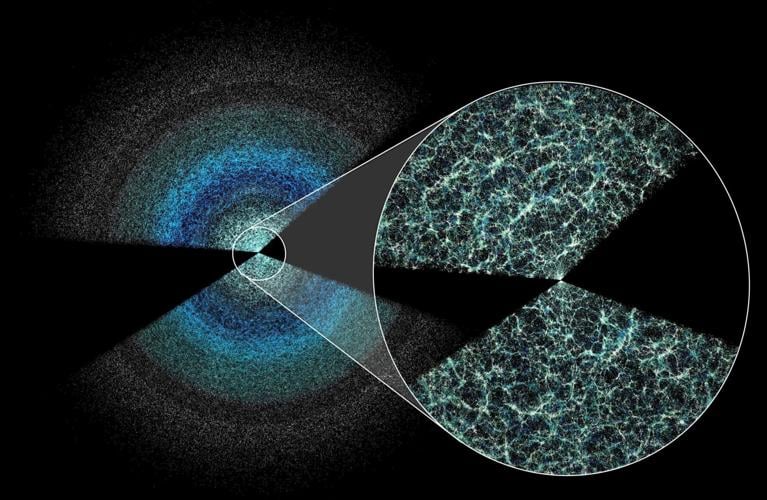
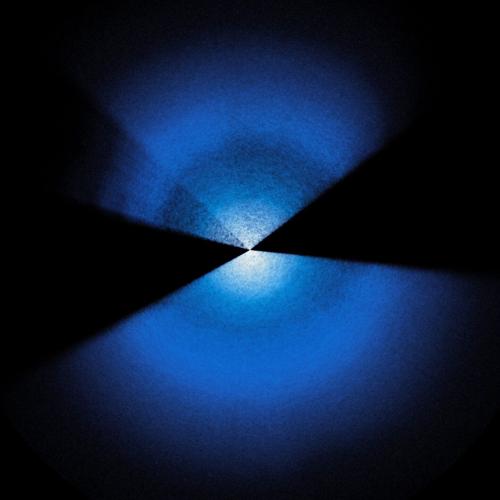
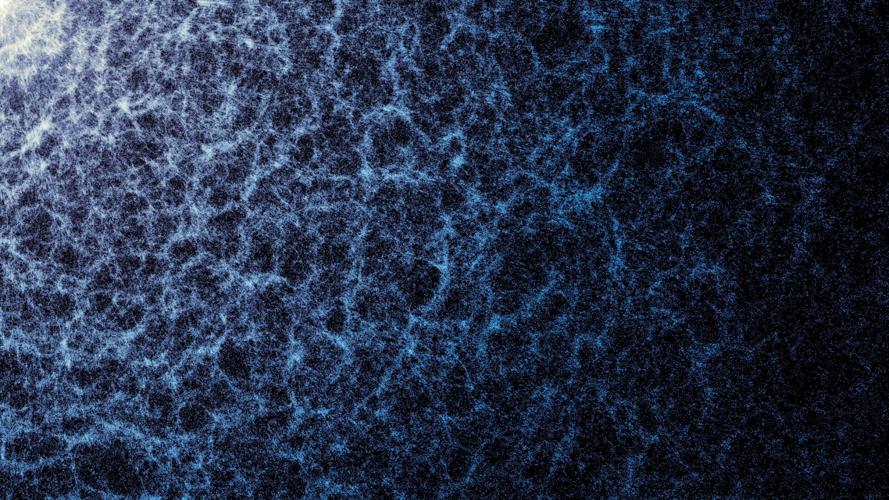
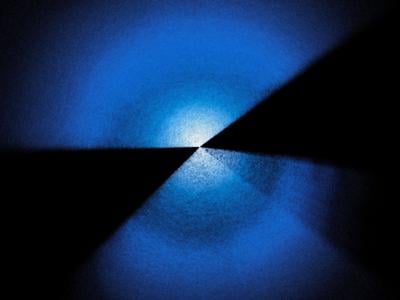

A thin slice of the map produced by the DESI five-year survey shows galaxies and quasars above and below the plane of the Milky Way. The Universe's large-scale structure is visible in the magnified inset. Earth lies at the center of the wedges, and the black gap marks where our own galaxy obscures distant objects. Light from the furthest galaxies shown is 11 billion years old by the time it reaches Earth. (Claire Lamman / DESI collaboration via SWNS)
By Dean Murray
The largest high-resolution 3D map of our universe has been unveiled.
An international team of astronomers has charted more than 47 million galaxies and quasars.
The groundbreaking map, released on Wednesday (April 15), comes from the Dark Energy Spectroscopic Instrument (DESI) project and promises to revolutionize our understanding of cosmic structure and expansion.
Researchers hail the achievement as a major milestone in cosmology, with the data now available for global scientific analysis.
The five-year survey, finished ahead of schedule and with vastly more data than expected, has produced the map to allow researchers to explore dark energy, the fundamental ingredient that makes up about 70% of our universe and is driving its accelerating expansion.

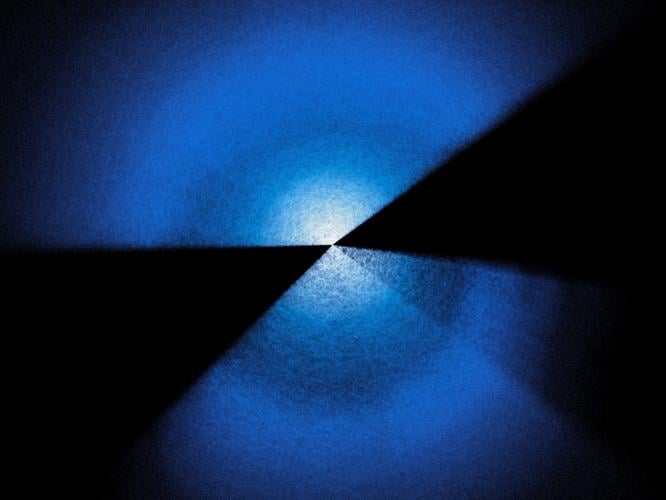
The largest ever 3D map of the Universe, created by the now-completed five-year Dark Energy Spectroscopic Instrument (DESI) survey. Researchers use DESI’s huge 3D map to study dark energy. Earth is at the center of this map, and every point represents a galaxy. (DESI Member Institutions via SWNS)






By comparing how galaxies clustered in the past with their distribution today, researchers can trace dark energy's influence over 11 billion years of cosmic history.
Surprising results using DESI's first three years of data hinted that dark energy, once thought to be a "cosmological constant," might be evolving over time.
With the full set of five years of data, researchers will have significantly more information to test whether that hint disappears or grows. If confirmed, it would mark a major shift in how we think about our universe and its potential fate, which hinges on the balance between matter and dark energy.

A small, zoomed-in portion of DESI’s year-five map in which the large-scale structure of the Universe, created by gravity, is visible. Each dot represents a galaxy. The denser areas indicate regions where galaxies and galaxy clusters have clumped together to form the strands of the cosmic web. Also seen are large voids between the filaments. (DESI Member Institutions via SWNS)
Stephanie Juneau, associate astronomer and NSF NOIRLab representative for DESI, said: "Ultimately, we are doing this for all humanity, to better understand our universe and its eventual fate.
"After finding hints that dark energy might deviate from a constant, potentially altering that fate, this moment feels like sitting on the edge of my seat as we analyze the new map to see whether those hints will be confirmed."
The Dark Energy Spectroscopic Instrument is mounted on the U.S. National Science Foundation Nicholas U. Mayall 4-meter Telescope at NSF Kitt Peak National Observatory (KPNO) in Arizona, a program of NSF NOIRLab.
The international experiment brings together the expertise of more than 900 researchers (including 300 doctoral students) from over 70 institutions.

(0) comments
Welcome to the discussion.
Log In
Keep it Clean. Please avoid obscene, vulgar, lewd, racist or sexually-oriented language.
PLEASE TURN OFF YOUR CAPS LOCK.
Don't Threaten. Threats of harming another person will not be tolerated.
Be Truthful. Don't knowingly lie about anyone or anything.
Be Nice. No racism, sexism or any sort of -ism that is degrading to another person.
Be Proactive. Use the 'Report' link on each comment to let us know of abusive posts.
Share with Us. We'd love to hear eyewitness accounts, the history behind an article.