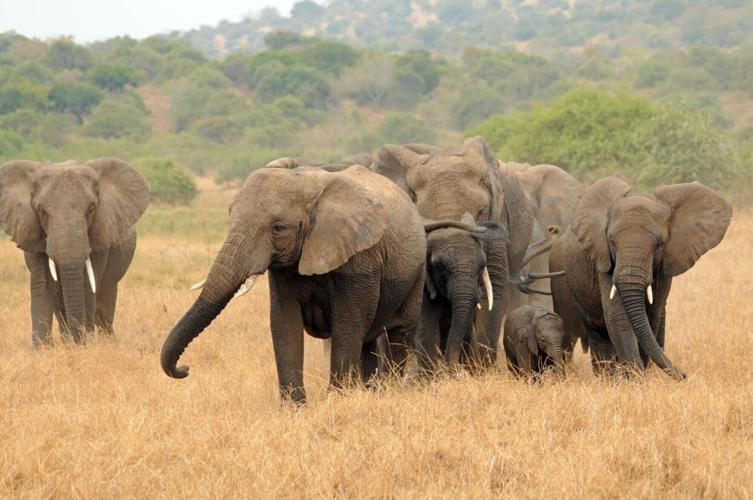
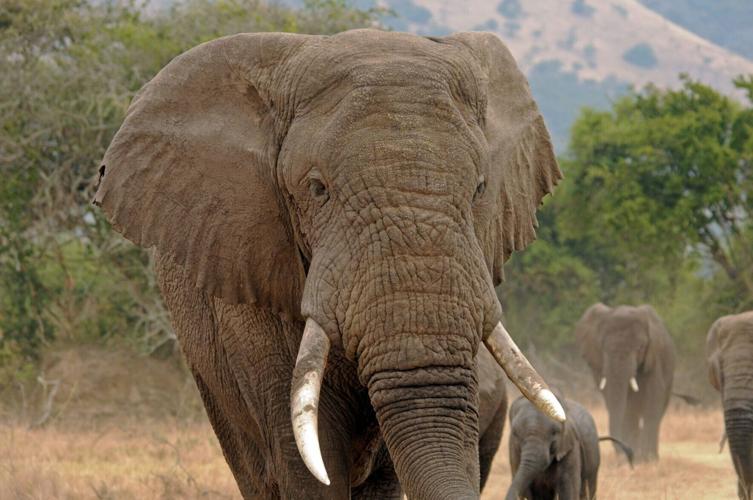
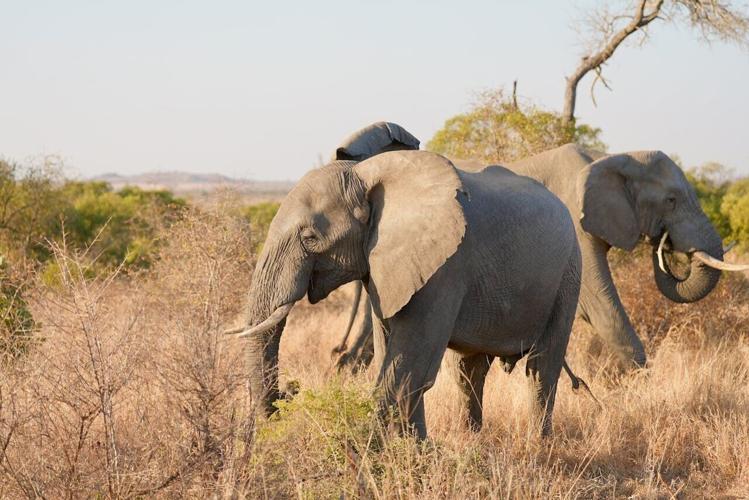
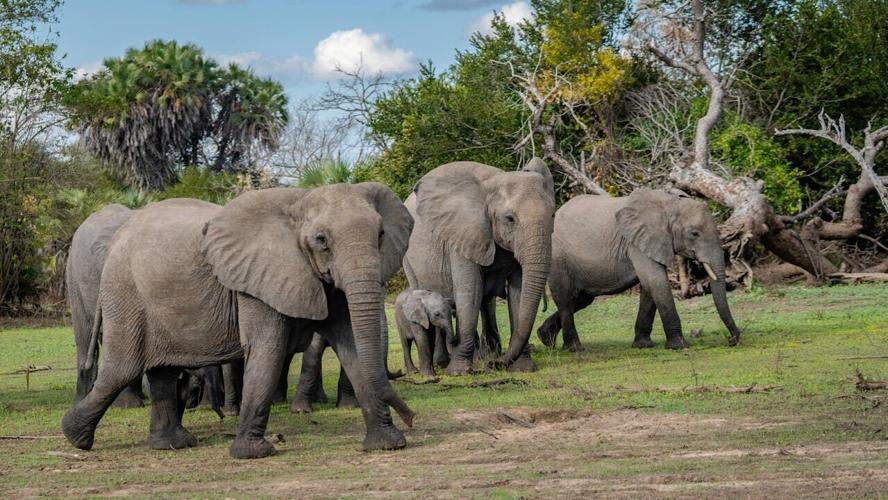
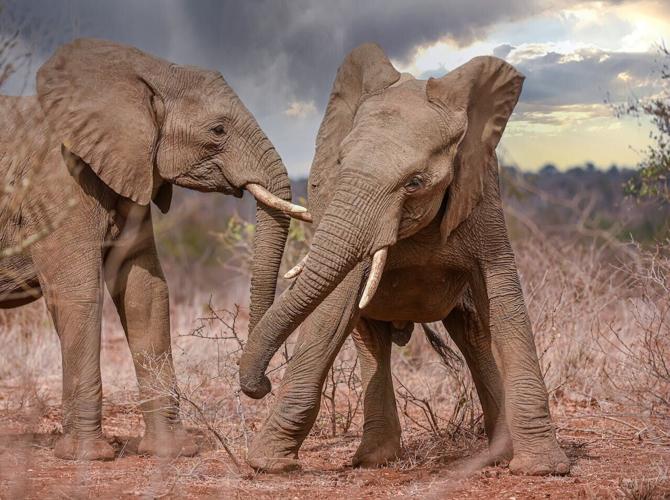

Elephants in Rwanda. (Laura Bertola via SWNS)
By Stephen Beech
African elephants are increasingly vulnerable to disease due to inbreeding, reveals a major new study.
Evidence of genetic mutations was discovered in isolated populations of the iconic species in the largest genomic mapping of the continent's elephants.
An international research team analyzed 232 whole genomes from both savanna and forest elephants, collected across 17 African countries.
It is the first large-scale, continent-wide genetic study since African elephants were recognized as two separate species.
The research team used samples that have been biobanked during previous genetic research more than 30 years ago and generated high-quality genomes through the iConserve program of the biotechnology company Illumina.
The findings, published in the journal Nature Communications, show genetic signs of isolation in several populations, where elephant herds have been cut off from each other due to a history of hunting, as well as growing human populations and their needs for agriculture and infrastructural developments.
Study lead author Patrícia PeÄnerová said: "Our study shows that until recently, elephants have been connected across vast distances.

Elephants in Rwanda. (Laura Bertola via SWNS)
"This freedom of movement has created genetic robustness because the populations have intermingled.
"Today, the picture is different. Elephants are living in a world where space is more and more restricted and some populations are becoming isolated."
She said two remote areas in Eritrea and Ethiopia are home to elephant populations that are small in number and quite isolated.
The elephants there are more than 250 miles away from other populations and are enclosed by human settlements and agricultural areas.
There, the researchers found a "high degree" of inbreeding, low genetic variation, and an accumulation of mildly deleterious mutations, which make them more vulnerable to changes in the environment and diseases.
But in West Africa, where high human population densities and a long history of the ivory trade have also isolated and reduced numbers, savanna elephants did not show the same loss of genetic variation seen in the isolated populations in Eritrea and Ethiopia.
The researchers said that while they are similarly inbred, the impact on genetic variation is partly masked because forest elephant genes flowed into these populations through interspecies hybridization.

(Photo by Zhang Thomas via Pexels)
The researchers said savanna and forest elephants are known to hybridize in a small number of locations where their habitats meet.
Surprisingly, this study also found that even savanna elephants far from the hybrid zone carry trace amounts of forest elephant ancestry.
Study co-senior author Alfred Roca, of the University of Illinois, said: "By reconstructing their genomic history, we found that savanna and forest elephants followed very different population trajectories over the last four million years, with over 85% of overall elephant genetic variation due to the differences between them.






"Given this history, gene flow between the species is unlikely to be beneficial, and hybrid elephants should be avoided for translocations.
"Among savanna elephant populations, historically high connectivity across their range limited regional differentiation.
"However, there were sufficient genetic differences across southern, eastern and west-central Africa to suggest that translocations across regions should be avoided."
The researchers explained that the patterns of gene flow revealed in the study are ultimately shaped by the ability of elephants to move across landscapes.
They say the positive effect of preserving elephant movement by protecting the landscape is quite evident in southern Africa.

(Photo by Tomasz Dworczyk - Podróż za Milion ZdjÄÄ via Pexels)
There, elephants are genetically diverse because the populations are closely connected and can exchange genes.
PeÄnerová, who works at the University of Copenhagen in Denmark, and Lund University in Sweden, said: "Elephants are extremely intelligent animals that can live close to humans and adapt.
"But one of the most important forces for their evolution is that genes can move between populations.
"In southern Africa, the landscape still allows movement between protected areas, and here we see that the genetic health of the elephants remains relatively intact."
Without ecological corridors and international coordination between countries and nature management authorities, she said even protected populations risk becoming weakened by genetic isolation.
To ensure the long-term survival of elephants, the researchers say landscapes and the connections between them need to be protected as well as the animals themselves.
Co-author Chris Thouless, director of conservation at Save the Elephants, said: "This study reminds us that we cannot understand or conserve elephants without knowing their history, and that they have always been in flux, especially in response to human impacts and climate change.
"The finding that recent and ancient hybridization between the two species extends over such a large part of both species' range is particularly interesting.

(Photo by Frans van Heerden via Pexels)
"The evidence of inbreeding in isolated and depleted savanna elephant populations is a matter of concern, especially since the samples on which this study is based date from before the recent period of intense poaching for ivory."
Co-author Charles Masembe, of Makerere University, Uganda, said: "Our findings provide important insights into the genetic health and connectivity of elephant populations on the African continent.
"By identifying distinct population units and levels of gene flow, this research can guide more effective conservation strategies, including habitat management, corridor protection, and translocation decisions.
"In addition, genomic tools and data that we have generated can support wildlife forensics by helping to trace the origin of confiscated ivory, thereby strengthening efforts to combat illegal wildlife trade."
He added: "Looking ahead, this work contributes to a growing body of knowledge that will inform conservation not only in Uganda but across Africa.
"By integrating genomics into conservation education and planning, we can better safeguard elephant populations for future generations, ensuring their ecological role and long-term survival in rapidly changing environments."

(0) comments
Welcome to the discussion.
Log In
Keep it Clean. Please avoid obscene, vulgar, lewd, racist or sexually-oriented language.
PLEASE TURN OFF YOUR CAPS LOCK.
Don't Threaten. Threats of harming another person will not be tolerated.
Be Truthful. Don't knowingly lie about anyone or anything.
Be Nice. No racism, sexism or any sort of -ism that is degrading to another person.
Be Proactive. Use the 'Report' link on each comment to let us know of abusive posts.
Share with Us. We'd love to hear eyewitness accounts, the history behind an article.