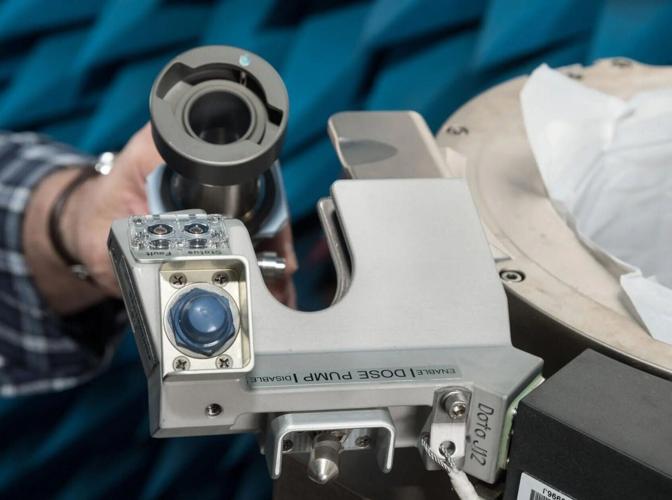
File photo shows a NASA team member demonstrating using the Universal Waste Management System (UWMS), lifting the urine hose out of its cradled position like a crew member would for use. A funnel (not shown) is attached to the open end of this hose and can then be easily replaced or removed for disinfection. 'Houston, we have a problem... the toilet's broken.' NASAÂs Artemis II astronauts may have bravely launched into space aboard the largest rocket the US have ever produced, but a problem with their onboard loo threatened to create a more down-to-Earth issue. Ahead of the apogee raise burn on Wednesday's (April 1) launch day, the Orion capsule crew reported a blinking fault light. Thankfully, mission control teams in Houston successfully assessed the data and worked with the crew to troubleshoot and resolve the issue. They were able to restore the spacecraftÂs toilet to normal operations.
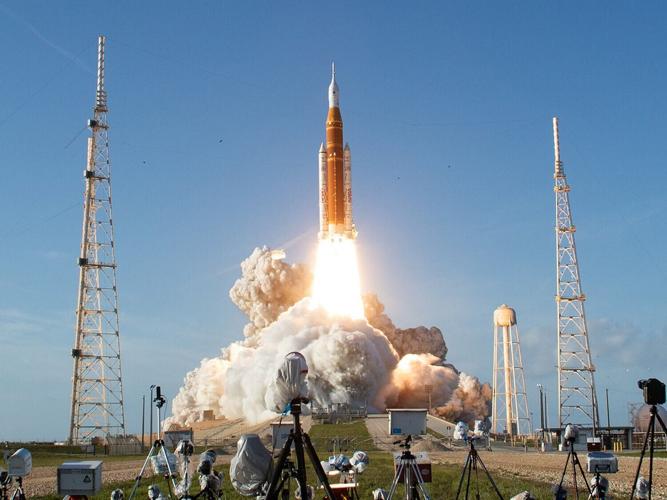
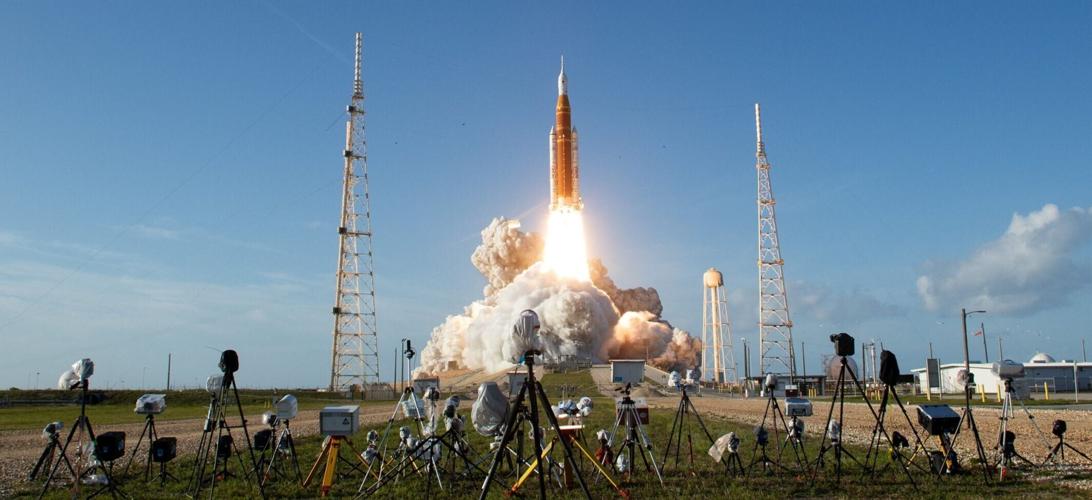
NASA's Space Launch System rocket carrying the Orion spacecraft with astronauts headed to the moon, blasts off Wednesday, April 1 in Florida. (NASA via SWNS)
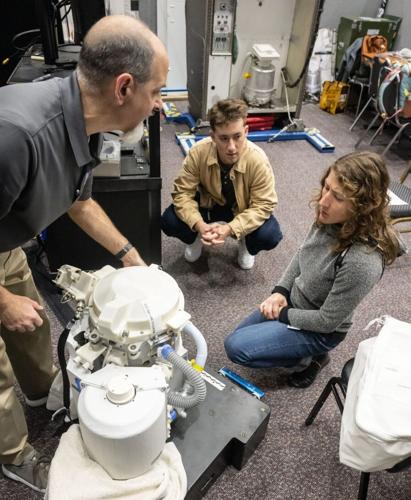
Artemis II Mission Specialist Christina Koch participating in the activation of the Orion spacecraft's toilet system at NASA's Johnson Space Center. (NASA via SWNS)
The Artemis II crew. From right to left, NASA astronauts Reid Wiseman, commander; Christina Koch, mission specialist; Victor Glover, pilot; and CSA (Canadian Space Agency) astronaut Jeremy Hansen, mission specialist wave to family and friends as they prepare to depart the Neil A. Armstrong Operations and Checkout Building to board. (NASA via SWNS)
File photo shows a NASA team member demonstrating using the Universal Waste Management System (UWMS), lifting the urine hose out of its cradled position like a crew member would for use. A funnel (not shown) is attached to the open end of this hose and can then be easily replaced or removed for disinfection. 'Houston, we have a problem... the toilet's broken.' NASAÂs Artemis II astronauts may have bravely launched into space aboard the largest rocket the US have ever produced, but a problem with their onboard loo threatened to create a more down-to-Earth issue. Ahead of the apogee raise burn on Wednesday's (April 1) launch day, the Orion capsule crew reported a blinking fault light. Thankfully, mission control teams in Houston successfully assessed the data and worked with the crew to troubleshoot and resolve the issue. They were able to restore the spacecraftÂs toilet to normal operations.
NASA's Space Launch System rocket carrying the Orion spacecraft with astronauts headed to the moon, blasts off Wednesday, April 1 in Florida. (NASA via SWNS)
By Talker
By Dean Murray
Houston, we have a problem ... the toilet's broken.
NASA’s Artemis II astronauts may have bravely launched into space aboard the largest rocket the U.S. has ever produced, but a problem with their onboard toilet threatened to create a more down-to-Earth issue.
Ahead of the apogee raise burn on Wednesday, April 1, launch day, the Orion capsule crew reported a blinking fault light.
Artemis II Mission Specialist Christina Koch participating in the activation of the Orion spacecraft's toilet system at NASA's Johnson Space Center. (NASA via SWNS)
Mission control teams in Houston successfully assessed the data and worked with the crew to troubleshoot and resolve the issue.
They were able to restore the spacecraft’s toilet to normal operations.
NASA said: "The Artemis II crew, working closely with mission control in Houston, were able to restore the Orion spacecraft’s toilet to normal operations following the proximity operations demonstration."
The Artemis II crew. From right to left, NASA astronauts Reid Wiseman, commander; Christina Koch, mission specialist; Victor Glover, pilot; and CSA (Canadian Space Agency) astronaut Jeremy Hansen, mission specialist wave to family and friends as they prepare to depart the Neil A. Armstrong Operations and Checkout Building to board. (NASA via SWNS)
By Talker
Orion’s crew module is equipped with the new Universal Waste Management System (UWMS) space toilet, which makes going to the bathroom easier for both women and men while cutting the mass and volume needed for deep-space launches.
Earlier astronauts on Mercury, Gemini, and Apollo had no toilets and relied on bags and diapers, but Orion’s compact UWMS improves on the bulky shuttle-era toilet by using air flow to direct waste and featuring a redesigned seat and urine funnel based on female astronaut feedback so both systems can be used simultaneously.
Keep it Clean. Please avoid obscene, vulgar, lewd,
racist or sexually-oriented language. PLEASE TURN OFF YOUR CAPS LOCK. Don't Threaten. Threats of harming another
person will not be tolerated. Be Truthful. Don't knowingly lie about anyone
or anything. Be Nice. No racism, sexism or any sort of -ism
that is degrading to another person. Be Proactive. Use the 'Report' link on
each comment to let us know of abusive posts. Share with Us. We'd love to hear eyewitness
accounts, the history behind an article.











(0) comments
Welcome to the discussion.
Log In
Keep it Clean. Please avoid obscene, vulgar, lewd, racist or sexually-oriented language.
PLEASE TURN OFF YOUR CAPS LOCK.
Don't Threaten. Threats of harming another person will not be tolerated.
Be Truthful. Don't knowingly lie about anyone or anything.
Be Nice. No racism, sexism or any sort of -ism that is degrading to another person.
Be Proactive. Use the 'Report' link on each comment to let us know of abusive posts.
Share with Us. We'd love to hear eyewitness accounts, the history behind an article.