
Photo by Mustafa Akın via Pexels
By Lauren Wilkin
A brain study has revealed that eating peanuts daily could improve memory and protect against Alzheimer's disease.
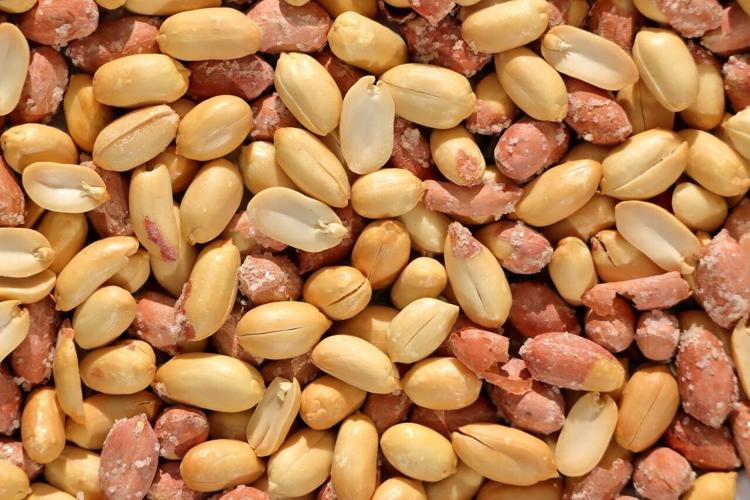
The study, published in Food & Function, examined 31 healthy older adults between the ages of 60 and 75, who consumed 60 g of peanuts daily for 16 weeks.
Participants were given premeasured packets of skin-roasted peanuts and directed to consume the peanuts in the morning or afternoon.
They were allowed to eat the daily amount all at once, spread it out over the day or add the peanuts to their meals.
During the control period, participants did not consume peanuts.
Then, after 16 weeks of consuming peanuts, participants underwent MRI scans. Researchers found that brain insulin responsiveness improved in a cluster in the right hemisphere.
This included areas of the brain involved in memory - and the researchers observed improved memory performance.
"Our study found that daily peanut consumption beneficially affected insulin responsiveness in memory-related brain regions in older adults," says Peter Joris, the study's senior author and an associate professor in the Department of Nutrition and Movement Sciences at Maastricht University Medical Center.







Photo by Pablo RAMON via Pexels
"The hormone insulin plays an important role in the brain, where it supports memory and other cognitive processes.
"As people age, the brain may become less responsive to insulin, which has been linked to age-related cognitive decline."
Explaining the results, Joris said: "Multiple nutrients present in peanuts, including unsaturated fats, dietary fiber, vitamins and minerals and bioactive phytochemicals, could potentially contribute to the observed brain benefits."
"Peanuts are also a good source of plant-based protein and are especially rich in L-arginine.
"L-arginine is a key precursor of nitric oxide, which has been reported to facilitate learning and memory performance," he added.
The research team noted that a potential limitation of the study was that participants partly added the peanuts to their habitual diet without a prescribed food replacement.
This means that the observed effects may reflect not only the effects of peanut consumption itself but also changes in energy intake and nutrient substitution.
(0) comments
Welcome to the discussion.
Log In
Keep it Clean. Please avoid obscene, vulgar, lewd, racist or sexually-oriented language.
PLEASE TURN OFF YOUR CAPS LOCK.
Don't Threaten. Threats of harming another person will not be tolerated.
Be Truthful. Don't knowingly lie about anyone or anything.
Be Nice. No racism, sexism or any sort of -ism that is degrading to another person.
Be Proactive. Use the 'Report' link on each comment to let us know of abusive posts.
Share with Us. We'd love to hear eyewitness accounts, the history behind an article.