



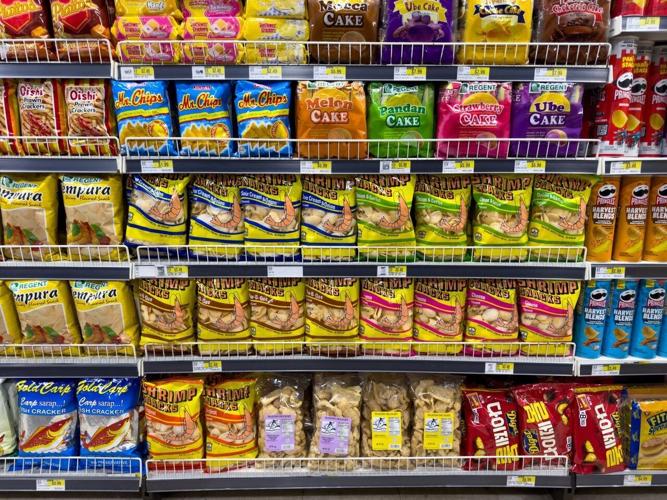


Many fast food brands sell ultra-processed food. (SWNS)
By Lauren Wilkin
A new study by researchers at Harvard University has found eating ultra-processed foods increases your risk of developing dementia and cognitive impairment.
The extensive research defined ultra-processed food as "industrially produced food and beverages to which chemical additives or chemically modified ingredients are added to enhance palatability, extend shelf life, or reduce costs"—such as sugar-sweetened beverages, breakfast cereals, pizza and other "ready to eat" food.
It tracked 5,370 older adults—with an average age of 64—over nine years.
The participants completed dietary questionnaires at the start of the study, and underwent standardized memory and attention tests every two years to assess their cognitive health.
At the end of the study, published in the American Journal of Public Health, the people who ate the most ultra-processed food had a 58% higher risk of developing dementia, compared with those who ate the least.

Foods like breakfast sausage are also ultra-processed. (SWNS)
The highest consumers were also found to have a 46% higher risk of developing cognitive impairment without dementia.
And the opposite was proven, too.





People who ate the most whole, minimally processed foods showed the opposite pattern, with a 41% lower risk of developing dementia and 24% lower risk of developing cognitive impairment.
The researchers on the study have called for changes in policy and industry-level action.
"Given UPFs' low cost, taxation may be warranted, as illustrated by Colombia's recent UPF tax," the study says, which would see the prices of UPFs increase for consumers.
The study revealed UPFs make up over 50% of total energy consumption among adults in the United States.

Among those who regularly consumed UPFs, the most common types were sugar-sweetened beverages (31.2%), other beverages (22.2%), dairy (11.2%), snacks and sweets (9.7%), and grains and derivatives (6.2%).
More education around the dangers of consuming these common foods is also needed, the study said.
Replacing ultra-processed foods with whole foods and ingredients is an easy way to improve your diet and brain health.
Simple swaps can make a big difference. Examples include replacing pre-made burgers for ground beef to make your own, opting for fresh baked bread instead of packaged bread, and swapping breakfast cereals for oatmeal or fruit and yogurt.
UPFs have already been associated with obesity, diabetes and cardiovascular disease. Usually, these foods are high in saturated fat, sodium, and sugar and are popular due to their convenience and low cost.

(0) comments
Welcome to the discussion.
Log In
Keep it Clean. Please avoid obscene, vulgar, lewd, racist or sexually-oriented language.
PLEASE TURN OFF YOUR CAPS LOCK.
Don't Threaten. Threats of harming another person will not be tolerated.
Be Truthful. Don't knowingly lie about anyone or anything.
Be Nice. No racism, sexism or any sort of -ism that is degrading to another person.
Be Proactive. Use the 'Report' link on each comment to let us know of abusive posts.
Share with Us. We'd love to hear eyewitness accounts, the history behind an article.